



For more than five decades, The MUI Group has been a familiar name in Malaysia’s corporate landscape. Founded by Tan Sri Khoo Kay Peng in the late 1960s, the conglomerate has evolved alongside the nation’s economic development—from its beginnings in cement, sugar and construction into a diversified multinational group with interests spanning property development, hospitality, retail, food & beverage, financial services and international investments.
Today, the group owns a portfolio of household brands that generations of Malaysians have grown up with, including Metrojaya and A&W Malaysia, while its property developments, hotels and international assets continue to form key pillars of the business. Although diversification helped fuel MUI’s expansion over the decades, the changing business landscape has prompted a strategic rethink.
Leading that transformation is Andrew Khoo Boo Yeow, who succeeded his father as Group Chief Executive Officer in 2018. Rather than viewing himself as the heir to a corporate empire, Khoo prefers a different description.
“I see myself as just a steward of the business,” he told BusinessToday during an exclusive interview.
“My father built this business from the ground up. Every decade, the business evolved, just as Malaysia evolved. My responsibility now is to prepare MUI for the next seventy years.”
From Conglomerate to Focused Enterprise
One of Khoo’s earliest priorities after assuming leadership was defining a clear corporate purpose and simplifying a business that had grown increasingly diversified.
While diversification was once the hallmark of successful Malaysian conglomerates, he believes today’s capital markets reward focus, clarity and operational excellence instead.
“The days of being a diversified conglomerate are perhaps out of favour,” he said.
“You only have limited time and resources. You have to focus on your core strengths, bring in the right talent and capabilities, and double down on what you do best.”
That philosophy has driven an extensive rationalisation programme that is now roughly halfway through its three-year roadmap. The group has already reduced the number of listed entities under its umbrella and is evaluating further portfolio optimisation to unlock shareholder value.
According to Khoo, diversified structures often make it difficult for investors and analysts to accurately value businesses.
“If the business is too diversified, the value isn’t reflected in the share price. What we’re trying to do is unlock that value for all shareholders.”
The transformation has also involved selective asset disposals, with proceeds carefully allocated across several priorities rather than pursuing aggressive expansion.
Khoo said funds generated from asset sales have been channelled towards reducing debt, strengthening working capital, rewarding shareholders through dividends and recycling capital into new investments.
“Everything is carefully calibrated. Every major transaction has been thought through and the proceeds have already been earmarked.”
He expects the group’s transformation programme to be substantially completed within the next 12 to 18 months.
Next Phase Of Growth
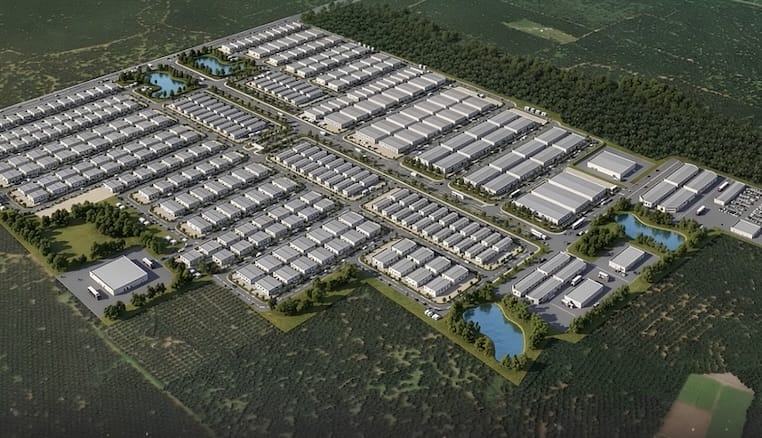
Among the businesses poised to drive MUI’s next phase of growth is property development, particularly industrial developments linked to Malaysia’s fast-growing digital economy.
The group has enjoyed encouraging momentum from its industrial projects and sees continued opportunities amid strong foreign investment into Malaysia.
“Industrial property has done very well for us. We’ve also had exposure to data centres, and we believe there’s still considerable room for growth.”
The company has almost completed sales of its existing 2,000-acre township while preparing another 700-acre development pipeline, with future acquisitions focused primarily on industrial developments and selected residential projects.
Unlike previous expansion phases that saw MUI venture aggressively overseas, Khoo said Malaysia remains the group’s primary investment destination.
“Malaysia is our home market. We understand it well and there are still many opportunities here.”
One of MUI’s most promising opportunities lies in the rapidly expanding data centre ecosystem.
Its Bandar Springhill development in Negeri Sembilan secured a landmark collaboration involving Gamuda and Google, where Google is developing what is expected to become one of its largest data centre and AI-related facilities in the country.
That success has attracted growing interest from other hyperscale operators.
“We’re receiving enquiries from other data centre players. If we secure the right location, there’s potential for another project.”
Khoo also sees potential for recurring income models through future data centre developments depending on how projects are structured.
Hospitality DNA
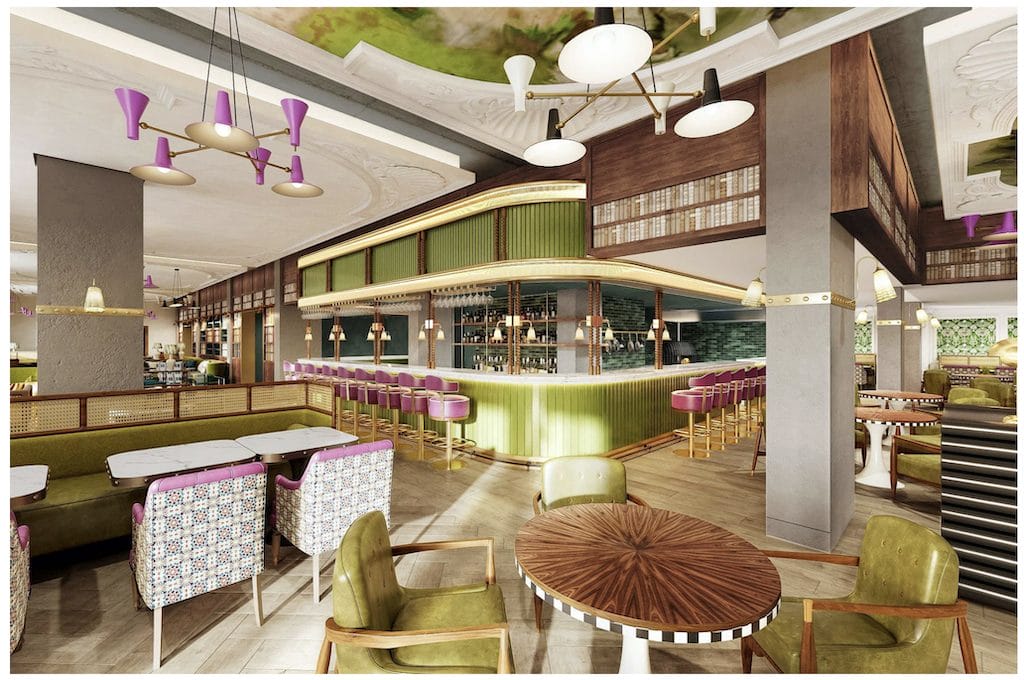
While MUI recently disposed of the iconic Corus Hotel Kuala Lumpur, hospitality remains one of Khoo’s biggest priorities.
Rather than owning every hotel outright, the group is pivoting towards an asset-light strategy centred on hotel management contracts.
“We have a hospitality team with 30 to 40 years of experience. We believe Malaysia is ready for more third-party hotel operators.”
The strategy combines management contracts with selective acquisitions and developments while leveraging partnerships with global hospitality brands.
Among the group’s biggest milestones this year will be the opening of a newly rebranded 308-room Marriott Tribute Hotel overlooking Hyde Park in London, alongside the launch of MUI’s own hospitality brand, Burnham Beeches.
Technology will also play an increasing role.
Khoo wants artificial intelligence to enhance guest experiences while improving operational efficiency across the hospitality portfolio.
Food And Beverage Expansion
Another business undergoing transformation is A&W Malaysia.
Despite operating close to 90 outlets nationwide, Khoo believes the iconic fast-food chain remains significantly underpenetrated.
“A&W is a well-loved brand. Our job is to make it relevant again for the next generation.”
The strategy goes beyond simply opening more restaurants.
Instead, the company is refining pricing, improving consistency and introducing product innovation while optimising outlet locations following post-pandemic changes in consumer behaviour.
Long term, Khoo believes the network can expand to between 200 and 300 outlets within five years.
“Some established competitors have 600 to 700 outlets. There’s no reason why we can’t sustainably reach 200 or 300.”
Local innovation is also becoming part of the strategy.
Among the ideas currently under development is a unique coffee-infused root beer inspired by experiments conducted in the US, alongside other locally adapted menu offerings.
Beyond A&W, MUI is preparing to launch an entirely new halal casual dining concept centred on one of Malaysia’s most iconic dishes — chicken rice.
The concept draws inspiration from the famous chicken rice served for decades at Ming Court and Corus Hotel.
“The proposition is simple — hotel-quality chicken rice at mass-market prices.”
The brand will feature both steamed and roasted chicken varieties and is expected to debut within the next three to four months before expanding into shopping malls.
If successful, Khoo envisions between 10 and 40 outlets, complementing A&W under MUI’s growing portfolio of halal food brands.
Technology sits at the heart of MUI’s transformation agenda.
The recent appointment of Chief Transformation Officer Teoh Ze-Han signals the group’s intention to accelerate digitalisation across every business unit.
Khoo said artificial intelligence will initially focus on internal productivity, process improvements and operational efficiency before potentially becoming a standalone business opportunity.
“We’re not looking at AI just because it’s fashionable. It has to make a real difference.”
The company is already working with technology partners to identify practical AI applications while exploring future digital businesses that could create long-term shareholder value.
Learning from the Past
Khoo acknowledged that not every decision has gone according to plan.
Among the most difficult periods was navigating the challenges surrounding MUI’s UK business during the COVID-19 pandemic, when parts of the business entered administration.
The group also experienced setbacks from venture capital investments made during the technology funding boom before global liquidity conditions tightened.
“Perhaps I was a little too bullish during that period,” he admitted.
Nevertheless, Khoo views these experiences as part of building a stronger organisation rather than failures.
“I don’t like living life with regrets. Every experience teaches you something.”
Asked what message he hopes investors take away, Khoo said MUI’s transformation is ultimately about creating sustainable long-term value rather than chasing short-term market sentiment.
“I’ve never managed the business by looking at the share price.”
Instead, he wants investors to judge MUI based on the quality of its assets, disciplined execution and ability to unlock hidden value over time.
“People need to believe in the story. They need to believe in the assets, believe that we can execute the plan, and if we do that consistently, we’ll continue creating value for shareholders.”
Although he inherited one of Malaysia’s best-known business groups, Khoo remains careful not to frame leadership as a family entitlement.
His father spent years preparing him by exposing him to boardrooms, internships and eventually encouraging him to leave the family business altogether to build his own entrepreneurial journey.
When the call finally came in 2017 asking him to return, Khoo agreed on one condition—that only one captain should steer the ship.
Today, nearly eight years into the role, he remains focused not on preserving the past, but ensuring MUI remains relevant for decades to come.
“I’m just stewarding this business,” he reflected.
“The goal is to build something sustainable that can continue creating value long after my time.”


