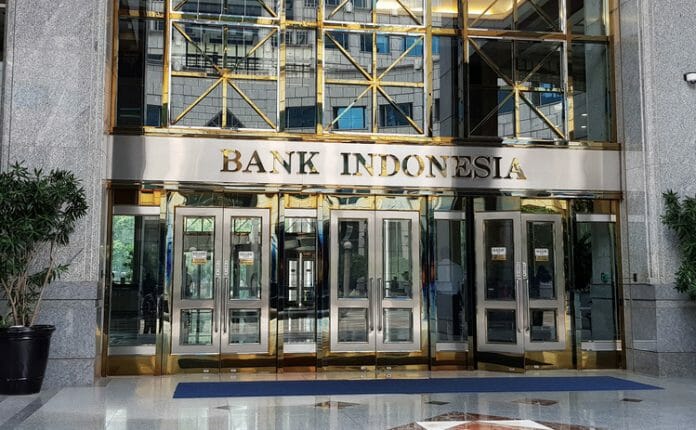
Indonesia’s financial markets are expected to remain cautious following the surprise resignation of Bank Indonesia (BI) Governor Perry Warjiyo, with investors closely watching the appointment of his successor and the future direction of monetary policy, according to CIMB Securities.
The research house said Warjiyo’s resignation on July 27, nearly two years before the end of his second five-year term, marks an unexpected leadership transition at a time when Southeast Asia’s largest economy is navigating currency pressures and tighter monetary conditions.
Under Indonesia’s central bank law, Senior Deputy Governor Destry Damayanti has assumed the role of acting governor while President Prabowo Subianto nominates a permanent successor, subject to parliamentary approval.
CIMB noted that Warjiyo is only the second BI governor since 2000 to leave office before completing a full term, following Boediono’s resignation in 2009 after being nominated as Indonesia’s vice-presidential candidate.
Leadership change comes amid market challenges
The transition comes after a turbulent six months for Indonesia’s financial markets.
CIMB said the rupiah (IDR) had faced sustained depreciation, prompting Bank Indonesia to intervene in the foreign exchange market and raise its benchmark interest rate by a cumulative 100 basis points since May to 5.75% in June.
With the currency showing signs of stabilisation, the central bank kept rates unchanged in July while introducing broader balance-of-payments measures to support financial stability.
“The leadership transition comes at a delicate juncture,” the research house said, noting that markets are now focused on whether the incoming governor will maintain the current policy framework.
Internal candidates seen as front-runners
CIMB expects Acting Governor Destry to provide near-term policy continuity, although her appointment is temporary.
The brokerage said potential internal candidates include Destry herself, who is viewed as representing policy continuity, and Deputy Governor Thomas Djiwandono, who is also President Prabowo’s nephew.
Among possible external candidates, CIMB identified Finance Minister Purbaya Yudhi Sadewa and National Economic Council member and former finance minister Chatib Basri as potential contenders.
The research house noted that most BI governors since 2003 have been promoted from within the central bank, with former finance minister Agus Martowardojo being the only external appointment during that period.
Markets awaiting policy signals
CIMB said previous leadership transitions at Bank Indonesia generally elicited neutral to positive market reactions when successors were perceived as technocratic and committed to policy continuity.
In such cases, foreign investors typically returned as net buyers of Indonesian bonds and equities, while volatility in the rupiah proved short-lived.
However, appointments that created uncertainty over policy direction or institutional arrangements tended to trigger more cautious investor sentiment.
Given Warjiyo’s reputation for maintaining orthodox monetary policies and supporting financial market stability, his departure is likely to keep investors on the sidelines until a permanent successor is announced.
Rupiah expected to remain range-bound
CIMB expects the rupiah to remain largely range-bound in the near term, with the US dollar potentially retesting the 18,200 rupiah level as markets digest the leadership transition.
The brokerage believes any sharp currency weakness is likely to be moderated by continued intervention from Bank Indonesia.
Looking ahead, CIMB said the rupiah’s longer-term direction will depend largely on two key developments — the appointment of the next central bank governor and the presentation of Indonesia’s 2027 state budget on Aug 16, which will provide greater clarity on the country’s fiscal plans.
While the research house noted the rupiah has already weakened substantially over the past year amid rising country risk and policy uncertainty, it said a return to more orthodox policymaking under the next governor could help restore investor confidence and support a recovery in the currency.