


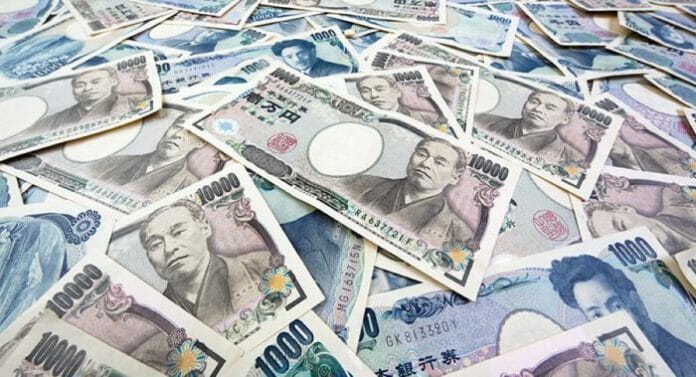
The Japanese yen weakened on Friday after the Bank of Japan (BOJ) kept its benchmark interest rate unchanged at 1%, surrendering part of the sharp gains triggered by coordinated currency intervention a day earlier as investors questioned the durability of official support for the currency.
The US dollar was up 0.75% at 160.67 yen after tumbling 2.4% in the previous session, its biggest one-day decline since January 2023. The rebound came as markets tested Tokyo’s resolve to defend the yen following intervention by Japanese authorities.
The BOJ left short-term interest rates unchanged, in line with market expectations, after raising rates to a 31-year high last month. However, it warned for the first time that underlying inflation could exceed its target, signalling the possibility of further interest rate increases.
A market source told Reuters that Japan bought yen and sold US dollars during the New York trading session on Thursday, helping the currency recover from four-decade lows, although the gains proved short-lived.
Japan’s top foreign exchange diplomat also said Tokyo was receiving support from the United States that “goes beyond psychological support”, while the Nikkei reported that US authorities had conducted rate checks. The New York Federal Reserve declined to comment.
In a separate move, South Korea also intervened in the currency market by selling US dollars to support the won, according to a market source. The South Korean currency briefly climbed to a nine-month high before easing to trade about 1% lower at 1,438.1 per US dollar.
Analysts said the combination of intervention risks and expectations of additional BOJ tightening could limit further weakness in the yen, although interest rate differentials with the United States remain the dominant market driver.
State Street Investment Management senior fixed-income strategist Masahiko Loo said intervention and a potentially faster pace of monetary policy normalisation should place “a soft cap” on further yen weakness, while noting that the next significant move for the currency could ultimately be higher.
Meanwhile, the BOJ cited inflationary pressures from robust global artificial intelligence demand and easing concerns over the Middle East conflict in its latest quarterly outlook, reinforcing expectations that rates could continue rising.
According to a Reuters poll, most analysts expect the BOJ to increase interest rates again to 1.25% by the end of the year. Speculators also remain heavily bearish on the yen, with net short positions valued at US$11.65 billion, close to the highest level in two years.
The BOJ’s policy decision followed the US Federal Reserve’s move to leave interest rates unchanged, which weighed on the US dollar. The US Dollar Index edged up slightly to 100.22 after falling 0.8% in the previous session and remained on track for a weekly decline of 1.2% and a monthly loss of 0.9%.


