


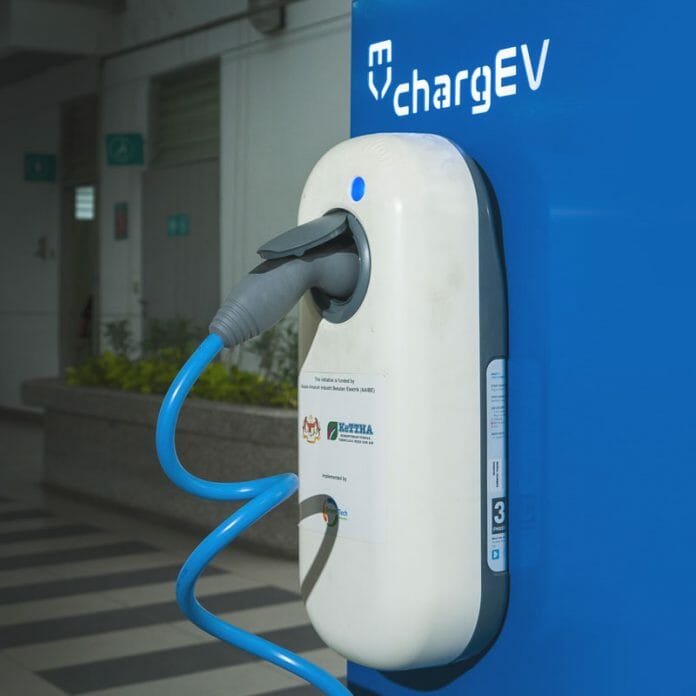
A new levy on electric vehicle (EV) sales could undermine Malaysia’s efforts to accelerate EV adoption, with concerns mounting that higher ownership costs may weigh on demand while the country’s charging infrastructure continues to lag behind its ambitions.
MCA Vice President and Tanjung Piai MP Datuk Seri Dr Wee Jeck Seng has criticised the government’s reported proposal to impose a levy on every EV sold in Malaysia to finance the expansion of public charging infrastructure.
Wee said the move would effectively transfer the cost of building the country’s EV ecosystem to consumers at a time when the government is simultaneously encouraging Malaysians to switch to electric mobility.
“The government encourages Malaysians to embrace EVs, yet because there are not enough charging stations, it now expects EV buyers to help fund them,” he said.
Higher Costs Risk Dampening Demand
Wee highlighted that the proposed levy raises a wider question over whether Malaysia risks making EV ownership less attractive just as the domestic market needs greater scale as EV buyers already have to contend with concerns surrounding vehicle prices, charging convenience, battery maintenance costs and resale values.
“Adding another charge would raise the barrier to ownership further, particularly for middle-income households and younger families.
“If the government is serious about driving the country’s green transition, it should lower the barriers to EV ownership rather than increase costs,” Wee said.
The issue has broader business implications as Malaysia seeks to develop an EV ecosystem extending beyond vehicle sales.
Stronger adoption can support investment by automakers, charging point operators and other businesses participating in the electric mobility value chain. Conversely, policies that increase the upfront cost of purchasing an EV risk weakening the consumer demand needed to support that expansion.
Charging Infrastructure Still Below Earlier Target
Wee also pointed to Malaysia’s existing charging infrastructure shortfall where the government had initially targeted 10,000 public charging points, but only 6,416 had been installed nationwide as of May 31, and this target has since been raised substantially to 30,000 charging points by 2030.
Wee said the government should focus on accelerating infrastructure development, streamlining approval processes, offering investment incentives and attracting more charging point operators rather than imposing additional costs on buyers.
“The government should explain why it failed to meet its original infrastructure target, instead of looking for new ways to charge EV buyers,” he said, adding that the proposed levy could also complicate the policy message surrounding Malaysia’s EV ambitions.
“The government has previously encouraged EV adoption through tax incentives and other supportive policies designed to lower entry barriers and stimulate demand.
“Introducing a new levy now would send a contradictory signal to consumers and the market,” Wee argued.
For an industry still establishing itself, policy consistency matters. Investors committing capital to vehicles, charging infrastructure and related services depend on sufficient consumer adoption to justify expansion.
A policy that increases EV ownership costs while infrastructure remains inadequate could therefore create tension between Malaysia’s green mobility ambitions and the commercial conditions required to achieve them.
Broader Funding Model Needed
However, Wee said he was not opposed to establishing a dedicated fund or sustainable financing mechanism for charging infrastructure, but argued that ordinary consumers should not be expected to carry the burden.
Instead, he called for a broader funding model involving public-private partnerships, investment by charging point operators, government development allocations and green financing.
Highway concessionaires, shopping malls, car park operators and property developers could also contribute to the expansion of charging facilities, he said.
Such an approach would spread the cost of developing the charging network across stakeholders that could benefit commercially from the growth of Malaysia’s EV market.
For Malaysia, the debate ultimately goes beyond whether an EV levy should be imposed.
The bigger business challenge is ensuring the country can expand its charging network rapidly enough to support EV adoption without introducing new costs that risk slowing the market it is trying to build.


