The Joint Committee on Climate Change (JC3) is stepping up efforts to translate Malaysia’s climate commitments into practical financing and reporting solutions, with a focus on energy transition, climate resilience and greater transparency in sustainability disclosures.
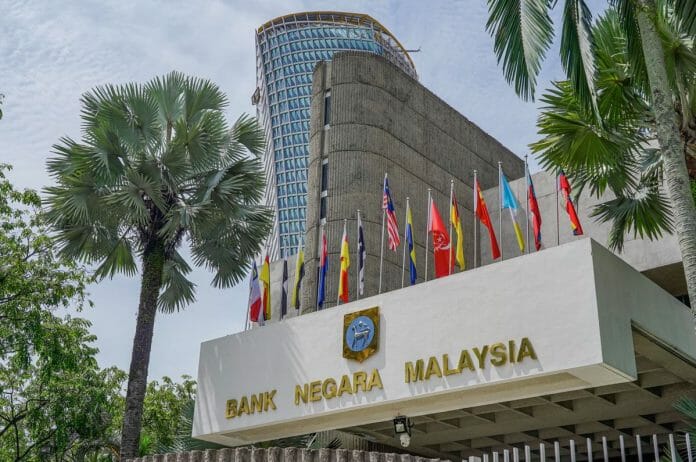
The direction was reaffirmed at the committee’s 17th meeting held on Aug 6, 2026, jointly chaired by Bank Negara Malaysia (BNM) and the Securities Commission Malaysia (SC).
A key development was the issuance of National Sustainability Reporting Framework (NSRF) Guidance Documents for Banks and Insurers and Takaful Operators, aimed at helping financial institutions produce sustainability-related disclosures that are more robust, consistent, comparable and useful for decision-making.
The guidance addresses common implementation challenges, including assessments of sustainability-related risks and opportunities, strategy disclosures, and the use of relevant metrics and targets.
Hands-on capacity-building programmes are scheduled to begin in October 2026 to support financial institutions and insurers in implementing the reporting requirements.
Securities Commission Malaysia Chief Sustainability Officer and JC3 Co-Chair Neetasha Rauf said the guidance would help financial institutions and insurers and takaful operators navigate reporting challenges while supporting the transition towards higher-quality sustainability disclosures.
She added that the guidance complements the work of the Advisory Committee on Sustainability Reporting (ACSR) in providing implementation and capacity-building support for entities covered by the NSRF.
RM1.73 billion funding pipeline for climate projects
The meeting also noted further progress under the Climate Finance Innovation Lab (CFIL), which connects climate- and nature-related projects with potential funding sources.
Under CFIL’s second cohort, 22 projects seeking RM1.73 billion in funding will participate in a structured accelerator programme in collaboration with the United Nations Global Compact Network Malaysia, Brunei and Cambodia.
The programme will focus on refining business models, assessing impact and facilitating access to funding.
JC3 also encouraged potential funders to engage with CFIL to help scale climate- and nature-related solutions.
Malaysia to adopt ASEAN Taxonomy as foundation
Another major development is JC3’s decision to fully adopt the ASEAN Taxonomy for Sustainable Finance as the foundation for Malaysia’s Taxonomy.
The move is expected to improve regional interoperability, consistency and comparability in sustainable finance while reducing the operational burden for businesses, particularly those involved in cross-border activities.
JC3 will develop practical guidance and tools tailored to Malaysia’s implementation needs before conducting a pilot programme with selected members.
The pilot is expected to help identify operational challenges and refine the framework ahead of full adoption for reporting in 2028.
BNM Assistant Governor and JC3 Co-Chair Madelena Mohamed said a taxonomy would only be effective if it could be applied consistently and confidently.
She said the pilot would allow JC3 to identify implementation challenges at an early stage and ensure the framework remained relevant to Malaysia’s needs.
JC3 explores centralised climate data platform
To further support the implementation of the Malaysia Taxonomy and the broader development of sustainable finance, JC3 will also explore the establishment of a centralised climate- and nature-related data platform.
The proposed platform could improve access to reliable climate and nature-related data, enabling financial institutions, businesses and investors to better assess risks and opportunities, meet reporting requirements and direct capital towards sustainable and transition activities.
The initiatives reflect JC3’s broader push to strengthen the financial sector’s ability to support Malaysia’s energy transition while improving resilience against climate-related risks, particularly flooding.
Meanwhile, JC3 will host its flagship JC3 Journey to Zero Conference (JC3 J20) on Sept 28 and 29, 2026, at Sasana Kijang.
The conference is expected to bring together policymakers, financial institutions, investors and other stakeholders to discuss practical approaches to scaling transition and adaptation finance, share implementation experiences and explore solutions capable of delivering measurable climate outcomes.