



Malaysia’s animation and games industry can no longer rely principally on lower costs to compete and must instead build a global reputation for world-class quality and work that is recognisably “Made by Malaysians”.
Malaysia Digital Economy Corporation (MDEC) chief executive officer Anuar Fariz Fadzil said that Malaysia already has the talent, studios, supporting infrastructure and market access needed to compete internationally. However, with other countries in the region rapidly strengthening their capabilities, the industry’s long-term position could not be sustained simply by offering cheaper production.
“For the past 30 years, we have had the ‘Made in Malaysia’ story. Now we need to work on quality. We need to be able to say it is ‘Made by Malaysians’,” Anuar said during a panel discussion at the Borneo Animation and Games Festival 2026 (BAGFEST 2026) here.
He added that Malaysia’s earlier role as an outsourcing and production base had not been wasted. It had developed skills, trained talent and exposed local studios to international production standards, placing the country in a stronger position to create and commercialise its own animation, games and intellectual property (IP).
MDEC’s Digital Creative Ecosystem (DICE) Roadmap 2026–2030 is intended to strengthen the industry’s longer-term competitiveness. Anuar said its priorities included human capital, IP commercialisation, financing and attracting high-value investments.
Malaysia’s digital creative industry has generated RM92.5 billion in cumulative revenue, RM12.1 billion in exports and RM85.7 billion in investments, while creating more than 11,000 high-value jobs, according to the Ministry of Digital.
The panel also featured Sarawak Digital Economy Corporation Berhad (SDEC) chief executive officer Dato Ir. Ts. Sudarnoto Osman and Puan Sri Tiara Jacquelina Eu Effendi of the Enfiniti Group of Companies. It was moderated by Nikkei Inc journalist Norman Goh.
Sudarnoto said Sarawak’s ambition should extend beyond staging a successful festival. It required a complete ecosystem connecting schools and universities with production houses, entrepreneurship, investment and commercial opportunities.
He said SDEC wanted production houses to come to Kuching to discover local IP, invest in it and co-develop projects with Sarawak creators. The state’s affordable cost of living and cultural diversity could also give young studios a longer runway.
“It is not about one festival. It is about the whole ecosystem,” he said, adding that retaining young Sarawak talent would ultimately depend on whether the state could create sufficient jobs, business opportunities and pathways into entrepreneurship.
Tiara said Malaysia did not suffer from a shortage of ideas or talent. The weakness frequently emerged between creation, commercialisation and ownership.
She said the industry was accustomed to financing individual films, animations, games or stage productions and then treating their completion as success. Sustainable IP development required support beyond the first product, including early development, audience building, international distribution, licensing, publishing and merchandising.
Drawing on her experience with Puteri Gunung Ledang and Dream Forest Langkawi, Tiara said creators should consider whether their stories and characters could continue across animation, games, books, merchandise, live experiences and digital platforms.
The panellists also agreed that artificial intelligence should be treated as a tool for improving productivity rather than a replacement for human creativity.
Anuar said AI could take over repetitive work and allow creative professionals to concentrate on higher-value activities, particularly storytelling and bringing ideas to life. The industry therefore needed to equip its talent to use emerging tools rather than resist them.
Tiara said AI could provide the tools but could not supply a distinctive point of view or manufacture cultural identity. As the same technology became available to more creators, originality, taste and lived experience would become even more valuable.
For Malaysia, Anuar said the opportunity was to combine those distinctly Malaysian strengths with world-class execution, enabling locally created stories and IP to earn recognition in international markets on the strength of their quality.
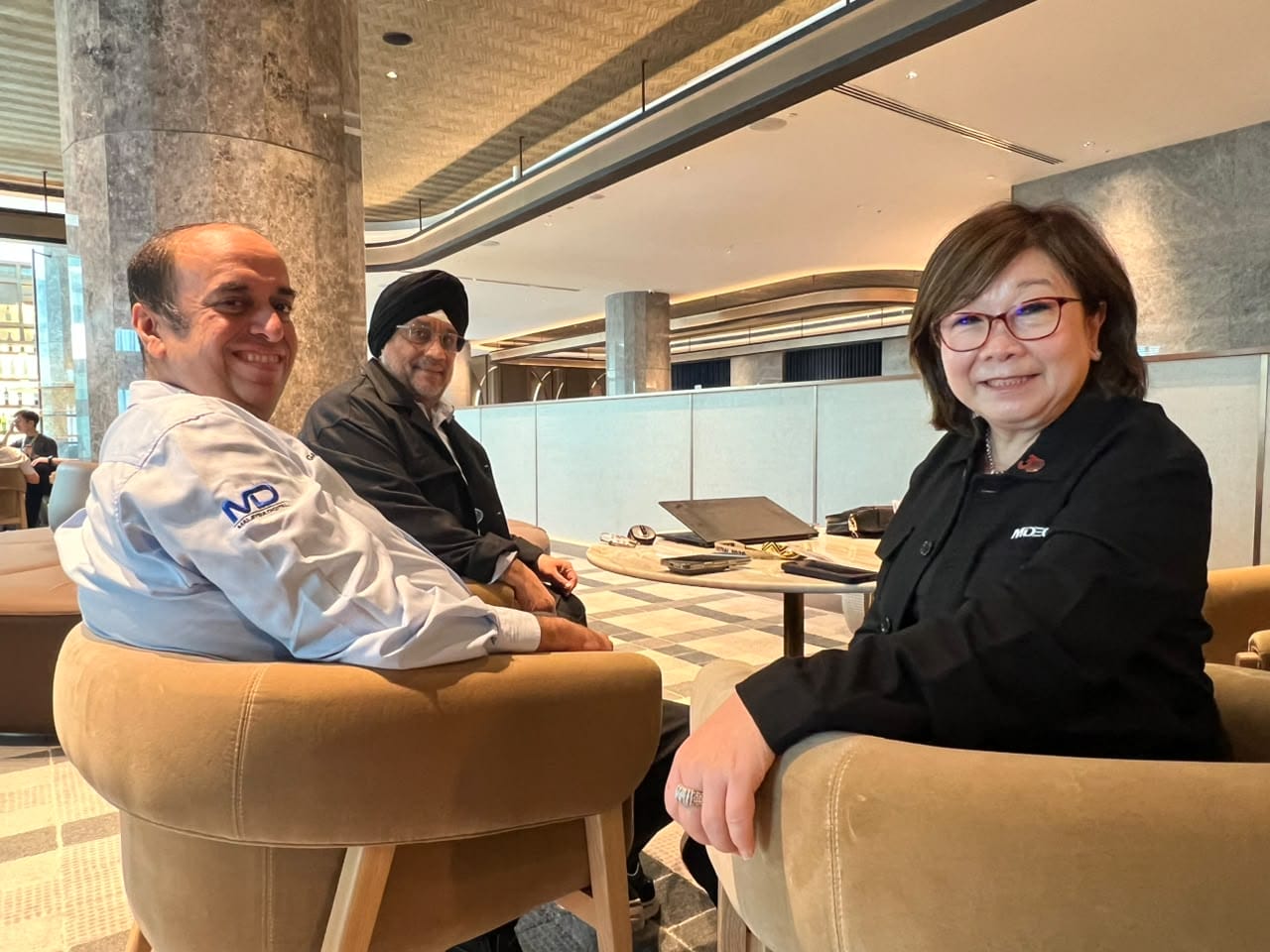
Meanwhile, MDEC director Datuk Harjit Singh Sidhu (centre in pic with chairman Ganesh Kumar Bangah and director Dato’ Dr. Munirah Looi) said that Malaysia’s next step was to turn its creative capabilities into enduring intellectual property and businesses capable of scaling internationally.
“Talent gives us the starting point but talent alone does not build an industry. We must help creators understand ownership, financing, distribution and how value is captured over the life of an IP. When creative ambition is matched by commercial discipline, Malaysian stories can become global assets rather than one-off projects,” said Harjit.


