


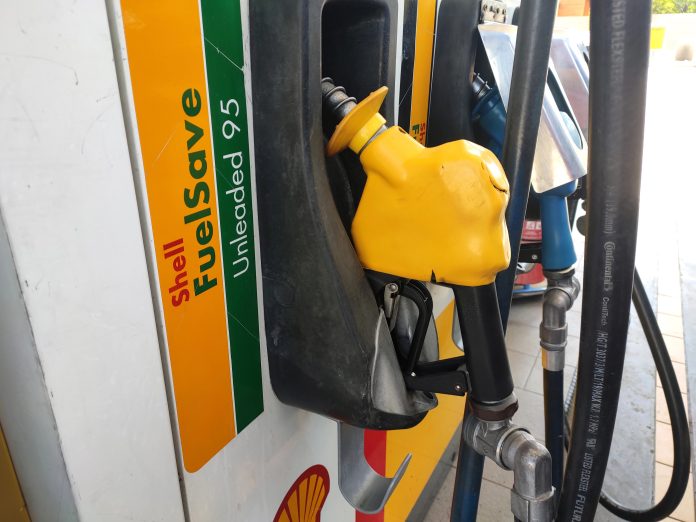
Malaysia faces an estimated RM750 million in additional annual fiscal exposure for every US$1 per barrel increase in crude oil prices, as higher petroleum revenues only partly offset the rising cost of fuel subsidies, according to Kenanga Research.
The research house said Malaysia remained a net exporter of energy but was effectively net short oil from a fiscal perspective, leaving government finances exposed to movements in refined petroleum product prices.
Based on Ministry of Finance (MoF) estimates, every US$1 per barrel increase in oil prices raises federal petroleum revenue by about RM300 million annually, excluding dividends from Petroliam Nasional Bhd (PETRONAS).
Kenanga, however, estimates the subsidy cost beta at around RM1.05 billion a year, meaning the additional petroleum revenue would cover less than one-third of the increase in subsidy costs.
As a result, the research house estimates Malaysia’s net fiscal exposure at approximately RM750 million annually for every US$1 per barrel movement in oil prices, or about RM7.5 billion for a US$10 per barrel increase.
Kenanga said Malaysia’s fiscal exposure to fuel subsidies has a relatively low price threshold.
Its analysis puts the RON95 subsidy strike at around US$44 per barrel of Brent, while the diesel subsidy strike is estimated at about US$48 per barrel, following the RM2.10 BUDI Diesel price.
Neither level is close to Kenanga’s US$80 per barrel average Brent forecast for 2026, suggesting that the fiscal exposure would persist even without another major oil price shock.
However, the implementation of targeted subsidies has already reduced the government’s exposure.
Kenanga estimates that BUDI95 could generate annual savings of between RM2.5 billion and RM4 billion, while BUDI Diesel is expected to deliver another RM2 billion in savings from July.
Combined, the targeted subsidy measures could therefore generate annual savings of around RM4.5 billion to RM6 billion.
The MoF has consistently positioned these savings as additional fiscal space for priorities including education, healthcare and public transport infrastructure.
The scale of Malaysia’s subsidy exposure is significant.
The MoF has estimated combined RON95 and diesel subsidies at around RM3.5 billion a month when Brent crude is near US$90 per barrel, comprising approximately RM2 billion for RON95 and RM1.5 billion for diesel.
For 2026, the ministry expects petroleum product subsidies to reach almost RM40 billion, while Kenanga estimates the figure at between RM38 billion and RM43 billion.
The research house noted that the potential annual subsidy bill is comparable with the entire RM42.8 billion three-year capital expenditure allowance for Tenaga Nasional Bhd under the fourth regulatory period (RP4).
Kenanga said the magnitude of the exposure makes fuel subsidy reform consequential for Malaysia’s fiscal position
Kenanga believes the durable solution lies in rebalancing Malaysia’s energy exposure rather than relying solely on subsidy reforms.
It said potential options differ significantly in terms of capital intensity, where the investment would sit on corporate balance sheets, import content and the time required before they begin contributing to the economy.
The research house said these factors should be assessed alongside the underlying technology when determining Malaysia’s future energy strategy.
The recent oil shock has also exposed a less visible vulnerability in Malaysia’s energy balance, it said.
While Malaysia remains a net energy exporter, its fiscal position is exposed to refined petroleum product prices through subsidies, while its trade position is short crude oil and long on liquefied natural gas (LNG).
Kenanga said the West Asia crisis reinforces the case for reducing Malaysia’s exposure to subsidised fossil fuel consumption while preserving fiscal capacity for energy infrastructure needed to support rising electricity demand.
For fixed income markets, Kenanga said fuel subsidies are increasingly becoming a direct input into fiscal supply.
A sustained increase in unsubsidised pump prices could widen the fiscal deficit before any policy response, making the monthly subsidy trajectory an early indicator of potential pressure on Malaysian Government Securities (MGS) supply.
However, the relationship works both ways, as administered pump prices can suppress headline inflation and help anchor the front end of the yield curve.
Kenanga therefore retained its 10-year MGS forecast at 3.60%.
For the ringgit, the research house said the longer-term benefit from energy rebalancing would come from a stronger external balance and greater economic complexity as energy investment builds domestic capacity.
In the near term, however, the construction of new energy infrastructure would require imports of capital goods, creating an initial drag on the trade balance.
Kenanga maintained its US dollar-ringgit forecast at 3.95 for end-2026.


