


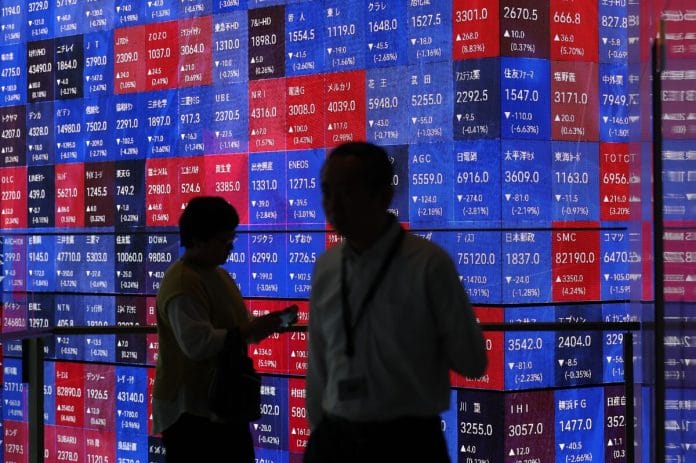
Asian stocks traded unevenly on Tuesday while oil prices edged higher as investors assessed the US’ expanded economic pressure on Iran and awaited Nvidia’s earnings, CNA reported.
The US Treasury said Iran’s digital assets, technology, gold, aviation and shipping sectors would be targeted under expanded sanctions, with Treasury Secretary Scott Bessent warning that countries continuing to trade with Tehran could also face consequences.
The developments come as efforts to reopen the Strait of Hormuz remain stalled, keeping oil markets sensitive to the risk of further disruption. Both major oil benchmarks fell more than 2% on Monday after Bessent’s comments appeared to suggest Washington would favour economic pressure over immediate military escalation, before recovering slightly in Asian trade.
Asian equities remained under pressure, particularly technology stocks. Seoul fell more than 2% at one point as SK hynix and Samsung Electronics retreated, while Hong Kong, Shanghai, Taipei and Manila also traded lower. Tokyo, Sydney, Singapore and Wellington posted gains.
Markets are also bracing for Nvidia’s latest earnings, with investors increasingly concerned over whether the chipmaker can deliver results strong enough to justify elevated expectations surrounding the artificial intelligence boom.
Saxo Markets analyst Charu Chanana said investors were assessing not only whether Nvidia could produce another strong quarter but whether the results would provide enough upside given elevated bond yields.
Investors are also watching the Jackson Hole gathering this week, where Federal Reserve Chair Kevin Warsh is expected to speak on Friday. His remarks could provide clues on the central bank’s monetary policy outlook amid persistent inflation and elevated Treasury yields.
Meanwhile, the Canadian dollar edged higher after retreating against the US dollar on Monday, following President Donald Trump’s threat to double tariffs on Canadian vehicles to 50%. The latest escalation comes after Washington and Ottawa failed to reach a deal to avert new 50% US tariffs on selected Canadian goods.


