


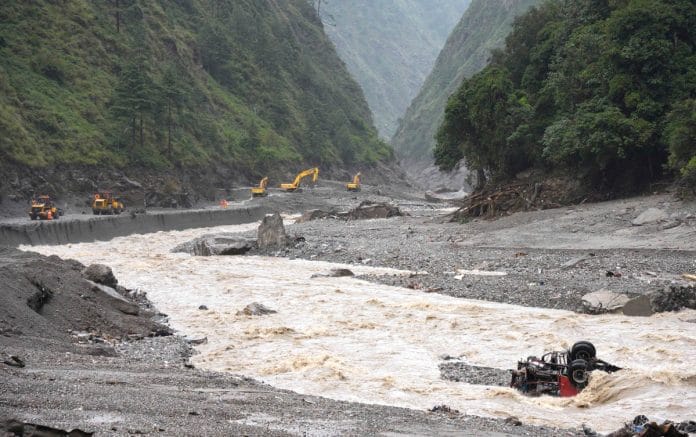
Nepal’s military has intensified search and rescue operations after a devastating flash flood swept through the Himalayan region, but thick mud and people trapped in mountain tunnels are hampering efforts as the number of missing across Nepal and neighbouring Tibet rises above 2,400.
Fourteen rescue helicopters are operating in affected areas including Temure, Syabrubesi and Mailung. However, layers of mud have made it difficult for aircraft to land and take off, army spokesman Raja Ram Basnet said.
More than 4,400 people had been rescued by Friday evening, according to Nepal’s disaster management authority. However, 1,924 people, including 517 foreigners, remained missing in Nepal, while another 558 were reported missing in Tibet.
The disaster has killed at least 579 people in Nepal, with 586 bodies recovered across the wider flood-hit region. Some victims were swept downstream into India, where authorities have recovered seven bodies believed to be linked to the floods.
Rescue efforts have been further complicated by people trapped inside tunnels at the Trishuli 3A hydropower project. Basnet said only four people had been rescued from the tunnels by Friday morning, while more than 100 were believed to remain trapped in the area.
Two helicopters have been deployed to support the operation, but rescuers have struggled to locate the tunnel entrances. Video footage showed two mud-covered workers being pulled alive from a tunnel at a hydropower plant before being carried to a helicopter.
Meanwhile, the threat of further flooding has added to the danger facing emergency teams. Large volumes of ice, mud and water have formed temporary lakes, prompting Nepali police to warn rescuers to move to safer ground after receiving reports that a water dam had burst on the Tibetan side.
In Tibet, Chinese authorities temporarily suspended rescue operations in the worst-hit Gyirong area because of the risk of renewed flooding, before saying the threat had eased. State media later reported that two villagers had been rescued.
The Red Cross estimates that up to 93,000 people may have been affected by the disaster, with food and water supplies running low in some devastated areas.
The flooding has also disrupted pilgrimage routes to Tibet’s Mount Kailash, with scores of devotees among those reported missing.


