


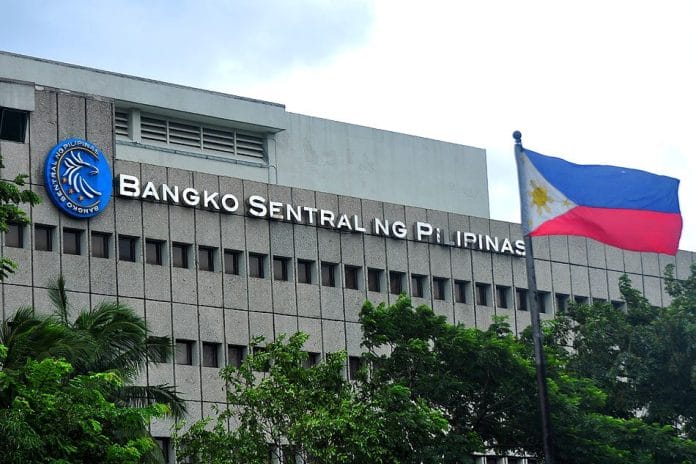
The Philippines Central Bank (BSP) raised its key policy rate by 25 basis points (bps) to 5.00%, a move Kenanga Research said reinforces the central bank’s tightening bias as it prioritises anchoring inflation expectations amid volatile oil prices and potential El Niño-related food pressures.
The decision, which was in line with Kenanga’s and market expectations, saw the BSP’s Monetary Board increase the target reverse repurchase (RRP) rate to 5.00%.
The overnight deposit facility rate and overnight lending facility rate were similarly raised by 25bps to 4.50% and 5.50%, respectively.
Kenanga said the latest decision signals the BSP’s willingness to tighten monetary policy further should inflation risks materialise, with interest rates likely to remain restrictive for an extended period.
The BSP highlighted volatile oil prices and the possibility of a severe El Niño weather event as key upside risks to the inflation outlook, with the latter potentially pushing up agricultural prices and wages.
According to the central bank, these pressures “require pre-emptive monetary action” to prevent inflation expectations from becoming entrenched.
Recent estimates of core inflation have also pointed towards broadening price pressures, strengthening the case for what the BSP described as a measured monetary tightening cycle.
The Monetary Board maintained a clear tightening bias, saying it remained prepared to take monetary policy action as warranted to bring inflation back towards its 3% target.
Kenanga said the Philippines’ inflation outlook remains challenging despite an easing in headline inflation.
The BSP expects inflation to breach the upper end of its 2%-4% target band in both 2026 and 2027, reflecting persistent supply-side pressures and underlying inflation dynamics.
Inflation is expected to move back towards the central bank’s 3% target by 2028.
Kenanga said risks surrounding oil prices, El Niño-driven food inflation and potential wage-related second-round effects mean the BSP could deliver further rate increases if price pressures remain persistent.
“Rates are likely to remain restrictive for an extended period, with room for further hikes if price pressures persist,” the research house said.
On the economy, the BSP acknowledged that Philippine growth slowed during the first half of 2026 but maintained that the country’s underlying economic fundamentals remained intact.
Growth is expected to strengthen in the second half, supported by fiscal measures and improving domestic demand, although higher borrowing costs are likely to exert some pressure on economic activity.
The BSP’s balancing act therefore remains centred on containing inflation without placing excessive pressure on growth, with the latest rate increase indicating that price stability remains the immediate priority.
Kenanga expects the BSP’s tightening stance and relatively high domestic interest rates to provide some support for the Philippine peso, although external developments could limit its appreciation.
The peso had weakened 5.1% year-to-date to 61.9 against the US dollar as of Aug 27.
That compared with a 6.1% depreciation in the Indonesian rupiah and a 4.4% decline in the Thai baht, while the Malaysian ringgit bucked the regional trend with a 0.6% appreciation.
Kenanga maintained its year-end USD/PHP forecast at 58.5, compared with 58.9 at end-2025.
The research house said the BSP’s hawkish tone and continued tightening bias should support the peso in the near term by helping contain imported inflation and preserving the attractiveness of Philippine yields.
However, it cautioned that gains could be constrained by global developments, including geopolitical tensions, the direction of US Federal Reserve monetary policy, US President Donald Trump’s trade policies and swings in global commodity prices.
For the interest-rate outlook, Kenanga expects the BSP to remain focused on anchoring inflation expectations, with the latest move demonstrating its willingness to act pre-emptively rather than wait for inflationary pressures to become more entrenched.
Further tightening therefore remains possible should oil, food and wage pressures intensify, keeping Philippine monetary policy restrictive as the central bank works to steer inflation sustainably back towards its target.


