


By Associate Professor Dr Shahrul Mizan Ismail
Associate Professor, Faculty of Law, Universiti Kebangsaan Malaysia (UKM)
Malaysia has the right to control its borders. A UNHCR card is neither an immigration pass nor a guarantee of citizenship, and refugees or asylum seekers who commit crimes remain subject to Malaysian law.
But sovereignty has limits. Removing someone who has no legal right to remain in Malaysia is one thing; returning that person to a place where they face a genuine risk of killing, torture, enforced disappearance or persecution is another.
This distinction is particularly important as Malaysia prepares to repatriate Myanmar nationals under its Voluntary Repatriation Programme.
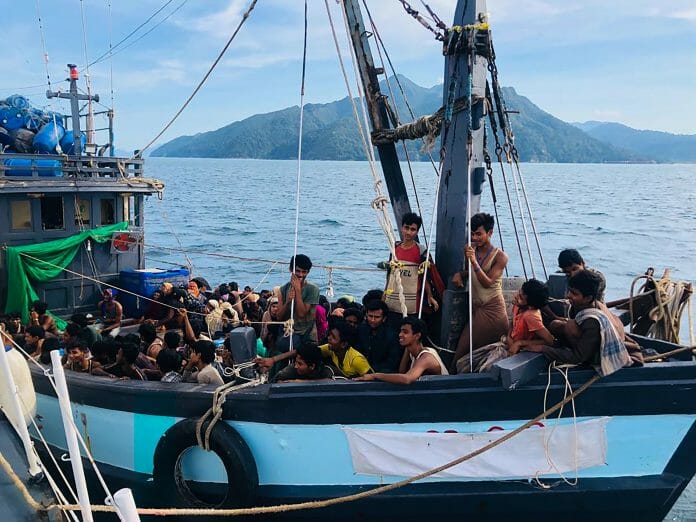
On Aug 27, the Home Ministry said 1,476 Myanmar nationals who were eligible and had agreed to return would be repatriated on Sept 29, forming the first phase of a programme involving 5,000 people.
They should not automatically be described as Rohingya. Myanmar refugees in Malaysia include Rohingya, Chin, Karen and Mon communities, and no official breakdown of the 1,476 individuals has been provided.
Who Is Being Sent Back?
That distinction matters because different individuals may require different levels of protection.
Are they registered refugees, asylum seekers awaiting decisions, immigration detainees, convicted offenders who have completed their sentences, or a combination of these groups? Are children, trafficking victims or stateless people among them?
Without such information, it is difficult to determine whether the exercise constitutes genuinely voluntary and safe repatriation or a mass removal conducted under that label.
Malaysia’s immigration laws give the government broad powers to detain and remove people who do not have a legal right to remain in the country. But broad powers are not the same as unlimited powers.
The Federal Constitution also extends important protections to “persons” rather than citizens alone. While this does not give foreigners an automatic right to remain in Malaysia, detention and removal must still be conducted lawfully and through a process that is not arbitrary.
Not Signing Refugee Convention Does Not End The Debate
Malaysia is not a party to the 1951 Refugee Convention or its 1967 Protocol. Under Malaysia’s dualist legal system, the Convention cannot simply be treated as though it were domestic legislation.
However, the debate cannot end by saying Malaysia is not a signatory.
The principle of non-refoulement — broadly, the prohibition against returning people to places where they face serious threats to their lives or freedom — is widely recognised as part of customary international law.
More fundamentally, sending someone somewhere they face a real risk of torture raises obligations extending beyond an ordinary immigration decision.
This does not mean refugee status provides immunity from criminal law. Malaysia has every right to investigate security threats, prosecute offenders, combat human trafficking and act against illegal activities.
But criminal responsibility must be individual. Anger towards an entire community, a viral video or an isolated criminal case cannot replace evidence against the individual facing punishment or removal.
How Voluntary Is “Voluntary”?
There is also a fundamental question over what constitutes voluntary repatriation.
A signature obtained while someone is in immigration detention may demonstrate consent on paper, but it does not necessarily prove a genuinely free choice. If the practical options are returning home or remaining in detention indefinitely, the voluntary nature of that decision deserves scrutiny.
Individuals facing repatriation should therefore be interviewed privately, provided with interpreters and current information about their destinations, given access to independent advice and allowed sufficient time to make their decisions.
Access for UNHCR or independent observers would also give greater credibility to government assurances that participation is genuinely voluntary. UNHCR has said it is not involved in Malaysia’s current repatriation plan and has raised concerns about the implications of continuing armed conflict for safe returns.
Myanmar Risks Require Individual Assessment
The security situation in Myanmar makes such assessments especially important.
Recent UN reporting has documented serious violations against the Rohingya, including arbitrary arrests, torture, sexual violence, enforced disappearances, forced recruitment and destruction of villages and places of worship.
But this does not mean every Myanmar national can never return.
Risk must be assessed individually. Ethnicity, place of origin, age, gender, detention history, political affiliations and threats from military or armed groups could all produce different conclusions.
Non-refoulement should therefore mean that nobody is returned until the authorities know who the person is, where they are going and what risks await them.
Neither Open Borders Nor Mass Repatriation
The answer is neither unlimited open borders nor indiscriminate mass repatriation.
Malaysia can return people who genuinely choose to go home following credible individual assessments. Serious criminal offenders should be dealt with under Malaysian law, while those who cannot yet return safely could be considered for controlled temporary arrangements, third-country resettlement or limited employment access under Malaysia’s refugee registration framework.
The issue is therefore not whether Malaysia has sovereignty over its borders. It unquestionably does.
The more important test is how that sovereignty is exercised.
A confident state should be capable of determining, based on facts and law, who can return safely, who should face trial, whose protection claim has no basis and who still requires protection.
Sovereignty is not simply the power to send people away. It is knowing who can be removed, on what grounds, to where and through what process — and being prepared to defend that decision under the law.


