


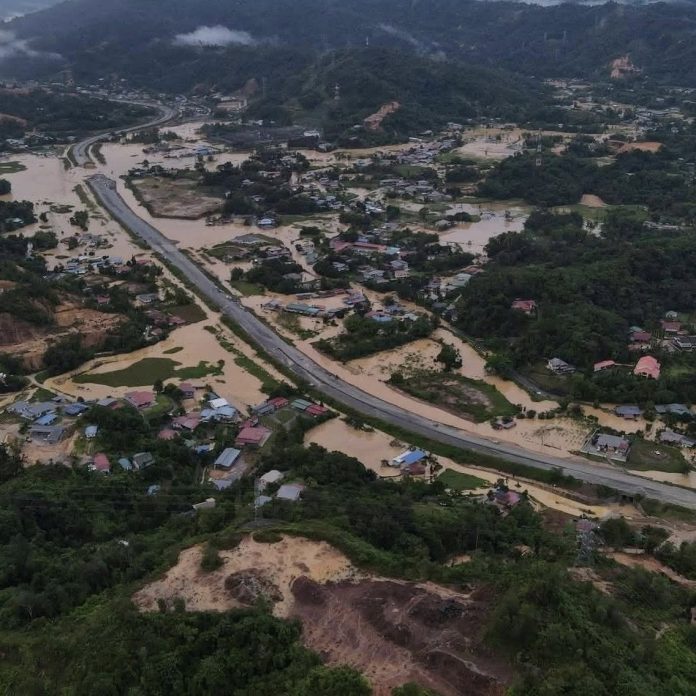
The catastrophic flooding in Nepal has demonstrated, once again, the devastating human and economic toll of climate change. Entire villages swept away, roads and bridges gone, harvests destroyed overnight. The immediate priority must be to save lives and support affected communities. But the devastation is also a warning for Malaysia: physical hazards can quickly morph into macroeconomic shocks, and no country in the region is immune. This year, the World Meteorological Organization expects a strong El Niño to intensify from August through October, raising the likelihood of above-normal temperatures and shifting rainfall patterns. Malaysia’s northeast monsoon already exposes the east coast and low-lying river basins to severe flooding year after year, with NADMA estimating that 4.8 million people nationwide live in flood-prone areas.
The economic exposure is just as striking. According to Bank Negara Malaysia, roughly two-thirds of estimated losses from the 2021 floods, about RM4 billion, were not covered by insurance. Nationwide, close to 74% of Malaysian homeowners carry no flood insurance at all, and only around 43% of households hold any fire and home policy, according to the General Insurance Association of Malaysia. That gap means households, businesses, and ultimately the government absorb most of the cost when the water rises.
The scale of the challenge is staggering. The United Nations Office for Disaster Risk Reduction estimates direct global disaster losses averaged $180-200 billion annually between 2001 and 2020; counting cascading effects, the total exceeds $2.3 trillion. Malaysia’s own flood losses swing sharply: the December 2021-January 2022 floods, the worst in decades, cost an estimated RM6.1 billion, equivalent to 0.40% of GDP, before easing to RM622 million (0.03% of GDP) in 2022 and RM755 million (0.04%) in 2023, then climbing to RM933 million (0.05%) in 2024.
If roads, ports, irrigation systems, schools, and hospitals cannot be repaired in time, disruptions become a permanent drag on productive capacity, forcing the government to divert development spending or borrow at short notice. A financing gap can easily become a long-lasting slump.
Malaysia does not need to wait for the next flood to start planning. Prearranged financing cannot cover the full cost of a major disaster, nor should insurance be expected to, but its value lies in providing reliable funding during the critical early stage of a crisis. The right approach is to layer risks: budget reserves and disaster funds managed by NADMA can cover frequent, small losses; contingent credit suits medium-size shocks; insurance and catastrophe bonds should be reserved for less frequent but fiscally severe events. Closing the insurance gap and building these buffers now, rather than after the next monsoon, is what keeps a flood from turning into a fiscal crisis.
Nepal’s tragedy is a stark illustration of what happens when a country is caught unprepared. With disaster-risk finance in place, Malaysia will be better placed to restart its economy, preserve fiscal space, and protect the households and businesses that bear the brunt when the rains come. That is what real resilience looks like in a warming world
Ahmad Nizam Che Kasim, AGILE Research Group, Faculty of Business & Communication, Universiti Malaysia Perlis


