


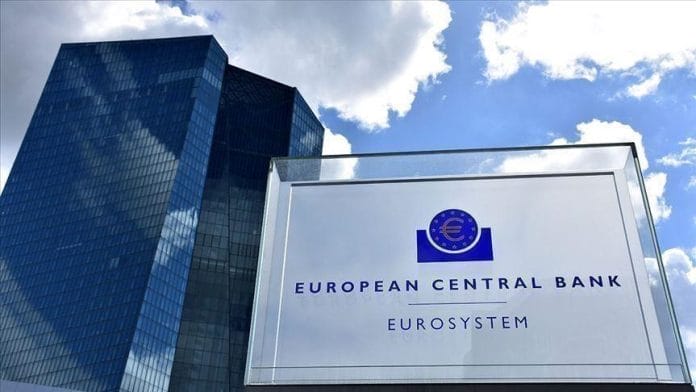
The European Central Bank is expected to raise interest rates on Thursday for the second time this year as the war involving Iran sends oil prices above US$100 a barrel and revives concerns over inflation in the euro zone.
Economists expect the ECB to raise its policy rate to 2.50% from 2.25% and signal that further tightening remains possible if inflation fails to ease.
“ A September hike looks all but locked in,” said Alessia Berardi, head of global macroeconomics at the Amundi Investment Institute. “Inflation remains elevated and should stay sticky over the next few months before easing toward the second half of next year.”
The renewed inflation threat comes after attacks by the United States and Iran on military, shipping and energy assets since the end of August pushed oil prices above US$100 a barrel, raising concerns over another wave of price increases across the fuel-importing euro zone.
Despite the energy shock, the 21-country euro zone economy has remained relatively resilient, with business activity holding up better than expected and bank lending accelerating in July.
“We expect President Lagarde to maintain a hawkish wait-and-see stance, leaving the door open to further tightening,” said Martin Wolburg, senior economist at Generali Investments.
Financial markets are pricing in another rate hike this year followed by one or two more moves next year, although economists increasingly expect Thursday’s increase to be the last for now.
The ECB may also raise its growth forecasts for this year and possibly 2027, reflecting the economy’s resilience. However, the latest surge in energy prices could delay the return of inflation to the central bank’s 2% target.
Euro zone inflation is already above 3%, although core inflation eased to 2.4% last month. Wage growth has also moderated and consumers have lowered their inflation expectations.
“Unlike the 2022 energy shock, this year’s energy price shock is unlikely to spark a wage-price spiral, as demand conditions are not as conducive to higher inflation,” said Andrew Kenningham at Capital Economics.
However, the latest increase in gas prices adds another concern for policymakers, with Barclays warning that gas price shocks tend to feed through more slowly than oil shocks but can have larger and more persistent effects on non-energy inflation.
ECB President Christine Lagarde is also expected to face questions about her future at the central bank during her post-decision press conference. Her current term is scheduled to run until October 31, 2027.
Reuters


