


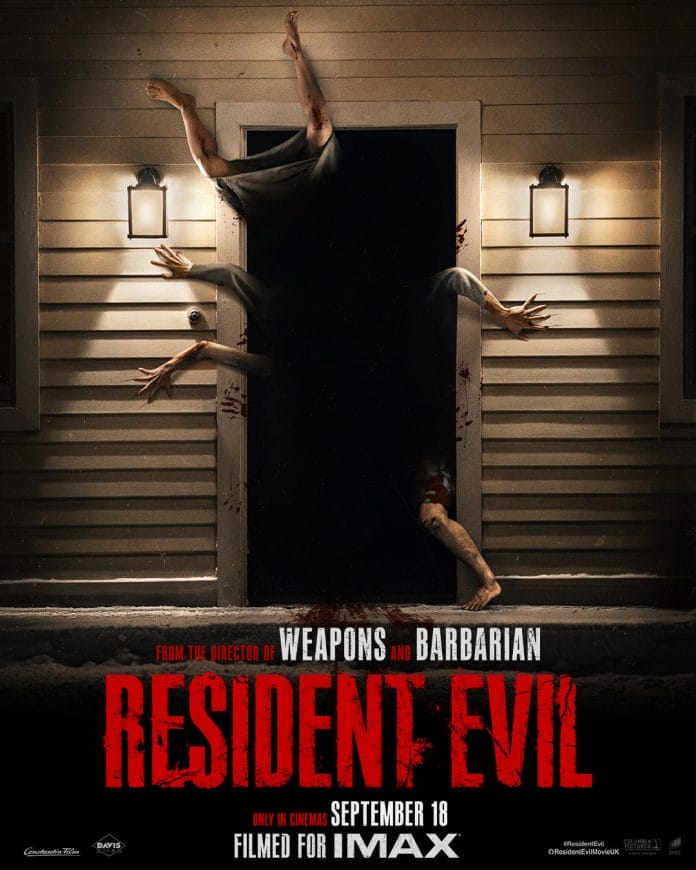
Short answer? I had a lot of fun.
I grew up with Resident Evil. My first survival horror game was the classic Resident Evil 2, somehow running on a tiny, painfully underpowered laptop. Years later, I have played pretty much every major game from Resident Evil 1 through 8. I haven’t played Requiem yet and the spin-offs are another story, but yeah, Raccoon City? I’m familiar with that place.
So naturally, I was very curious about Zach Cregger’s Resident Evil.
There was plenty of scepticism before release, with some people convinced this was just another generic horror movie borrowing the Resident Evil name.
After watching it, I think those people might be pleasantly surprised.

A Resident Evil Story Without The Usual Heroes
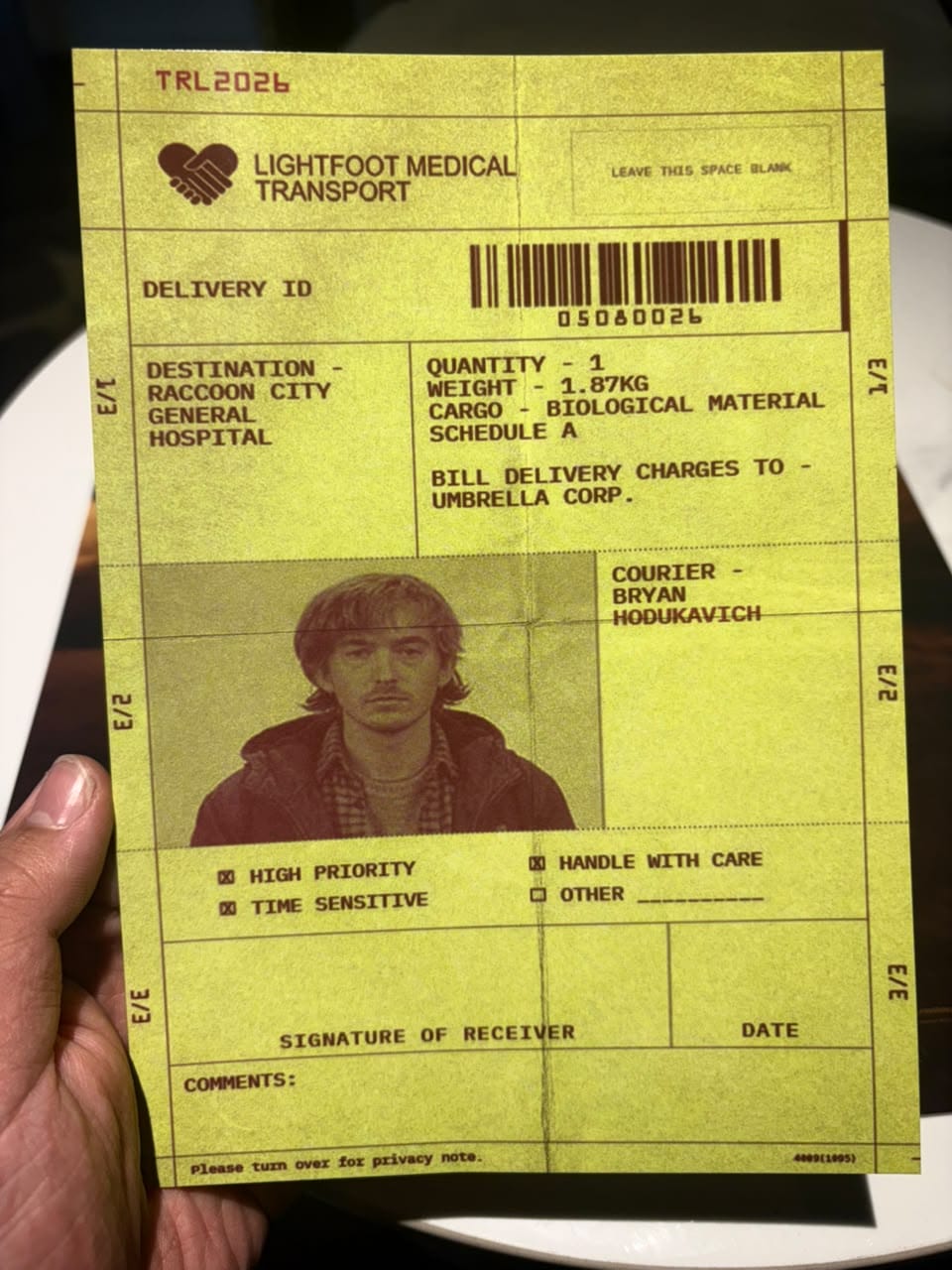
The plot is simple. Bryan, a medical courier, is making a delivery to Raccoon City General Hospital when an outbreak forces him to fight for survival.
That’s basically it.
What if you were just some random guy doing a nine-to-five job and suddenly found yourself trapped in a Resident Evil game?

Yep, that’s Bryan.
And weirdly, his story reminded me of those random NPCs you encounter in the games. You rummage through a room looking for bullets or collectables, find a document and read about some poor person whose life was destroyed by the outbreak. You finish reading and think, “Damn, I’m sorry this guy had to go through this.”
Bryan is that NPC story.
Except you’re actually following him.
He’s not Leon. He’s not Chris. He’s not some highly trained agent. He’s just a guy trying to survive, and I really liked that approach.

Cregger Gets What Resident Evil Feels Like
This is probably my favourite thing about the movie.
Cregger doesn’t simply adapt one of the games. He captures what it feels like to play one.
The exploration, rummaging through drawers, things lurking around corners, environmental clues, weapons placed in suspiciously familiar locations, locked doors, matching symbols and keys, first-person sequences and POV shots all feel deliberate.
Even the shotgun sitting in one room while the bullets are somewhere else made me think, “Oh man, this is so Resident Evil.”
And then there’s the question: why are there so many padlocks?
If you’ve played the games, you know.
There are plenty of Easter eggs and references, but thankfully the movie never feels desperate to point at them and shout, “HEY, REMEMBER THIS?”
The references work because they’re part of the world.
That’s the difference.

No Leon, No Claire, No Problem
I also appreciate that Cregger doesn’t rely on Leon, Claire, Jill or Chris to make this feel like Resident Evil.
The Milla Jovovich movies had their own universe and stylisation. The television series took another approach (badly), while Welcome to Raccoon City tried to pack in so many recognisable elements that the references sometimes became the point.
Cregger does something much simpler.
He makes a good horror movie first.
Strip away the name Resident Evil and all the expectations that come with it, and you’re left with a genuinely fantastic horror flick.
Ironically, the Resident Evil name might be the worst thing about it because it comes with decades of expectations. People want the characters, monsters and locations they already know.
But the games themselves have reinvented the formula multiple times. Resident Evil 4 changed the series dramatically. Resident Evil 7 went first-person and leaned heavily into survival horror.
So why can’t the movie do the same?
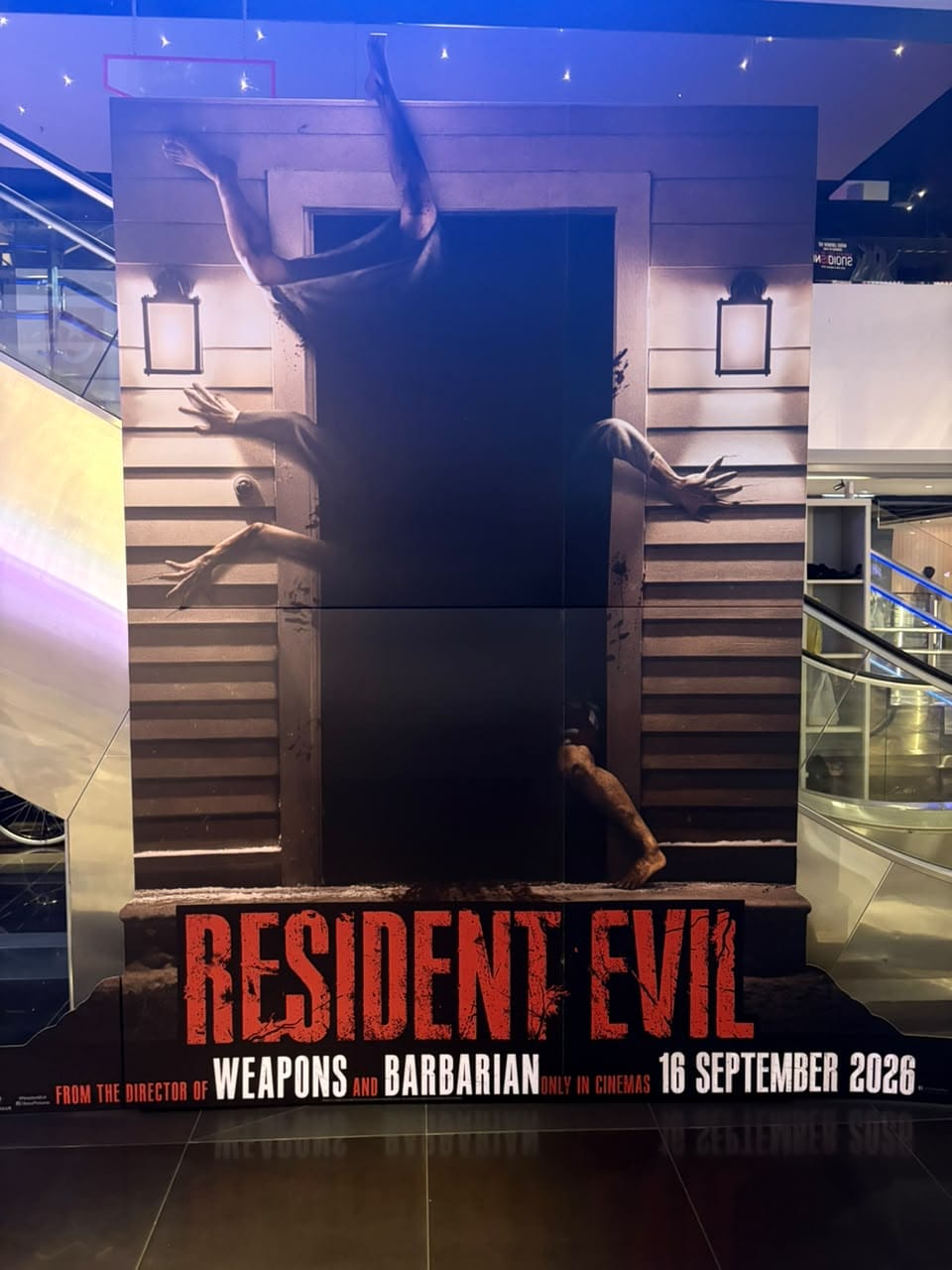
The Monsters And Horror Work
The creature designs are grotesque, weird and occasionally pretty damn cool.
I especially liked the BOW pursuing Bryan throughout the movie because it keeps mutating. Rather than simply dropping a Tyrant or Nemesis into the story, the movie translates the stalker mechanic into something that belongs to its own story.
The infection also feels like a mixture of different ideas from across the games rather than simply being another T-virus story.
The movie also has quite a bit of comedy, particularly from Austin Abrams, and surprisingly, it worked for me. There are moments where something objectively horrible is happening but his reaction makes it funny without completely killing the horror.
The movie also doesn’t rely heavily on jump scares. I counted around three that really got me. Most of the suspense comes from waiting for something to go horribly wrong.
That’s much more effective for me.
IMAX Is Absolutely Worth It
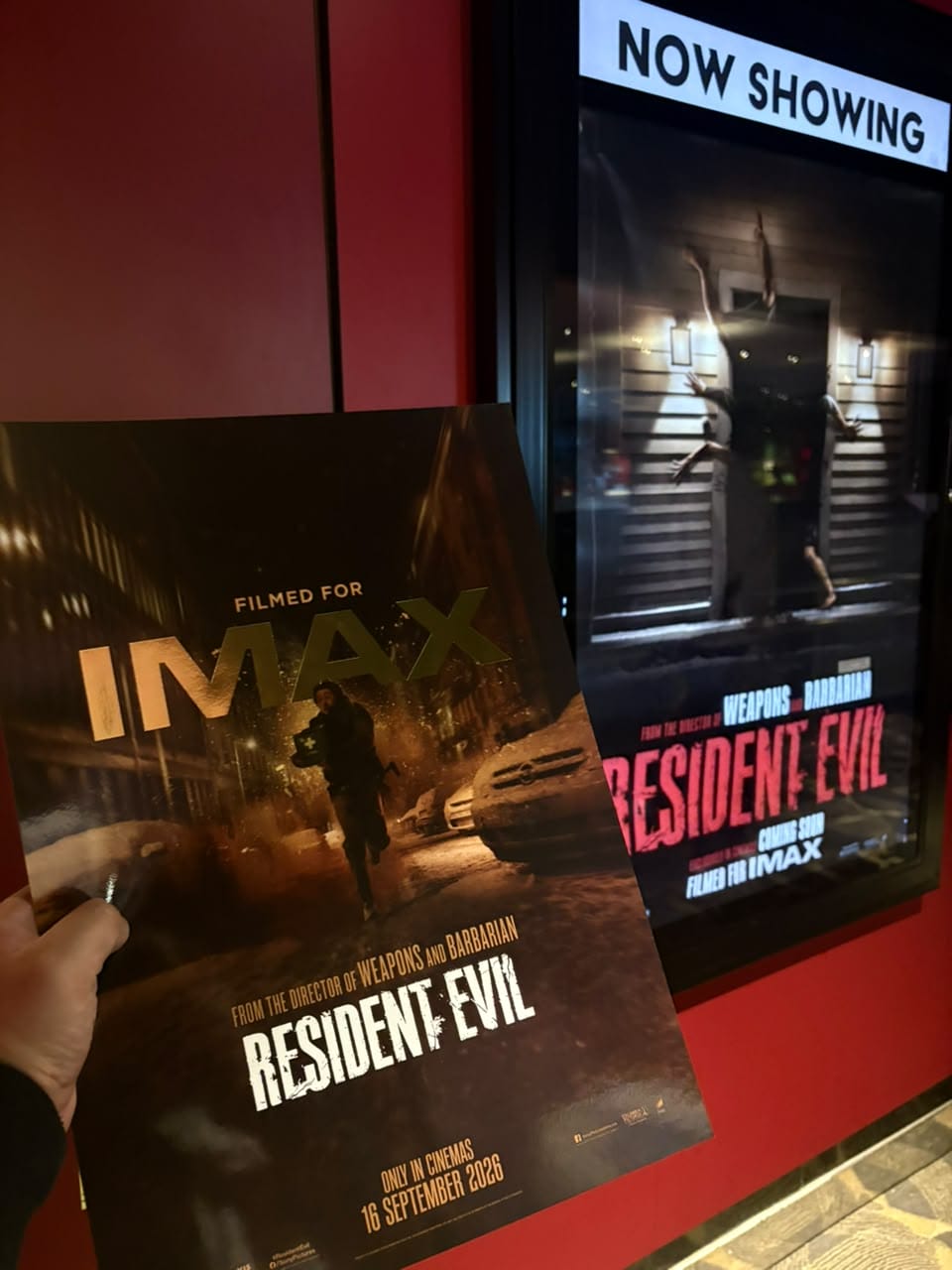
I watched Resident Evil in IMAX and I’d genuinely recommend seeing this on the biggest screen you can find.
The visuals benefit from the scale, but the sound is what really got me.
The suspenseful moments hit differently when the sound is surrounding you. There were several scenes where the audio alone had me waiting for something to appear, and the cinema sound made the tension feel hectic.
Also, I walked out with the poster and an A5 postcard, so that’s a nice little bonus.

Final Verdict
Immediately after walking out, I thought 7/10 as a Resident Evil movie.
As a standalone horror movie? 9/10.
Somewhere between those two is my final 8/10.
The story is simple and I do wonder how memorable the actual plot will be months from now. But the experience itself is fantastic.
What Cregger has done is take the DNA of Resident Evil rather than simply copying its homework.
You don’t need Leon. You don’t need Claire. You don’t need to recreate Resident Evil 2.
You need exploration, suspense, grotesque monsters, ridiculous locks, questionable inventory logic and the feeling that something horrible is waiting around the next corner.
Cregger understands that.
And that’s why, as someone who grew up playing these games, I found this to be a surprisingly respectful adaptation.
Cregger’s Resident Evil gets the games right by not trying to recreate them.
Rating: 8/10
And oh, there’s no post-credits scene.


