


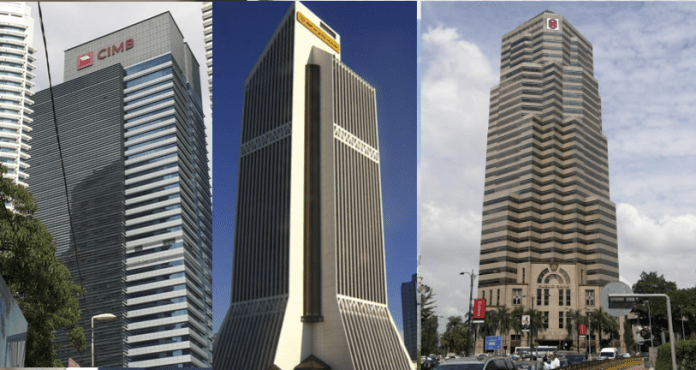
The domestic banking sector continues to benefit from strong business loan demand, rising fee income and potential dividend payouts, but prolonged cost-of-living pressures and more expensive funding could increasingly weigh on growth and asset quality, according to MBSB Research.
In its Sept 18 sector report, the research house maintained its POSITIVE stance on banking, saying current earnings drivers continue to outweigh the risks. However, it cautioned that the balance could shift if elevated energy and living costs persist into 2027.
MBSB Research identified business lending, wealth management and dividend distributions as key supports for banks, alongside better-than-expected operating cost control during the first half of 2026.
It said loan demand from businesses had exceeded expectations, particularly for construction, non-residential property and projects linked to data centres. Working capital financing has also begun recovering.
However, the research house questioned whether the current pace of business loan growth could be sustained beyond 2027, particularly if major construction activity moderates.
Household Loan Stress And Deposit Competition In Focus
While corporate lending remains strong, MBSB Research said household loan demand has weakened, with banks becoming more selective in extending credit.
Unsecured personal financing and residential mortgages are the main areas showing signs of asset quality deterioration, particularly among smaller banks.
The research house identified Affin Bank and Bank Islam as institutions whose household loan portfolios warrant closer monitoring, based on its assessment of recent results and management guidance.
It also cautioned that relatively low loan loss coverage at certain banks could limit their ability to absorb further deterioration without additional provisions.
Meanwhile, higher bond yields are making wholesale funding less attractive, prompting banks to compete more aggressively for fixed deposits.
MBSB Research expects this competition to raise funding costs and continue putting pressure on net interest margins (NIMs), even as business loans generate higher yields.
Possible OPR Increase Could Offer Some Margin Relief
The research house sees a possibility of Bank Negara Malaysia raising the Overnight Policy Rate (OPR) by 25 basis points in 2027 from its current 2.75%, although it does not regard an increase as imminent.
Such a move could improve lending margins as banks reprice loans, but the benefit would vary across institutions and could be offset by higher deposit costs.
MBSB Research’s scenario analysis suggests a 25-basis-point OPR increase could lift full-year NIMs by approximately two to five basis points across the banks under its coverage.
It also warned that higher global yields could affect banks’ investment portfolios and non-interest income.
Wealth management remains another important earnings contributor, supported by regional investment flows and stronger demand for financial products. However, MBSB Research expects growth in this business to moderate as the initial surge in new customers and funds becomes harder to replicate.
Dividends Remain An Important Sector Catalyst
Dividend payouts are expected to remain a key area of investor interest towards the end of 2026 and into next year.
MBSB Research highlighted CIMB Group’s RM2 billion special dividend programme over three years and Public Bank’s RM3.5 billion special dividend programme over the same period.
It is also monitoring RHB Bank’s capital and dividend plans, while Hong Leong Bank has raised its dividend payout ratio to 50% and indicated plans for further increases.
The research house noted that banks have maintained tighter operating cost control despite continued technology investment, although wage negotiations and renewed competition for deposits could add to expenses in the second half.
MBSB Research named Hong Leong Bank and Public Bank as its preferred banking stocks, maintaining BUY calls with target prices of RM29.80 and RM5.53 respectively.
It cited Hong Leong Bank’s asset quality, provisioning and regional presence, while highlighting Public Bank’s consistent earnings, asset quality and dividend prospects.
Looking ahead, the research house said the principal risks to its banking outlook are weaker economic growth, intensifying deposit competition and further deterioration in borrowers’ repayment capacity.
It cautioned that a prolonged Middle East conflict beyond the first quarter of 2027 could prompt it to reassess its POSITIVE sector stance, particularly if sustained cost pressures further weaken household finances and retail lending demand.


