


By Dr Ahmad Zaharuddin Sani
Malaysia’s political chessboard changed again today.
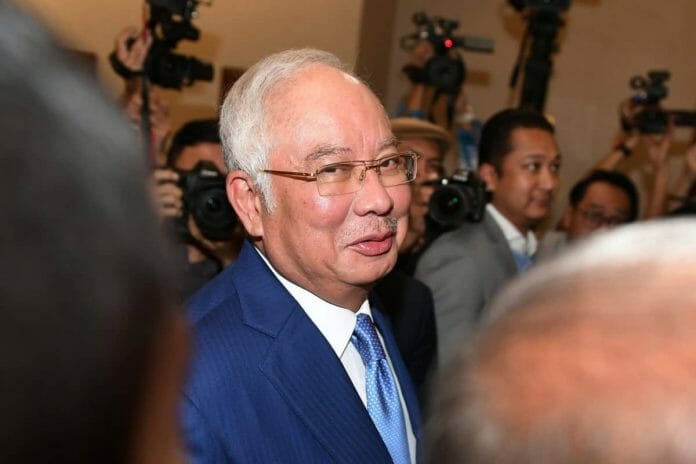
Former prime minister Datuk Seri Najib Razak has been granted a conditional pardon allowing him to serve the remainder of his SRC International sentence under house arrest until Aug 23, 2028, subject to a RM50 million fine. The decision does not erase his other ongoing legal proceedings, including his appeal in the 1MDB case.
Politically, however, the significance goes beyond Najib’s personal circumstances.
It raises a much bigger question: Does Prime Minister Datuk Seri Anwar Ibrahim now have more reason to call 16th General Election (GE16) early or more reason to wait?
My reading is that Najib’s return to the political conversation makes the timing question more complicated, not simpler.
Najib’s Return Complicates Anwar’s GE16 Calculus
An early election gives Anwar one obvious advantage: Control over timing.
Every government eventually reaches the point where it must ask whether another month in office adds political value or merely creates another opportunity for a problem to emerge.
Anwar currently has some numbers to work with. A Merdeka Centre survey conducted from March 12 to April 9 found his approval rating at 52%, while federal government satisfaction stood at 50%. But the same survey found that 73% of voters identified economic issues as the country’s biggest problem, with cost of living, the economy and fuel prices dominating concerns.
That tells us something important.
A government does not go to an election simply because its approval rating is respectable. It goes when its political strengths are greater than the risks created by waiting.
And there is another number worth watching.
Strong GDP, But Cost Of Living Remains The Real Test
Malaysia’s economy expanded 6% year-on-year in the second quarter of 2026, according to the Department of Statistics Malaysia.
That gives the government an economic story to tell.
But GDP growth is not the same thing as political satisfaction.
A headline saying the economy grew by 6% does not necessarily resonate with a family worrying about groceries, housing, education or monthly commitments.
Macroeconomic growth is a statistic. Cost of living is an experience. Elections are often decided by the gap between the two.
The Political Risks Of Waiting
This is where waiting becomes dangerous.
The longer Anwar waits, the more time the Opposition has to consolidate, the more internal tensions can surface within the current government administration, and the more economic or governance controversies can accumulate.
But calling an early election carries its own danger.
The government must explain why it is asking Malaysians to vote earlier. If that explanation is unconvincing, the election itself can become a referendum on political timing rather than governance.
Then comes Najib.
Najib Re-Energises UMNO’s Grassroots
For UMNO, today’s decision is politically significant. Its president Datuk Seri Dr Ahmad Zahid Hamidi described the development as a major relief for Najib, his family and the wider UMNO family, while stressing respect for the institution of the monarchy, the Constitution and the rule of law.
That sentiment should not be underestimated.
Najib remains an emotionally powerful figure among sections of UMNO’s grassroots. His return to house arrest could therefore strengthen morale within parts of the party and revive questions about whether UMNO should continue its present political arrangement or pursue a more distinct identity.
But there is a trap here.
But UMNO Sentiment May Not Translate Into Wider Votes
Emotional strength inside UMNO is not automatically electoral strength outside UMNO.
That distinction could become one of the defining questions of GE16.
For some Malay and UMNO voters, the development may reinforce perceptions that Najib was treated too harshly or that his case has become symbolic of political injustice. For others, the same development may reinforce concerns about accountability and institutional integrity.
There is no single “Malay vote” that can be switched on by one political event.
And Najib’s pardon does not automatically transfer votes from one coalition to another.
PH And PN Face Different Political Tests
For Pakatan Harapan (PH), the issue creates its own political dilemma. Anwar has said the government’s fight against corruption and abuse of power remains unchanged, and that ongoing cases involving Najib will continue according to law.
That position will now be tested not by rhetoric, but by consistency.
For Perikatan Nasional, meanwhile, the development potentially creates another line of attack against the unity government: that the political establishment remains interconnected and that the old political order has not disappeared.
But again, political narratives do not vote by themselves.
The voter ultimately asks a simpler question: “What has changed in my life?”
That is why the coming months matter more than today’s headlines.
Five Signals To Watch Before GE16
Watch five things: The cost of living, real household incomes, the durability of economic growth, the future of the PH-Barisan Nasional arrangement and whether UMNO chooses to make Najib central to its political identity or treats him as one part of a much broader campaign narrative.
The biggest mistake would be to assume that Najib’s house arrest automatically changes the electoral equation.
It changes the conversation.
It changes UMNO’s internal psychology.
It potentially changes coalition calculations.
But whether it changes voting behaviour is another question entirely.
Timing May Matter More Than Today’s Advantage
Ultimately, Anwar’s biggest political decision may not be whether to call GE16 early.
It may be whether to call it before the political weather changes again.
Because in Malaysian politics, the most dangerous assumption is that today’s advantage will still exist tomorrow.
Disclaimer: The views and opinions expressed in this article are solely those of the writer, in his personal capacity, and do not reflect the views or positions of BusinessToday and the editorial team.


