


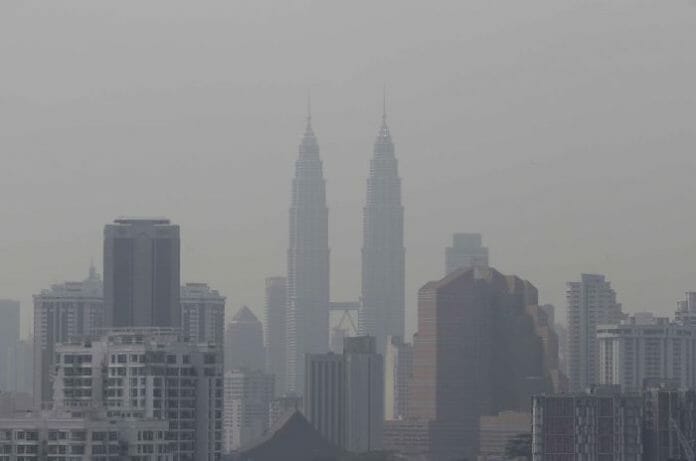
The worsening transboundary haze could have broader economic consequences beyond public health, potentially disrupting aviation, tourism, renewable energy generation and agricultural production if dry conditions persist into the final quarter of 2026, according to Hong Leong Investment Bank (HLIB) Research.
In its Sept 18 sustainability report, the research house warned that the haze season could extend into late October or early November if a strong El Niño prolongs dry weather and allows forest and peatland fires to persist.
HLIB cited a projection of more than 90% probability of a very strong or “Super El Niño” between October and December, identifying the duration of the dry spell as a key factor determining the economic impact.
The research house said the Sept 4 haze emergency in Serian, Sarawak, where the Air Pollutant Index reached 519, demonstrated how quickly deteriorating air quality could disrupt communities and economic activity.
Healthcare Costs And Productivity Losses
HLIB identified rising healthcare demand and lost productivity as two of the most immediate economic consequences of prolonged haze.
Citing Ministry of Health data for Aug 16–22, the research house said asthma cases across heavily affected states, including Sarawak, Kedah and Perak, increased 259% from 61 to 219, while upper respiratory tract infection cases rose 124% from 1,637 to 3,674.
Businesses could also face higher absenteeism, medical leave and disruption to outdoor operations, particularly in construction and logistics.
HLIB noted that respiratory diseases accounted for 14.1% of total hospitalisations in 2024, highlighting the existing burden on Malaysia’s healthcare system.
It also cited research estimating that the 2013 haze episode generated RM410.6 million in illness-related costs, illustrating the potential economic consequences of severe air pollution. That figure is a historical estimate, not a forecast for the current episode.
Aviation, Tourism And Solar Energy Face Disruption
HLIB warned that worsening visibility could force airlines to delay, cancel or divert flights, increasing operating costs and disrupting travel schedules.
Tourism could also be affected by weaker traveller sentiment, cancelled bookings and temporary closures of outdoor attractions.
The research house identified AirAsia X Bhd as having exposure to potential disruptions across its Malaysia–Indonesia network, particularly if the haze becomes more widespread.
Meanwhile, renewable energy operators face a different challenge as suspended particles reduce the sunlight reaching solar panels.
HLIB cited a study of Malaysian solar installations during the 2015 haze episode, which recorded a 17.8% decline in photovoltaic output.
However, it expects the near-term earnings effect on Solarvest Holdings Bhd and Samaiden Group Bhd to remain limited because electricity sales currently contribute a relatively small proportion of their group revenue.
The financial impact would become more significant if severe haze persisted for a prolonged period.
Agriculture And Water Supply Add To Economic Risks
Beyond the immediate haze-related disruptions, HLIB said prolonged dry weather could constrain agricultural production by reducing crop yields and increasing pressure on water supplies.
Lower reservoir levels could affect manufacturing, agriculture and household consumption, while reduced food production could add to inflationary pressures.
The research house forecasts Malaysia’s headline inflation at 2.0% in 2026, with upside risks in 2027 should climate-related supply disruptions persist.
It projects economic growth of 5.3% this year but cautioned that prolonged haze and El Niño conditions could weigh on growth momentum heading into 2027.
Limited Earnings Upside For Healthcare Providers
Within the healthcare sector, HLIB highlighted KPJ Healthcare Bhd’s exposure to Sarawak through its specialist hospitals in Kuching, Sibu and Miri.
The research house maintained its BUY call and RM3.79 target price on KPJ, noting that higher respiratory-related patient volumes could provide some additional demand for private healthcare services.
It also identified CUCKOO International (MAL) Bhd as a potential beneficiary of stronger demand for indoor air purifiers.
Nevertheless, HLIB cautioned that haze-related medical cases generally generate relatively modest revenue, making a major earnings uplift for healthcare providers unlikely.
HLIB concluded that the economic consequences of haze depend heavily on its duration and geographic spread, with a short-lived episode likely to have manageable earnings effects but prolonged pollution potentially creating wider costs for households, businesses and the healthcare system.


