


Malaysia’s headline inflation rose marginally to 1.9 percent year-on-year in August 2026, up from 1.8 percent in July, slightly exceeding consensus market expectations.
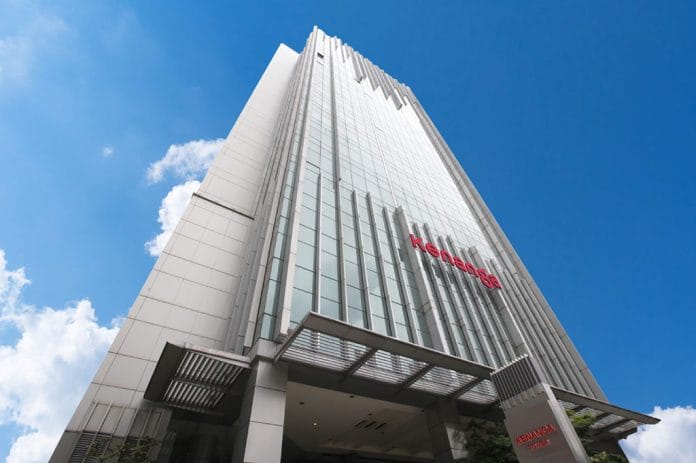
According to an economic report by Kenanga Investment Bank, consumer prices advanced 0.3 percent month-on-month after two consecutive months of flat growth, driven by price increases across 10 of the 13 main CPI categories. Core inflation eased slightly to 1.7 percent year-on-year from 1.8 percent in July, primarily due to high base effects from the prior year.
The month-on-month pickup was led by key non-discretionary sectors:
- Transport: Rebounded 0.6 percent month-on-month following a surge in airfares, with domestic air travel costs jumping 15.0 percent. Unsubsidised retail fuel costs also ticked up, with diesel and petrol prices rising 0.9 percent and 0.8 percent month-on-month respectively amid firmer global crude benchmark prices.
- Housing, Water, Electricity, Gas & Other Fuels: Accelerated to 2.1 percent year-on-year—the highest level since February 2025. Electricity and gas prices rose 3.3 percent month-on-month as the fuel surcharge for Peninsular Malaysian households consuming over 600 kWh increased to 3.80 sen/kWh from 3.59 sen/kWh in July. House rentals and maintenance fees grew by 0.4 percent and 0.5 percent respectively.
- Food & Beverages: Advanced to 1.9 percent year-on-year, driven by food at home costs. Vegetable prices jumped 2.8 percent month-on-month, led by a 38.2 percent spike in tomato prices, while poultry prices expanded 8.0 percent year-on-year.
Resurgent energy costs stemming from ongoing Middle East conflicts and disruptions along the Strait of Hormuz have pushed crude prices back above USD100 per barrel in September, prompting major central banks to resume rate hikes.
Kenanga revised its full-year 2026 inflation projection for Malaysia downward to 1.9 percent (from 2.1 percent), noting that targeted government subsidies continue to shield retail consumers from the full brunt of global commodity spikes.
While RON95 fuel prices remain capped at RM1.99 per liter under the BUDI95 framework, energy cost pass-through is primarily reaching consumers via market-driven channels such as airfares and freight-sensitive groceries. Additionally, the expansion of electricity bill relief—raising the consumption protection threshold for domestic users from 600 kWh to 800 kWh through December 2026—will limit fuel surcharge pass-through and trim headline inflation in the fourth quarter.
Despite policy rate increases by the Federal Reserve and the European Central Bank, Kenanga expects Bank Negara Malaysia (BNM) to maintain the Overnight Policy Rate (OPR) at 2.75 percent through 2026. With local inflation anchored below 2.0 percent, real interest rates remain positive, giving the central bank headroom to look through supply-driven price shocks unless persistent secondary inflationary pressures emerge.


