


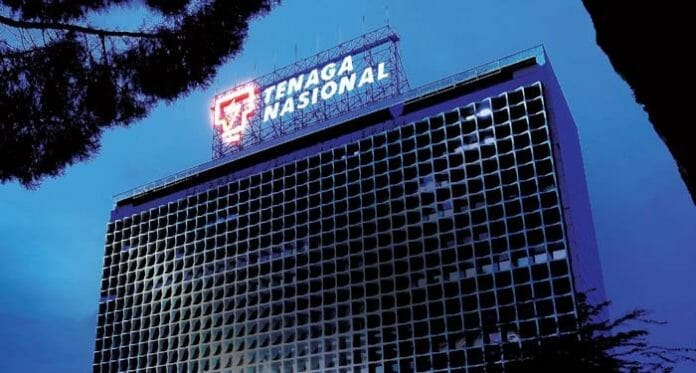
Equity analysts have taken a cautious stance on Tenaga Nasional Bhd (TENAGA) after the national utility confirmed it will bear an estimated RM120 million to RM150 million cost impact stemming from the government’s expanded domestic electricity tariff fuel surcharge exemption.
According to a research report by Kenanga Investment Bank, while the short-term financial hit is manageable, the decision to absorb fuel surcharge costs establishes an uncomfortable precedent that threatens Malaysia’s established regulatory framework.
The absorption comes after the Malaysian government raised the subsidised electricity threshold for residential consumers from 600 kWh to 800 kWh per month through the end of FY26.
Under the revised temporary measures, eligible domestic households consuming up to 800 kWh per month will be exempted from the Automatic Fuel Adjustment (AFA), the RM10 monthly retail charge, and the Sales and Service Tax (SST).
TENAGA highlighted that electricity usage has climbed across the country, with 20 percent of residential customers exceeding the 600 kWh threshold in July—subjecting them to additional charges—compared to just 13 percent in January.
Kenanga expressed concern over the regulatory implications of the move, noting that TENAGA has historically been insulated from fuel price volatility under the Incentive-Based Regulation (IBR) framework and its fuel-cost pass-through mechanism.
Kenanga has incorporated the RM150 million cost hit into its 4QFY26 forecasts, trimming TENAGA’s FY26 net profit estimate by 2 percent.
The net dividend per share (NDPS) forecast for FY26 was revised downward proportionally based on TENAGA’s 60% payout ratio policy.
While the current exemption is capped at end-2026—presenting a less than 3 percent downside drag on full-year FY26 performance—Kenanga warned that any extension into FY27 or future policy interventions could undermine the IBR framework and inject structural volatility into TENAGA’s earnings profile.
Following the increased regulatory uncertainty and potential execution friction under the upcoming Regulatory Period 4 (RP4), Kenanga raised its Cost of Equity assumption by adding a 25-basis-point Equity Risk Premium (to 10.69% from 10.44%). Consequently, its Weighted Average Cost of Capital (WACC) rose to 7.01% (from 6.90%), resulting in a lowered Discounted Cash Flow (DCF)-derived Target Price of RM16.30 (down from RM17.00).
Despite short-term regulatory friction, Kenanga maintained its OUTPERFORM recommendation on TENAGA, citing the utility’s structural position as a prime beneficiary of Malaysia’s foreign direct investment (FDI) inflows, particularly in digital infrastructure.
- Data Centre Pipeline: Demand from data centre developments is projected to exceed 8,000 MW by 2035—representing roughly 30 percent of Malaysia’s total generation capacity.
- Capacity Additions: Approximately 700 MW of data centre capacity is slated to come online in 2026 alone, driving electricity sales, improving operational efficiency, and expanding non-regulated revenue streams.
- Demand Forecasts: Kenanga kept its electricity demand growth projections intact at 5.0 percent for FY26 and 3.5 percent for FY27.
Kenanga reiterated its positive long-term investment case based on TENAGA’s dominant market position in power generation, transmission, and distribution, its defensive regulated asset base, expanding data centre supply footprint, and its heavyweight index-linked stock status. Key risks to the call include a breakdown in the fuel-cost pass-through framework, a global economic slowdown curbing industrial power demand, and ESG non-compliance risks.


