



By Dato’ Lee Chun Fai
For years, the conversation around Malaysia’s logistics competitiveness has centred on capacity: how big is the port, how deep is the berth, how many containers can move through in a day. These questions still matter. But they are no longer the ones that decide whether Malaysia wins or loses investment to its regional neighbours. As businesses diversify supply chains and competition for investment intensifies across ASEAN, logistics has become a strategic differentiator.
The more important question is how well our ports, railways and roads work together as a single logistics ecosystem.
I have spent much of my career at Kuantan Port, on Malaysia’s east coast, and the lesson from that experience is simple. A port’s value is no longer just what happens at the quayside. It is what happens for the hundreds of kilometres after the cargo leaves it.
Kuantan Port sits along the shortest maritime route between Malaysia and southern China, and it became the anchor for the Malaysia-China Kuantan Industrial Park (MCKIP) more than a decade ago. The logic was straightforward: bring the port, the industrial park and the investors together and let each reinforce the other. Today, Kuantan Port handles more than 20 million tonnes of cargo annually, while MCKIP has attracted more than RM31 billion in cumulative investments.
What made this work was never the port alone. It was that a steel producer, a refinery investor or a manufacturer setting up in MCKIP could see, and rely on, a port that could scale with them. Investment decisions are rarely made on the strength of a single asset. They are made on the strength of an ecosystem.
MCKIP demonstrates that manufacturers invest not simply because infrastructure exists, but because it is connected. Reliable links between ports, industrial parks and markets give businesses the confidence that supply chains will remain efficient, resilient and competitive. Infrastructure creates connectivity. But connectivity creates confidence, and confidence is what attracts investment.
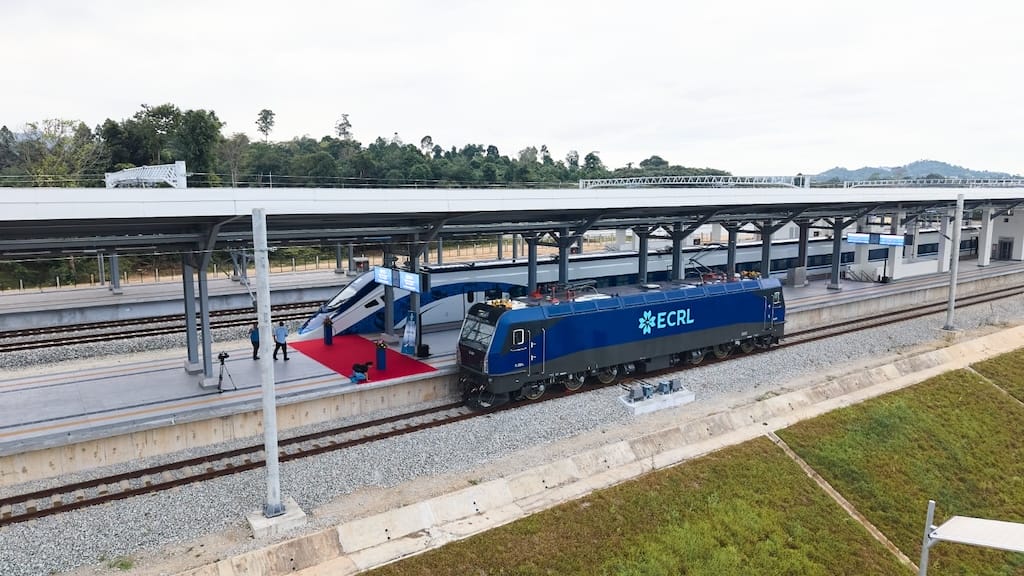
That is the model I would like to see replicated at a national scale, and the East Coast Rail Link can help make that possible.
It is tempting to think of ECRL primarily as a passenger project, a faster way to move people between the Klang Valley and the east coast. That framing understates its role in freight.
The ECRL’s freight capability will further strengthen this connectivity. Each electric locomotive will be capable of hauling up to 45 wagons, carrying approximately 3,500 tonnes of freight per trip at speeds of up to 80 km/h. Moving cargo at this scale by rail can help reduce the number of heavy vehicles on the road and, over time, support a lower-emission way of moving goods across the country.
The ECRL can extend the reach of our ports inland, connecting industrial centres in Pahang, Terengganu and Kelantan that have historically been constrained by overland transport costs and travel time. For those states, this is the difference between being served by logistics infrastructure and being genuinely integrated into it.
Construction of the ECRL spur line into Kuantan Port is progressing, with completion targeted by the end of this year. Once operational, it will strengthen the port’s multimodal connectivity and provide a direct rail link to the national network. The ongoing collaboration with Malaysia Rail Link, Kuantan Port and Port Klang to develop the ECRL Land Bridge demonstrates how rail, ports and road networks can work together, giving businesses greater flexibility in moving cargo across the country.
Kuantan Port is also strengthening its regional connectivity through China’s New International Land-Sea Trade Corridor, building on its longstanding partnership with Guangxi Beibu Gulf Port Group and extending its links across western China and ASEAN.
Malaysia is not the only country in the region making the case for manufacturing relocation and supply chain diversification. Vietnam, Indonesia and others are pitching the same investors. Port capacity or rail electrification alone will not decide that competition. What matters is whether an investor can look at Malaysia and see a logistics chain that removes friction from ship to factory floor.
Ports must also continue evolving. Customers expect far more than efficient cargo handling. They increasingly demand digital integration, real-time cargo visibility, operational reliability and more sustainable logistics solutions. These are no longer differentiators. They are becoming baseline expectations.
None of this is automatic. Building an integrated logistics ecosystem requires coordination across ports, rail operators, industrial parks and government, with a shared focus on improving connectivity rather than optimising individual assets. Kuantan Port’s experience with MCKIP shows what is possible when that coordination is deliberate rather than incidental.
Malaysia already has the building blocks in place: a deep-water port on the east coast with room to grow, an industrial ecosystem proven through MCKIP, and a rail corridor that will strengthen connectivity between the east and west coasts. The opportunity is to connect these assets into one integrated logistics ecosystem that supports trade, investment and long-term growth.
No single project will define Malaysia’s future competitiveness. It will be our ability to connect ports, railways, highways, industrial parks and businesses into a seamless logistics network. When connectivity improves, investment follows. And when investment follows, industries grow, supply chains become more resilient and Malaysia strengthens its position as a competitive trading nation. Getting this right will not simply move more cargo. It will shape where the next generation of investment chooses to land.
By Dato’ Lee Chun Fai, Group CEO and Managing Director, IJM Corporation Berhad


