


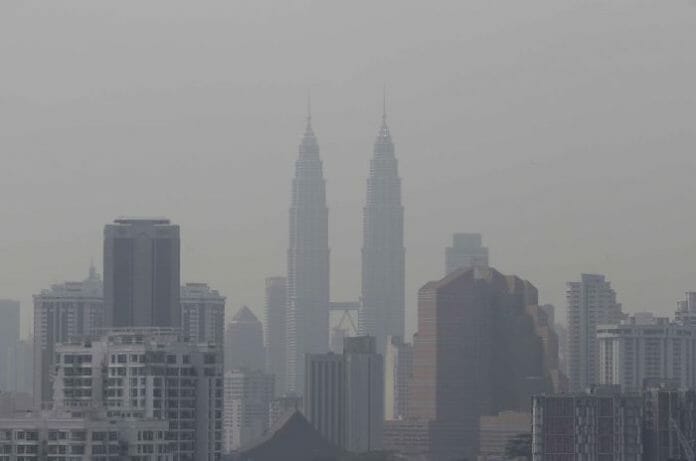
Malaysia is exploring new legislation to tackle transboundary haze, including studying Singapore’s approach to managing the recurring regional problem, Bernama reported.
Dr G. Pubadi, undersecretary of the Environmental Management Division at the Ministry of Natural Resources and Environmental Sustainability (NRES), said a special committee involving relevant ministries and agencies had been formed following a directive from Natural Resources and Environmental Sustainability Minister Datuk Seri Arthur Joseph Kurup.
“The Ministry is indeed examining the mechanisms already in place in Singapore to draft a specific act to address the haze issue. However, drafting an act is not a simple matter,” he said during the Bernama TV programme Ruang Bicara, titled “Regional Action and Cooperation to Address Transboundary Haze”, last night.
Pubadi said Malaysia had also proposed Science Diplomacy and a Sustainable Haze Fund at the recent 27th Technical Working Group meeting and Sub-Regional Ministerial Steering Committee meeting in Bali, Indonesia.
The proposals received support from Indonesia, Brunei, Singapore, Thailand and Timor-Leste, he said.
The proposals will now be reviewed by the ASEAN Secretariat before being discussed at a meeting involving 11 countries in Vietnam in December.
Malaysia has also proposed greater transparency in sharing haze-related data between countries.
“… regarding this data, if implemented, all countries should simply be able to share it openly and transparently; this would assist all nations in taking appropriate follow-up actions to address the haze issue or open burning,” he said.
Pubadi said sustainable financing would also be important in strengthening ASEAN’s response, ensuring countries have adequate resources, equipment and other necessities to deal with fires and transboundary haze.
Meanwhile, Department of Environment (DOE) enforcement director Rosli Zul said the department operates 68 official air quality monitoring stations and urged the public to refer to its readings rather than platforms using different measurement methods.
He said enforcement against open burning, a major contributor to haze, was also being stepped up, with nearly 80% of complaints received by the DOE each year linked to such activities.
On the current haze situation, Rosli said the expected transition to the Northeast Monsoon around mid-October could help reduce the impact of transboundary haze as wind patterns change, even if fires in Sumatra and Kalimantan continue.
He said monitoring would be strengthened to ensure domestic fires do not contribute to haze after the monsoon transition, including through closer weather forecasting cooperation and the use of satellite imagery.


