ASEAN+3 economies are projected to grow 4.1% in both 2026 and 2027, as stronger artificial intelligence (AI)-related exports and investment help cushion the region from higher energy costs and geopolitical risks, according to the ASEAN+3 Macroeconomic Research Office (AMRO).
AMRO, in its latest ASEAN+3 Regional Economic Outlook update, kept its 2026 growth forecast unchanged while raising its 2027 projection by 0.1 percentage point.
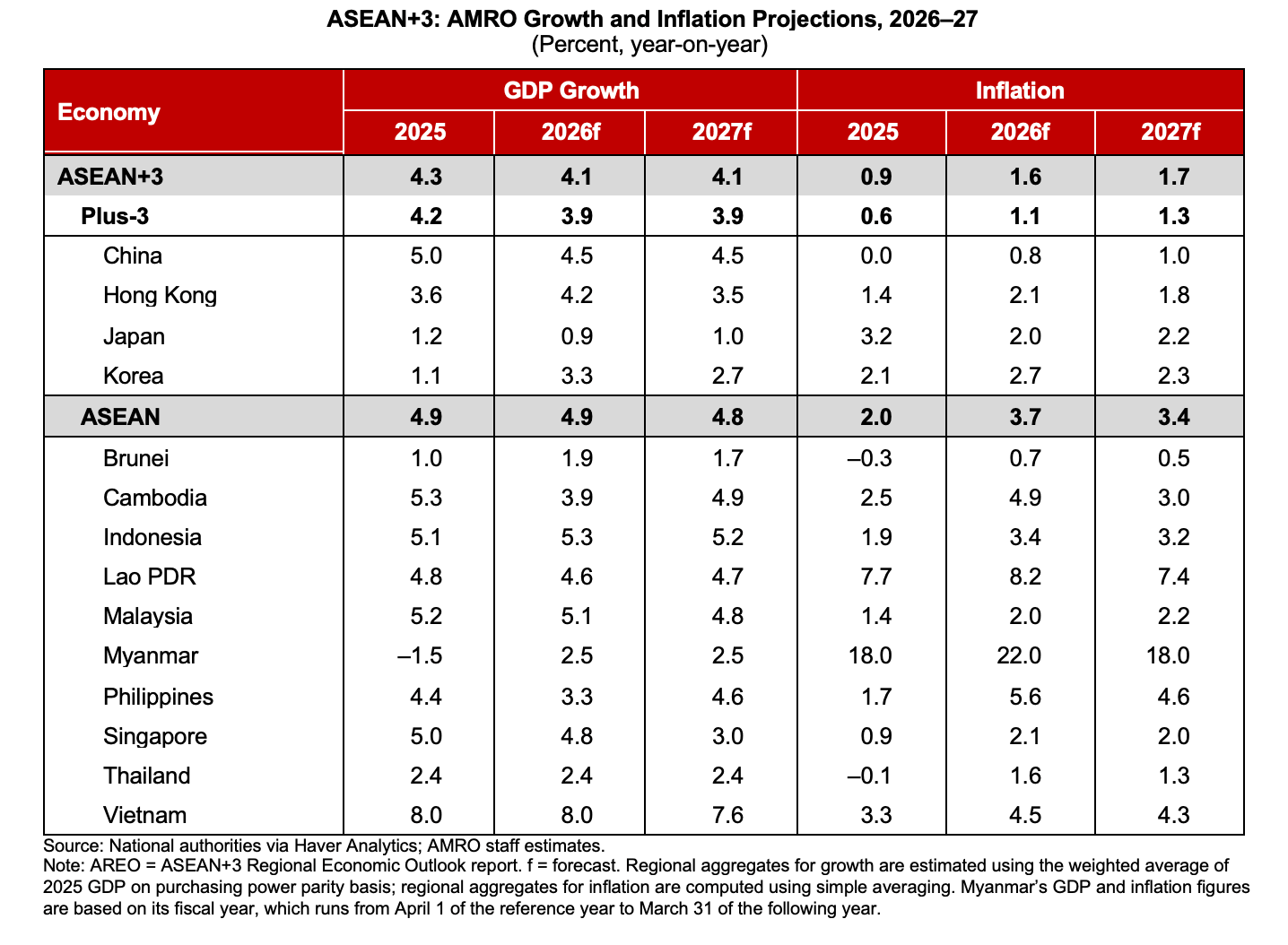
Inflation is expected at 1.6% in 2026 and 1.7% in 2027, with the latter revised higher amid elevated energy costs and potential El Niño-driven food price pressures.
AMRO chief economist Dong He said the AI investment cycle is supporting a broader range of regional activity, although domestic demand remains uneven.
The region has remained resilient despite shipping disruptions in the Strait of Hormuz, higher energy and logistics costs and rising dollar interest rates, with financial market adjustments largely orderly.
AMRO said most ASEAN+3 economies continue to maintain sound external positions and adequate foreign exchange reserves, while banking systems remain well-capitalised, liquid and profitable.
However, it warned that financial stability risks are becoming increasingly interconnected. A sharp repricing of AI-related assets could trigger wider market corrections, forced deleveraging and tighter credit conditions, while abrupt US dollar movements could quickly spill over through exchange rates, capital flows and funding costs.
Risks are also emerging from rising leverage and liquidity mismatches among nonbank financial institutions, as well as stablecoins, cyberattacks and digital fraud.
AMRO called for stronger macro-financial buffers, deeper local currency markets and closer regional cooperation, saying greater financial integration and more effective crisis preparedness would help ASEAN+3 economies withstand future external shocks.