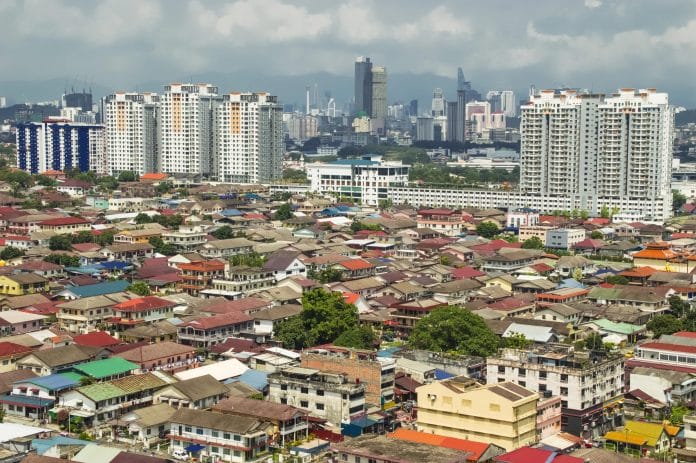
Petaling in Selangor remained Malaysia’s most populous administrative district in 2026 with an estimated 2.4 million people, according to the Department of Statistics Malaysia’s (DOSM) latest Current Population Estimates by Administrative Districts.
Johor Bahru ranked second with 1.8 million people, followed by Ulu Langat in Selangor at 1.5 million.
DOSM said the 2026 estimates are based on the Population and Housing Census Malaysia 2020 and calculated using the cohort-component method, taking into account births, deaths and migration. The 2026 figures remain provisional pending the latest component data.
Petaling also recorded the highest population density in the country at 4,779 persons per sq km, followed by Timur Laut in Penang at 4,085 and Putatan in Sabah at 2,377.
DOSM said six districts emerged as ageing districts in 2026 after the share of residents aged 65 and above reached at least 7%.
They were Port Dickson in Negeri Sembilan, Besut in Terengganu, Melaka Tengah in Melaka, Lipis in Pahang, and Kudat and Keningau in Sabah.
The highest median age was recorded in Lubok Antu, Sarawak at 38.9 years, followed by Saratok at 38.2 years and Lingga at 36.6 years.
At the same time, several districts continued to record relatively high dependency ratios.
Tumpat in Kelantan had the highest total dependency ratio at 63.6, followed by Song in Sarawak at 62.7, Gedong at 61.3, Pasir Puteh at 59.3 and Gua Musang at 58.9.
DOSM also found that females outnumbered males in 14 districts.
Muallim in Perak recorded the lowest sex ratio at 92 males for every 100 females, followed by Bachok in Kelantan and Samarahan in Sarawak, both at 94.
Other districts where women outnumbered men included Song, Kubang Pasu, Saratok, Kota Setar, Pasir Puteh, Tumpat, Julau, Machang, Maradong, Kanowit and Kuala Nerus.
The estimates provide a district-level snapshot of Malaysia’s changing demographic structure, including population concentration, ageing trends and dependency pressures.