


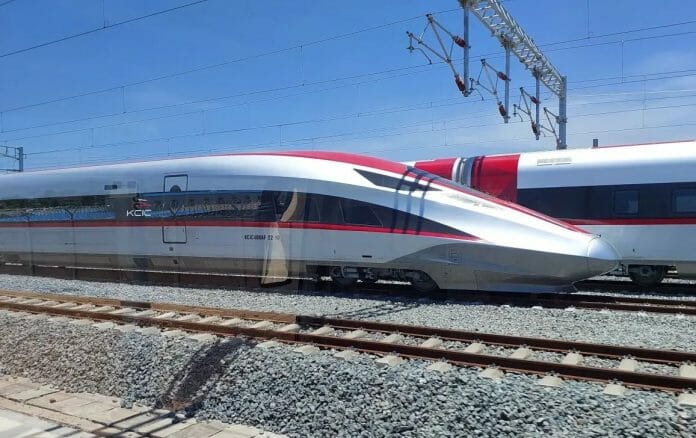
The Indonesian government is finalising a presidential regulation to transfer the shares of PT Pilar Sinergi BUMN Indonesia (PSBI), the local consortium behind the Jakarta–Bandung High-Speed Railway, to the Ministry of Finance as part of efforts to restructure the project’s financial obligations and ensure its long-term sustainability.
The move would effectively place Indonesia’s 60% majority stake in PT Kereta Cepat Indonesia China (KCIC), the joint venture operating the high-speed rail service known as Whoosh, under the Finance Ministry’s control.
The remaining 40% stake will continue to be held by the Chinese consortium, Beijing Yawan HSR Co. Ltd.
Finance Ministry Director General of State Assets Evita Manthovani said the government was preparing the legal framework in collaboration with relevant ministries and institutions, including the State-Owned Enterprises Management Agency (BP BUMN) and sovereign wealth fund Danantara Indonesia.
“The government is currently drafting a legal framework in the form of a presidential regulation to support the long-term sustainability of the Jakarta–Bandung High-Speed Train through the transfer of PSBI shares to the government, specifically to the Ministry of Finance,” she said on Friday.
Debt Restructuring Aimed At Protecting State Finances
Manthovani said the proposed regulation would establish a framework for restructuring Whoosh’s financial liabilities while ensuring that passenger services continue without disruption.
She explained that the government’s approach centres on two key priorities: maintaining uninterrupted railway operations to support public mobility and managing the project’s financial commitments prudently to safeguard the national budget.
The regulation is also expected to provide greater legal certainty by clearly defining the roles, rights and responsibilities of the stakeholders involved in the proposed ownership restructuring.
Under the planned arrangement, the high-speed railway asset will be managed through a Special Mission Vehicle (SMV) under the Ministry of Finance.
The structure is intended to separate the project’s commercial liabilities from direct government budget exposure, reducing potential fiscal risks associated with its financial obligations.
However, details of the proposed debt restructuring, including repayment arrangements and the financial implications of the share transfer, have yet to be disclosed.
Government Seeks Long-Term Operational Sustainability
Manthovani said the share transfer would be accompanied by stronger governance arrangements to ensure the railway’s continued operation and financial sustainability.
“Once this share transfer proceeds, it will be supported by sound, prudent, effective, integrated, and accountable governance in accordance with statutory provisions, thereby better guaranteeing the sustainability of the Jakarta–Bandung High-Speed Train,” she said.
The proposed restructuring represents a significant change in the ownership and management framework of Indonesia’s flagship high-speed railway project, which was developed through cooperation between Indonesian and Chinese entities.
By transferring the Indonesian consortium’s shares to the Finance Ministry, the government aims to establish clearer oversight of the project while addressing its financial obligations through a dedicated asset management structure.
The government has emphasised that the restructuring will prioritise continuity of passenger services, ensuring that the Jakarta–Bandung railway remains operational throughout the transition.
The presidential regulation is still being drafted, with no implementation date announced for the proposed share transfer.
Once finalised, the regulatory framework is expected to guide the ownership transition, debt restructuring and future governance of the high-speed rail project.
Is this conversation helpful so far?


