Home Blog Page 113

Public Bank Saw 1Q26 Net Profit Rise Slightly To RM1.75 Billion

0

Public Bank Berhad released its first quarter results ending 31 March 2026, where the group the
reported a pre-tax profit of RM2.32 billion and net profit attributable to shareholders of RM1.75 billion, increasing by 0.1% and 0.4% respectively as compared with the corresponding quarter in 2025. Revenue remained flat at RM7.3 billion for the quarter

Profit was supported by continued expansion in the loan and deposit portfolios, which grew at annualised growth rate of 5.7% and 5.3% respectively, complemented by non-interest and non-financing income, which grew by 3.7%.

The Group said it continued to maintain sound asset quality with a low gross impaired loans ratio of 0.51%. Domestically, the gross impaired loans ratio was lower at 0.35%, which was significantly better than the industry’s impaired loans ratio of 1.40%. Loan provisions remained prudently managed, with the loan loss coverage ratio standing at 147.0% and at 251.2% taking into account regulatory reserves.

The total loans were at RM452.1 billion as at the end of March 2026, with 5.7% annualised loan growth for the first quarter of 2026.

On the domestic front, loans grew by an annualised rate of 6.3% to RM427.7 billion. The Group maintained its strong presence in key retail consumer and SME financing segments. Domestic SME financing, residential properties financing and hire purchase financing achieved annualised growth of 11.2%, 4.4% and 8.4%, respectively. These key segments continued to command strong leading market shares of 19.0%, 20.1%, and 33.1% respectively.

On the funding side, total customer deposits grew in line with loan growth, registering an annualised growth rate of 5.3% to RM453.1 billion. Meanwhile, the Public Bank Group’s domestic customer deposits increased at an annualised growth rate of 5.1% to RM424.4 billion, led mainly by core deposits and money market deposits

The Group posted non-interest and non-financing income of RM825.9 million for the first three months of 2026, an increase of 3.7% as compared with the corresponding period last year, mainly due to higher income from unit trust, general insurance business and bancassurance.

“Against this backdrop, the Public Bank Group is in a strong position to weather the challenges, leveraging its long-standing solid fundamentals and prudent management. Nonetheless, as the Group stays vigilant, it will remain agile and forward-looking in pursuit of synergistic business growth.” Group CEO Tan Sri Tay concluded.

Stock Today: Dialog Slips 0.93% After Strong Rally As Profit Surge Already Priced In

Dialog Group Bhd shares eased in midday trading even as the energy services group continued to draw support from strong earnings momentum, with investors appearing to lock in gains following a sharp year-to-date rally.

At 12.30pm, Dialog was last done at RM2.12, down 2 sen or 0.93% on the day. The counter traded between RM2.09 and RM2.17, opening at RM2.17 before drifting lower, with more than 312.7 million shares changing hands, signalling active profit-taking interest.

The stock’s weakness came despite recent fundamental support from its latest results, which showed Dialog’s profit after tax more than doubling to RM457.2 million for the nine months ended March 31, 2026, compared with RM157.9 million a year earlier. Revenue rose 11.5% to RM2.11 billion, driven by stronger contributions from its Malaysia operations, particularly downstream engineering and construction activities and stable midstream storage income.

According to the company’s earlier disclosure, the group’s performance was supported by resilient tank terminal utilisation and higher realised oil prices, although upstream output was affected by maintenance activities while international operations recorded softer contributions.

Market data showed the counter had opened at RM2.17 before slipping to an intraday low of RM2.09, with buying interest clustered around RM2.11 and RM2.12 levels, suggesting consolidation after recent gains. The stock’s last traded price of RM2.12 was also below its reference price of RM2.14.

The broader sentiment around Dialog remains shaped by its integrated oil and gas model, which analysts have previously said provides earnings stability through cycles, supported by recurring midstream income and exposure to oil price upside.

Despite the latest pullback, trading activity indicates continued investor engagement as the market digests strong earnings performance against expectations of normalising momentum after the recent run-up.

Malaysia’s Population Hits 34.4 Million In Q1 2026 Amidst Slowing Growth And Declining Births

Malaysia’s total population reached an estimated 34.4 million in the first quarter of 2026 (Q1 2026), according to the latest demographic report from the Department of Statistics Malaysia (DOSM).

While the population continues to climb, the growth rate has noticeably cooled, dropping to 0.5% compared to the 0.9% growth recorded in the same period last year. This deceleration is largely attributed to a persistent decline in live births across the country.

The report highlights a gradual shift in Malaysia’s age structure, signaling the nation’s move toward an aging society.

Gender dynamics remain skewed, with 18.0 million males compared to 16.3 million females, resulting in a sex ratio of 110 males per 100 females. However, among Malaysian citizens, the ratio is more balanced at 102.

The ethnic landscape remained largely stable, though the Chinese community saw a slight decrease in its population share:

  • Malay: 58.3% (Slight increase)
  • Chinese: 22.1% (Down from 22.2%)
  • Other Bumiputera: 12.3% (Unchanged)
  • Indian: 6.5% (Unchanged)

The “Other Bumiputera” category continues to showcase the rich diversity of East Malaysia. In Sabah, the Kadazan/Dusun (31.7%) and Bajau (26.5%) remain the largest groups, while in Sarawak, the Iban community makes up the vast majority at 59.1% of the state’s Bumiputera population.

Live births fell by 3.1% in Q1 2026, with only 94,807 babies born compared to nearly 98,000 in the previous year.

Selangor recorded the highest number of births (17,990), while Labuan recorded the lowest (294).

Ethno-demographic data for births shows that Malay infants accounted for 69.5% of all live births, a significant increase in proportion compared to Q1 2025. Conversely, the proportion of Chinese and Indian births dropped to 7.4% and 3.8%, respectively.

On a positive note, total deaths decreased by 1.5%, with 49,139 deaths recorded in Q1 2026

Regional data shows that Selangor recorded the highest mortality at 8,042 deaths, while Putrajaya maintained the lowest at just 81 recorded deaths for the quarter.

Blackstone’s AirTrunk Seeks US$2 Billion Loan For Malaysia Growth

Blackstone Inc.-owned data center firm AirTrunk is marketing a $2.3 billion loan to fund a Malaysia project, according to people familiar with the matter, part of a slew of tech-linked financings in Southeast Asia spurred by the artificial intelligence boom.

Proceeds will support the firm’s 200-megawatt AirTrunk JHB2 facility located in the southern state of Johor, said the people, who asked not to be identified discussing private matters. About a dozen lenders — including DBS Group Holdings Ltd., Credit Agricole SA, ING Bank NV and United Overseas Bank Ltd. — are arranging the three-year loan, which is being syndicated to the broader market, the people said.

Blackstone and AirTrunk declined to comment.

Surging demand for AI capabilities has spurred data center operators to take on more debt to expand. Moody’s Ratings expects at least $3 trillion to flow into the sector over the next five years, with much of it financed through debt. Some investors, however have raised concerns about whether such investments will deliver sustainable returns.

Recent deals underscore the trend. Digital Edge and power producer B.Grimm Power Pcl this month announced an $880 million facility, the largest-ever financing for a data center project in Thailand. Bain Capital-owned Bridge Data Centres has also been in talks with lenders for a potential loan of up to $6 billion for expansion in the country. In Malaysia, Singapore-based DayOne Data Centers Ltd. has been seeking to double the size of an existing loan to as much as $7 billion for its expansion plans.

AirTrunk’s loan — which carries two one-year extension options — pays an interest margin of 225 basis points above the Secured Overnight Financing Rate for offshore financing and 235 basis points for onshore, the people said. The Sydney-headquartered firm is also looking to raise at least A$500 million ($358 million) through asset-backed bonds for its data center expansion, among the first for the region.

Bloomberg

Bottega Veneta’s Candy Bang Bang Just Got A Mini Upgrade

Bottega Veneta is going all in on the micro bag trend with the launch of the Candy Bang Bang in Lava Red for Summer 2026. Small enough to sit somewhere between a handbag, charm and lanyard, the latest release turns one of the house’s most recognisable silhouettes into a compact accessory designed to stand out instantly.

Based on the original Bang Bang vanity-style case, the new Candy version shrinks the design down to just 12.5cm by 9cm. While tiny, it still manages to fit the essentials, including AirPods, cards, lip balm and other small daily items.

Made from the brand’s signature Intrecciato piccolo nappa leather, the bag features dual zip closures, a top handle and a detachable strap that makes it easy to style in different ways throughout the day.

The real attention-grabber is the Lava Red finish. The bold shade works whether the Candy Bang Bang is worn on the wrist, styled crossbody as a lanyard or clipped onto a larger tote for a layered accessories look.

The launch also expands Bottega Veneta’s growing Candy collection, alongside mini versions of the Cassette and Jodie. For those leaning into the personalised bag trend, they can add the house’s alphabet and animal charms.

Priced at SG$2,620, the Candy Bang Bang is now available at Marina Bay Sands, Paragon and through Bottega Veneta’s official website.

Xi Presses Trump On Taiwan While Hailing Positive Trade Outcomes

Chinese President Xi Jinping warned US President Donald Trump that mishandling the Taiwan issue could push China-US ties towards “clashes and even conflicts” as he held high-stakes talks with Trump in Beijing on May 14, state news agency reported.

Describing peace and stability across the Taiwan Strait as the “biggest common denominator” between the world’s two largest economies, Xi stressed that the Taiwan question remains the most important issue in bilateral relations.

He said proper handling of the matter would ensure overall stability in China-US ties, but warned that support for “Taiwan independence” was fundamentally incompatible with cross-strait peace.

The remarks underscored Beijing’s firm stance on Taiwan amid renewed efforts by both countries to stabilise relations after years of strategic rivalry, trade tensions and geopolitical disputes.

On the economic front, Xi struck a more conciliatory tone, saying the latest negotiations between Chinese and US economic and trade teams had produced “generally balanced and positive outcomes”.

He described the progress as “good news” for both nations and the global economy.

Xi also reiterated Beijing’s long-standing position that “trade wars have no winner”, urging both sides to resolve disagreements through “equal-footed consultation” and to preserve the improving momentum in bilateral engagement.

The trip to Beijing is the first by a US president in nearly a decade, with the grand reception belying a host of unresolved trade and geopolitical tensions between the two countries.

Xi greeted Trump with a red-carpet welcome at the opulent Great Hall of the People, with military band fanfare, a gun salute and a host of schoolchildren jumping and chanting “welcome!”.

The meeting between Xi and Trump is being closely watched by global markets and political observers for signs of easing tensions between the two powers, particularly on trade, technology and regional security issues.

Building Material Prices Surge In April: Sand And Aggregates See Double-Digit Spike

The Malaysian construction industry is facing renewed cost pressures as the Department of Statistics Malaysia (DOSM) reported a widespread increase in the price of essential building materials for April 2026.

The latest “Special Release for Building and Structural Works” highlights significant month-on-month surges, particularly in raw materials like sand and aggregates, alongside steady climbs in steel and cement prices across Peninsular Malaysia, Sabah, and Sarawak.

Sand prices saw some of the most dramatic increases this month, with the unit price index rising by as much as 14.5%. The East Coast was hardest hit, with the Terengganu & Kelantan region recording the maximum 14.5% jump, followed closely by Pahang (14.4%) and Miri (14.1%).

Aggregates followed a similar trajectory, with price index changes ranging from 0.5% to 16.4% across various regions. These sharp increases in bulk raw materials are often attributed to localized supply constraints and rising haulage costs following recent diesel price adjustments.

Industrial materials also trended higher in April, adding to the overall burden on contractors:

The steel unit price index rose between 0.1% and 6.1%. Perak recorded the highest increase at 6.1%, followed by Johor at 2.7%.

Cement prices edged up by 0.1% to 6.0%. The highest monthly hike was observed in Sibu (6.0%), followed by Johor (3.9%).

Average Market Prices (April 2026):

  • Steel: Increased to RM3,504.20 per metric tonne (up 2.3% from March’s RM3,426.80).
  • Cement: Rose to RM25.90 per 50kg bag (up 1.3% from March’s RM25.55).

Comparing April 2026 to the same month last year reveals a persistent inflationary trend in the construction sector. The annual unit price index for sand has jumped by as much as 18.6% in Miri and 16.0% in the Northern Region (Pulau Pinang, Kedah & Perlis).

Cement also showed a notable year-on-year increase of up to 7.5%, with Kuching and Perak leading the annual price hikes.

The continued rise in material costs presents a significant challenge for developers and contractors, many of whom are already navigating a high-interest-rate environment. Industry experts suggest that the “double-digit” spikes in sand and aggregates may force a recalculation of project margins, particularly for infrastructure and residential developments in high-growth areas like Johor and the Klang Valley.

“With steel now averaging above the RM3,500 mark again, we may see an increased push for price escalation clauses in new private-sector contracts,” noted one industry analyst.

The report underscores a broader trend where domestic supply chain dynamics—including logistics costs and regional demand—are increasingly dictating the pace of construction inflation in Malaysia.

HLIB Expects Malaysia’s First Quarter Economy To Expand By 5.4%, Above DOSM Estimates

0

Hong Leong Investment Bank (HLIB) expects Malaysia’s economy to expand by 5.4% in the first quarter of 2026, slightly above the advance estimate released by the Department of Statistics Malaysia (DOSM) and the market consensus of 5.3%.

The research house said the anticipated growth would mark a moderation from the 6.3% expansion recorded in the fourth quarter of 2025, but remains supported by continued resilience across the services, manufacturing, agriculture and construction sectors.

Malaysia’s full first-quarter gross domestic product (GDP) data is scheduled for release on May 15, 2026.

HLIB said domestic demand is expected to remain the key growth driver, alongside positive contributions from net exports amid stronger export performance.

The services sector is projected to continue expanding, albeit at a slightly slower pace, following softer growth in the volume index of services, which rose 5.8% in the first quarter compared with 6.5% in the preceding quarter.

The moderation was broad-based across several subsectors, including wholesale and retail trade, food and beverage, accommodation, business services, finance, information and communication, transportation and storage.

Meanwhile, the manufacturing sector is expected to remain relatively stable, supported by a 5.7% rise in the manufacturing industrial production index (IPI), slightly below the 6.0% growth recorded previously.

HLIB said the sector continues to benefit from robust external demand for electrical and electronics (E&E) products amid the ongoing global semiconductor upcycle.

The research house highlighted that global semiconductor sales surged 62.4% year-on-year in the first quarter, compared with 25.6% growth in 2025.

It added that manufacturing growth was also supported by stronger output in wood products, printing and non-metallic mineral products.

However, the agriculture sector is expected to grow at a slower pace following moderation in crude palm oil production growth to 11.5% from 18.7% previously.

The construction sector is also anticipated to maintain positive momentum, although growth is expected to ease to 8.5% from 10.3% in the preceding quarter as activity in non-residential buildings and civil engineering normalises.

HLIB expects the mining sector to contract during the quarter, weighed down by lower crude petroleum and natural gas production.

On the demand side, private consumption is projected to remain supportive, underpinned by stable labour market conditions and continued wage growth in both the services and manufacturing sectors.

The unemployment rate remained unchanged at 2.9% in the first quarter, while wage growth in the services sector held at 5% and manufacturing wages expanded 2.3%.

Consumer spending is also expected to be supported by policy measures introduced by the government, including the RM100 Sumbangan Asas Rahmah (SARA) cash aid, the second phase of civil servant salary adjustments under the Public Service Remuneration System, continued RON95 fuel subsidies and diesel subsidy assistance.

The reintroduction of the RM1,000 personal income tax relief for domestic tourism is also expected to provide additional support to household spending.

On the external front, HLIB said net exports are likely to contribute positively to GDP growth as export growth accelerated to 12.7% in the first quarter from 11.0% previously, while import growth moderated to 7.7%.

Despite lingering risks from global energy supply disruptions, HLIB maintained its full-year 2026 GDP growth forecast at 4.5%, which is within Bank Negara Malaysia’s official target range of 4.0% to 5.0%.

The research house said Malaysia’s economic resilience continues to be supported by its position as a net exporter of oil and gas, exposure to the global technology upcycle and ongoing fiscal support measures.

Malaysia’s Job Market Expanded In Q1 To 9.23 Million With 97% Fill Rate

0

Malaysia’s labour demand continued to expand in the first quarter of 2026, with total jobs rising to 9.23 million as hiring activity remained resilient across key economic sectors, according to the latest Quarterly Employment Survey released by the Department of Statistics Malaysia (DOSM).

DOSM said total labour demand — comprising filled jobs and vacancies — increased from 9.06 million in the corresponding quarter last year.

Filled jobs grew 1.8% year-on-year to 9.03 million from 8.87 million previously, translating into a filled jobs rate of 97.9%.

Meanwhile, job vacancies edged up 0.4% to 194,800 positions compared with 194,100 vacancies a year earlier, representing a vacancy rate of 2.1%.

However, the number of jobs created during the quarter declined marginally by 1.5% year-on-year to 32,700 jobs.

By skills category, semi-skilled jobs continued to dominate Malaysia’s labour market, accounting for more than 60% of overall labour demand indicators.

DOSM reported that the semi-skilled category recorded 5.73 million jobs, up 1.3% year-on-year. Of these, 5.62 million positions were filled, while 107,900 remained vacant.

The category also recorded 21,000 newly created jobs during the quarter, slightly higher than the 20,800 jobs created a year earlier.

Skilled jobs rose 2.6% year-on-year to 2.33 million positions, with 2.28 million filled and 48,700 vacancies recorded.

Despite the increase in demand for skilled workers, jobs created in the category declined 4.2% to 8,600 positions.

Meanwhile, low-skilled jobs increased 2.9% year-on-year to 1.16 million.

Filled positions in the category stood at 1.13 million, while vacancies totalled 38,200 jobs. However, the number of newly created low-skilled jobs fell 8.6% to 3,200 positions.

Across economic sectors, the services sector remained the largest employer, accounting for 52.5% of total jobs or 4.84 million positions.

The manufacturing sector followed with 2.52 million jobs, representing 27.3% of total labour demand, while the construction sector contributed 1.28 million jobs or 13.9%.

The agriculture sector accounted for 502,500 jobs, while mining and quarrying recorded the smallest share at 80,400 jobs.

DOSM also noted that the services sector recorded the largest share of filled jobs at 4.82 million, followed by manufacturing at 2.41 million and construction at 1.25 million.

However, manufacturing continued to account for the majority of job vacancies, with 113,000 openings representing 58% of total vacancies nationwide.

The agriculture sector contributed 32,000 vacancies, while services and construction each recorded around 24,600 vacancies.

In terms of newly created jobs, the services sector led with 15,900 positions, accounting for 48.6% of total jobs created during the quarter.

Manufacturing followed with 11,900 new jobs, while construction created 3,200 positions. Agriculture and mining and quarrying contributed smaller shares of newly created jobs at 1,400 and 200 respectively.

Healthy Pullback In Blue Chip Counters, Market Remains Cautious

0

Asian markets traded mixed as investors weighed escalating Middle East tensions against hotter-than-expected US inflation concerns ahead of the U.S.–China summit (May 14–16). Downside pressure was partly cushioned by cautious optimism surrounding the Trump–Xi meeting in Beijing, with expectations of potential progress on tariffs, Taiwan-related issues, and a possible extension of the October 2025 trade truce. Technology sentiment also provided support, as AI and chip stocks gained traction following Trump’s Beijing visit accompanied by a delegation of CEOs from leading tech firms, including NVIDIA, Apple, and Tesla. The presence of top executives signalled a constructive tone in U.S.–China engagement, raising expectations of a more pragmatic
approach toward trade, supply chains, and technology restrictions.

US stocks rebounded from sharp intraday losses to finish mixed (Dow -0.14%, S&P 500 +0.58%, Nasdaq +1.20%), as stronger-than-expected April PPI and elevated oil prices near USD105 reinforced the “higher-for-longer” rate narrative (U.S. 10Y yield +1 bp to 4.47%). Despite macro headwinds, gains in AI-driven technology stocks provided a firm offset, underscoring the sector’s resilience amid persistent inflation concerns and expectations of prolonged Fed policy tightness.

Meanwhile, geopolitical and policy developments remained in focus, with President Trump arriving in Beijing alongside top executives from major tech firms ahead of a high-stakes summit with President Xi, raising hopes for potential trade progress and easing near-term tensions.

In line with cautious Wall St and regional sentiment, the KLCI erased 4.3 pts to 1,746.3 on profit taking after rebounding 33.7 pts from the US-Iran war, led by healthy pullback in blue chip (YTLPOWR, YTL, MAYBANK, SDG, TM and 99SMART). Market breadth weakened to 0.95 (vs 1.01 prior), while volume shed 15.9% to 4.14bn shares valued at RM3.45bn (-4.2%). Flow-wise, foreign institutions (-RM19m; WTD: -RM62m, May MTD: +RM146m) were the biggest net sellers alongside local institutions (-RM1m; WTD: +RM60m, YTD: +RM285m). In contrast, local retailers (+RM20m; WTD: +RM2m, May MTD: -RM431m) emerged as major net buyers.


Following a 6.25% relief rally from the YTD low of 1,664 (9 Mar) to an intraday high of 1,768 (7 May), the KLCI is consolidating its recent gains following a Shooting Star pattern on 7 May. Despite this, the uptrend remains intact above the rising trendline, underpinned by a MA20–MA50 golden cross. Holding above 1,730 (76.4% FR) is key to sustain bullish momentum, with upside targets at 1,768, 1,789 (110% FR) and 1,800. However, a breach of 1,730 could trigger a deeper consolidation towards 1,723 (MA20), 1,710 (MA50) and possibly the 1,700 zone.

Heightened geopolitical tensions and a sharp rally in oil prices amid the ongoing US–Iran impasse are expected to keep the KLCI in a range-bound consolidation phase, following its MTD gain of 24.3 points (Apr: +31.7 pts; YTD: +65.9 pts). Sentiment is likely to remain cautious and headline-driven, with markets closely tracking developments from the Trump–Xi summit in Beijing as a key near-term catalyst

At the same time, attention is turning to the ongoing 1Q26 earnings season, where investors will closely scrutinise corporate guidance for signals on whether resilient fundamentals can withstand intensifying external pressures, including geopolitical risks, potential global supply chain disruptions, elevated energy prices, and emerging growth headwinds.

Nevertheless, downside risks are likely to remain well cushioned around the 1,700 level, supported by Malaysia’s underlying economic resilience, its position as a net exporter of oil and gas, diversified trade linkages with key energy-producing economies, exposure to the ongoing global tech upcycle, and continued policy support from fiscal measures.

HLIB noted that weekly support is seen at 1,710–1,730, while resistance stands at 1,768-1,780

Kenanga Trims CelcomDigi FY2026, 2027 Earnings Forecast On DNB Equity Matter

0

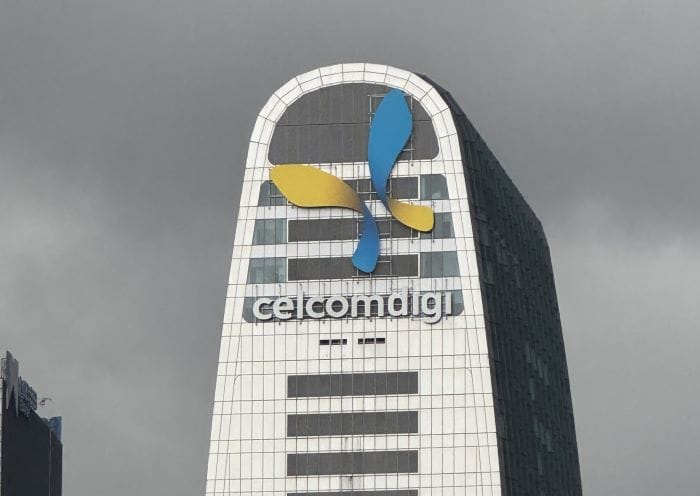
CelcomDigi Berhad (CDB) posted a 7% year-on-year increase in core net profit to RM416 million for the first quarter ended March 31, 2026, supported by stronger service revenue growth and operational efficiencies, according to Kenanga Investment Bank Berhad.

Kenanga said the results came in within expectations, accounting for 26% of its full-year forecast and 24% of consensus estimates.

The group declared a first-quarter dividend per share of 3.4 sen, slightly lower than the 3.7 sen declared a year earlier, but still in line with expectations.

Service revenue rose 1.7% year-on-year, consistent with the company’s guidance for low single-digit growth for the full financial year. Growth was mainly driven by stronger postpaid and home fibre segments.

Kenanga said postpaid revenue benefited from robust subscriber additions, supported by customer retention initiatives and migration from prepaid to postpaid plans.

Meanwhile, home fibre revenue was lifted by higher average revenue per account (ARPA) and subscriber growth amid sustained demand for converged broadband bundles.

The momentum in both segments helped lift ARPA to RM113 during the quarter from RM105 a year earlier, marking the fifth consecutive quarter of growth.

The research house noted that postpaid revenue growth was achieved despite a one-off RM10 million adjustment related to the reclassification of fibre-to-the-home and fixed wireless access accounts.

However, prepaid revenue continued to face pressure from subscriber churn as the group shifts away from lower-value users, while enterprise mobile revenue was impacted by structural declines in bulk SMS usage.

At the earnings level, earnings before interest and tax (EBIT) grew 4% year-on-year, supported mainly by lower staff costs following a one-off agency force programme payment recorded in the corresponding quarter last year.

Lower device costs also contributed to earnings improvement, although this was partially offset by higher depreciation expenses stemming from elevated capital expenditure investments.

Kenanga added that credit loss provisions eased significantly quarter-on-quarter to RM74 million from RM130 million in the preceding quarter, reflecting a gradual normalisation in provisions for doubtful debts toward the group’s target level.

Following the results, Kenanga trimmed its FY2026 and FY2027 earnings forecasts by 5% and 6% respectively to reflect the commencement of equity accounting for Digital Nasional Berhad (DNB) from the second half of FY2026 onward.

The research house also lowered its target price on CelcomDigi to RM3.29 from RM4.27 after revising its valuation multiple to align with the company’s de-rated historical average amid uncertainties surrounding potential earnings dilution from DNB.

Despite the lower target price, Kenanga maintained its “Outperform” recommendation on the stock.

The research house said it remains optimistic on CelcomDigi due to expected margin expansion from post-merger integration, supported by cost synergies, workforce rationalisation and consolidation of overlapping network infrastructure.

It also highlighted the group’s healthy projected free cash flow yield of between 7% and 10% over FY2026 to FY2027, which is expected to support continued dividend payouts.

Kenanga further noted that CelcomDigi’s market-leading subscriber base, estimated to be around 30% larger than its nearest competitor, provides economies of scale that strengthen its ability to absorb fixed and network-related costs.

AI Rally Lifts Asia Stocks As Trump-Xi Talks Loom

Asian equities advanced on Thursday, driven by continued enthusiasm around artificial intelligence that has pushed South Korea’s SK Hynix close to a US$1 trillion valuation, while investors also focused on a high-level meeting between United States President Donald Trump and China President Xi Jinping.

The Trump-Xi summit in Beijing is expected to centre on fragile trade relations as well as broader geopolitical flashpoints including the Iran conflict and Taiwan-related tensions. Trump was received at the Great Hall of the People as talks began, with markets watching closely for any signals on the direction of the relationship between the world’s two largest economies.

China’s blue-chip index slipped around 1% after briefly touching its highest level since late 2021 earlier in the session. The yuan, meanwhile, strengthened to a three-year high against the US dollar as traders tracked developments from the negotiations.

Broader regional sentiment remained firm. MSCI’s index of Asia-Pacific shares outside Japan gained 0.3%, hovering near record highs, while Japan’s Nikkei hit another all-time peak, supported by AI-linked earnings strength. South Korea’s KOSPI was largely flat after earlier gains faded.

SK Hynix remained a standout, rising on the back of strong AI-driven demand that has lifted its stock more than 200% this year and placed it on the verge of joining Samsung in the trillion-dollar market capitalisation club.

European equity futures pointed to a strong start while US futures were modestly higher.

Analysts cautioned that rising oil prices and geopolitical uncertainty could reintroduce inflation pressures. Brent crude traded at US$105.89 per barrel while US West Texas Intermediate stood at US$101.33.

“Markets are trying to run two playbooks at once: AI and earnings says buy growth, but geopolitics and energy prices are quietly re-writing the inflation trajectory in the background,” said Charu Chanana, chief investment strategist at Saxo.

“While today’s session may still follow the AI momentum, a macro reality check remains likely from the Trump-Xi meeting.”

In currency markets, the US dollar held firm after stronger-than-expected inflation and producer price data reinforced expectations that the Federal Reserve may lean towards a rate hike next year. The euro and sterling stayed weaker while the yen remained under pressure near levels that have kept traders alert to potential intervention by Japanese authorities.

Reuters

Philippines President Calls For Emergency Meeting After Senate Shooting

0

The Philippines president called an emergency meeting of top officials on Thursday (May 14) amid widening political tensions, a day after gunfire rang out at the Senate where a lawmaker wanted by the International Criminal Court has been holed up fearing his arrest.

Senator Ronald dela Rosa, the former national police chief and chief enforcer of ex-President Rodrigo Duterte’s bloody “war on drugs”, is wanted for crimes against humanity, the same charges Duterte is accused of.Duterte is set to become the first former Asian head of state to go on trial at the ICC.

Gunshots were heard late on Wednesday inside the Senate building and people inside scrambled for cover, hours after dela Rosa, better known as “Bato” or “Rock”, appealed on social media for supporters to mobilise, saying law enforcement agents were coming to take him from the legislature, where he had taken refuge.The incident sparked chaos and confusion, with a heavy presence of police and armed guards at the Senate, protests outside and more than a dozen shots fired just moments after marines were called in to bolster security.

President Ferdinand Marcos Jr was meeting government and security chiefs on Thursday, while police spokesperson Randulf Tuano said one person had been detained and investigations were underway, with bullet casings, assault rifle magazines and other items recovered.

“The person has provided names, but these still need confirmation,” Tuano told DZBB radio.It was unclear who fired the shots, or if dela Rosa was still in the Senate on Thursday. Entering the heavily guarded building, his lawyer Jimmy Bondoc, said he spoke to him during the night and believed he was inside.”As his lawyer, I asked him if you have plans to leave, he said none,” Bondoc told reporters.

Marcos and government agencies have insisted no order was issued to arrest dela Rosa, with no announcements on Thursday on the identity of individuals who officials said tried to force their way into the building.

In an interview with DZBB aired early on Thursday, dela Rosa said he will “exhaust all available remedies” to block his transfer to the ICC and having learned about conditions Duterte was being held under, he was no longer willing to fight his case in The Hague.

It was unclear when the interview was conducted. Dela Rosa has denied involvement in illegal killings.

“Yes, things changed. It turns out it is not that easy to visit him,” he said of Duterte. “If we were co-detainees there’s no assurance we would be placed in the same cell or even in the same facility.”

Marcos vowed late on Wednesday to get to the bottom of the incident, as political tensions mounted over dela Rosa and Monday’s impeachment of the former president’s daughter Vice President Sara Duterte.”What we are seeing now is the administration using all government resources to demolish political opposition or individuals who do not follow, agree with, or support (Marcos),” she said in comments shared by her office.

She said she had not spoken with dela Rosa since before the gunfire incident and said he was about to be the subject of extraordinary rendition, likening it to what she called her father’s illegal abduction and transfer to the ICC last year.

“That is how the world saw it then. And that is also what they are trying to do now to Senator Bato dela Rosa,” she said.

The Hague-based court unsealed an arrest warrant on Monday for dela Rosa, dated November, and he has filed an emergency appeal with the Supreme Court to block any transfer to the ICC, arguing it no longer has jurisdiction in the Philippines after the country withdrew from the court in 2018.

The court says it can investigate crimes committed prior to a country’s withdrawal.

Dela Rosa was Duterte’s top lieutenant, overseeing a fierce crackdown during which thousands of alleged drug dealers were slain, with rights groups accusing police of systematic murders and cover-ups.Police reject that and say the more than 6,000 killed in Project Double Barrel were all armed and had resisted arrest.

Activists say the real death toll may never be known, with users and small-time peddlers gunned down daily in mysterious slumland killings that police blamed on vigilantes and turf wars. 

Reuters

Indonesia To Review Visa Waiver For Southeast Asian Countries After Scam Syndicate Bust

0

Indonesia will review its visa-free entry policy for nationals of Southeast Asian countries after a string of arrests of foreigners accused of running illegal gambling and scam operations, a top immigration official said on Wednesday (May 13).

Authorities last week detained more than 500 people in two separate raids on an online gambling ring in the capital Jakarta and a scamming syndicate in Batam, in eastern Riau Islands province.Those arrested were nationals of Vietnam, Cambodia, Malaysia, Laos and Myanmar, which all enjoy 30-day visa-free stays in Indonesia, as well as China, which is not included in the waiver scheme.

Indonesian immigration boss Hendarsam Marantoko said the illicit activities were cause for “serious concern”.

“Cases of foreigners involved in illegal activities, including those coming from countries granted visa-free entry facilities, give rise to (a need for) evaluation” of policies, he said in a statement.

Investigators have found that many of those allegedly involved in the illegal gambling centre in Jakarta had entered Indonesia using visa waivers or applied for permits on arrival.

In recent weeks, immigration authorities have carried out more than 6,700 “administrative actions” including more than 2,000 deportations and cancellations of stay permits, Hendarsam said.Meanwhile, Thailand is reviewing its visa system to address the problem of criminals posing as tourists. 

Possible measures include reducing the visa-free stay period for tourists from 93 countries from 60 days to 30 days, said Foreign Minister Sihasak Phuangketkaeow on Tuesday.

The ministry will submit a plan to the Cabinet for approval next week.

“We are not targeting any particular country, but are looking at activities that may create problems for Thailand,” said Sihasak, as quoted by news outlet The Nation. 

“Visas must be issued with an appropriate period for tourism, which should probably not exceed 30 days, and the criteria must be set in line with the intended purpose.”

AFP

Conan O’Brien Scores Third Consecutive Oscars Hosting Gig

Conan O’Brien is officially returning to host the Oscars for a third year in a row, with the 99th Academy Awards set for March 14, 2027.

Disney confirmed the news during its upfront presentation this week, locking O’Brien back in after two ceremonies that helped bring fresh energy to an awards show often criticised for feeling too long or overly formal. The 2027 ceremony will air live on ABC and Hulu from Los Angeles’ Dolby Theatre.

O’Brien’s return is not exactly surprising. His mix of self-aware humour, quick one-liners and relaxed delivery has gone down well with both viewers and critics, giving the Oscars a more conversational tone without losing the event’s scale.

Disney Television Group president Craig Erwich said O’Brien has brought “remarkable energy” to the ceremony. Meanwhile, producers have praised him for being as involved behind the scenes as he is on stage.

The Academy is also sticking with the same creative team that has shaped the show over the past few years. Raj Kapoor and Katy Mullan are returning as executive producers for the fourth consecutive year, while Jeff Ross and Mike Sweeney are back for a third run. Sweeney will also continue as a writer for the broadcast, helping maintain the show’s sharper comedic style.

O’Brien now joins a small group of repeat Oscars hosts, alongside names like Steve Martin and David Niven. The all-time record still belongs to Bob Hope, who hosted the Academy Awards 19 times. Repeat hosts are becoming more common across major award shows, too, with Nikki Glaser also recently signing on to host the Golden Globes for a third consecutive year.

Ratings for the Oscars remain unpredictable, even with a popular host in place. O’Brien’s first ceremony in 2025 pulled in nearly 19.7 million viewers, marking a post-pandemic high for the awards.

The 2026 broadcast dipped to 17.9 million viewers, but the Academy has pointed to strong social media engagement as more viewers now follow the event through clips, reactions and online highlights instead of watching the full broadcast live.

The 2027 ceremony will also be one of the final Oscars held under the show’s current setup. From 2029, the awards are expected to move from the Dolby Theatre to the Peacock Theatre in downtown Los Angeles, while YouTube will take over as the ceremony’s streaming home.

Tourism Ministry Reminds It Is Sole Authority In Grading Spas And Wellness Centres

The Ministry of Tourism, Arts and Culture Malaysia (MOTAC) has reminded all stakeholders in the spa, wellness centre and Urutan Malaysia industries that all programmes, certifications, grading, training and participation must fully comply with official ministry guidelines currently in force.

MOTAC said the relevant frameworks include the Spa Grading Guidelines, Wellness Centre (PKU) Grading Guidelines and the implementation guidelines for the Urutan Malaysia training course. It stressed that these standards form the basis for all regulatory, accreditation and industry participation activities under the ministry’s oversight.

The ministry said it holds the authority to review, withdraw, amend or take any action deemed necessary against any individual, premises, coordinator, implementer or stakeholder found to be in breach of regulations. This includes cases involving misrepresentation, non-compliance or actions that may undermine policy integrity, professional standards, governance or the reputation of the industry.

MOTAC also cautioned industry players against issuing public statements, promotions or representations that contradict official policies or implementation requirements, noting that such actions may result in enforcement measures under existing administrative powers and regulations.

The ministry said enforcement action may be taken where necessary to protect the integrity of the sector and ensure adherence to established rules.

MOTAC reiterated its commitment to developing the spa and wellness industry in a professional and transparent manner, aligned with the Malaysia MADANI framework which emphasises wellbeing, compassion and sustainable industry development.

Tariff Cost Pass Through, Energy Shock Ripples Across US Economy

0

U.S. producer prices posted their biggest increase in four years in April, boosted by soaring costs for goods and services, the latest sign of accelerating inflation amid the war with Iran.

The PPI inflation accelerated to +6.0%yoy in Apr-26 (Mar-26: +4.3%yoy), surpassing market consensus of +4.9%yoy and marking the highest reading since Dec-22. This was driven by rising margins in trade services, escalating warehousing and transport costs, and a volatile energy market fuelled by ongoing tensions in the Middle East. 

On a monthly basis, PPI inflation surged by +1.4%mom (Mar-26: +0.7%mom) marking the steepest rise since Mar-22 and exceeding expectations of +0.5%mom. Goods prices climbed +2.0%mom, driven primarily by a +15.6%mom spike in gasoline as the ongoing conflict in Iran continued to push oil prices upward. Simultaneously, services rose +1.2%mom, recording the sharpest increase since Mar-22, driven by a +3.5%mom expansion in margins for machinery and equipment wholesaling. Core producer prices, excluding food and energy prices, increased by +5.2%yoy, (Mar-26: +4.0%yoy). On a monthly basis, core PPI surged by +1.0%mom (Mar-25: +0.2%mom), marking the highest reading since Mar-22.   

The recent data provides clear evidence of tariff-related passthrough and energy shocks rippling through the economy, signalling a significant firming of consumer inflation in the coming months. Rising input costs, exacerbated by the Iran conflict and shipping disruptions in the Strait of Hormuz, suggest persistent upward pressure on prices. Coupled with April’s robust nonfarm payroll growth, these inflationary pressures support the Fed’s current pause, thus maintaining a ‘higher-for-longer’ policy stance for now. 

President Xi Expects 2026 To Be A “Historic Landmark Year” For US-China Relations

0

Chinese President Xi Jinping held a welcome ceremony on Thursday morning outside the Great Hall of the People in central Beijing for U.S. President Donald Trump, who is on a state visit to China.

Xi said on Thursday that he expects 2026 to be a “historic, landmark year” that opens up a new chapter in China-U.S. relations.

China and the United States have more common interests than differences, Xi said when holding talks with visiting U.S. President Donald Trump in Beijing.

Success in one is an opportunity for the other, and a stable bilateral relationship is good for the world, he added.

Noting that China and the United States should be partners instead of rivals, Xi said the two countries should help each other succeed and prosper together, and find the right way for major countries to get along well with each other in the new era.

“I look forward to our discussions on major issues important to our two countries and the world, and working together with you to set the course and steer the giant ship of China-U.S. relations, so as to make 2026 a historic, landmark year that opens up a new chapter in China-U.S. relations,” Xi said.

HR Ministry Says Labour Agenda Aligned With World Bank Report

The Ministry of Human Resources (MOHR) has stated that Malaysia will be accelerating its efforts to create higher-quality jobs and better wages, following the findings of the World Bank Malaysia Economic Monitor, April 2026.

The report stressed that the country’s labour market must shift towards productivity, skills development, and stronger job matching, rather than focusing solely on job creation.

The report, titled “Raising the Ceiling, Raising the Floor: The Jobs Agenda as a Productivity Agenda”, highlighted that Malaysia’s key challenge is no longer just generating employment but ensuring jobs are aligned with skills, are productive and lead to higher incomes.

It also underscored the need for stronger investment in artificial intelligence, digitalisation and high-value industries, supported by a more responsive skills ecosystem including Technical and Vocational Education and Training, lifelong learning and better use of labour market data.

Human Resources Minister Datuk Seri Ramanan Ramakrishnan said the findings align with the ministry’s direction under the 13th Malaysia Plan to strengthen workforce readiness and productivity.

“The World Bank report recognises that talent development, AI readiness and the use of accurate labour market information play a crucial role in ensuring Malaysia can build a more competitive workforce prepared for economic and technological change,” he said.

He added that initiatives such as the MyMahir platform, Future Skills Talent Council, Critical Occupations List and AI Readiness Index are being expanded to better match industry demand with workforce capabilities.

The ministry also noted continued collaboration with the Education Ministry to expose students early to future career pathways in TVET, STEM, digital, AI and other high-skilled sectors.

The ministry said its agencies will continue strengthening labour standards, job placement systems, wage improvement mechanisms and social protection, while also supporting workers affected by technological change.

It added that efforts under the government’s framework aim to ensure economic growth translates into better jobs, fairer wages and improved opportunities for Malaysians.

BOYNEXTDOOR’s First Malaysia Concert Is Officially Happening

K-pop fans in Malaysia can officially mark their calendars: BOYNEXTDOOR are finally bringing their world tour to Kuala Lumpur. The six-member group will make their long-awaited Malaysian debut on December 26, 2026, at Unifi Arena as part of their ‘KNOCK ON Vol. 2’ tour, giving local fans their first chance to see Jaehyun, Taesan, Leehan, Woonhak, Riwoo and Sungho perform live.

The announcement lands at a busy moment for the group. BOYNEXTDOOR will release their first full-length album, HOME, on June 8, 2026, following a strong run of chart and sales success.

They recently dropped the pre-release track ddok ddok ddok with an accompanying music video, offering fans a preview of the new era just days before the tour reveal.

Despite debuting only three years ago, BOYNEXTDOOR have quickly become one of K-pop’s fastest-growing acts. Their recent EPs, No Genre and The Action, both surpassed 1 million sales in their first week, adding to the group’s streak of million-selling releases and pushing their popularity far beyond South Korea.

The ‘KNOCK ON Vol. 2’ tour begins in Seoul and Busan before heading across Japan and North America, with stops in cities including Osaka, New York, Toronto and Los Angeles.

Southeast Asia comes into focus in December, with Jakarta kicking off the regional leg ahead of the Kuala Lumpur show. The tour will then continue into 2027 with performances in Taipei, Hong Kong, Singapore and Bangkok.

Ticket prices and seating details for the Malaysian stop have not yet been announced, but demand is expected to be high.