Home Blog Page 3551

Despite Higher Revenue in 3Q22, Guan Chong’s Net Profit Dented by Energy Cost in Its German Plant

0

Impacted by the headwinds of rising interest rates and weakening Ringgit in its third quarter ended 30 September 2022 (3Q22), the world’s fourth largest cocoa grinder saw its net profit sliding 10.7% to RM30.4 million from RM34.5 million in the previous year’s corresponding quarter.

The higher energy costs at the Group’s industrial chocolate plant in Germany, SCHOKINAG-Schokolade-Industrie GmbH (SCHOKINAG), also adversely affected the Group’s overall profitability as a result of the Ukraine-Russia tensions.

Despite the 10.3% increase in the Group’s 3Q22 revenue to RM1.1 billion, versus RM998.1 million last year, net profit skidded due to the burdening energy cost in the German plant.

It is notable that higher average selling prices of cocoa power and increased sales tonnage of 5.2% year-on-year contributed to higher revenue.

“Our operations face the rapidly changing market dynamics, such as the increasing interest rates and the rising energy costs in Europe. Despite that, we maintained profitability so far for the year. We are circumspect of the challenges, and we will continue to focus on operations efficiency to sustain our profit margins. In the meantime, we aim to secure more forward sales for our anticipated Ivory Coast facility and other plants in Malaysia and Indonesia,” Managing Director and CEO of Guan Chong Berhad, Mr. Brandon Tay Hoe Lian said.

During 3Q22, the USD appreciated from RM4.408 on 30 June 2022 to RM4.634 on 30 September 2022. The rising USD has resulted in an unrealised foreign exchange loss of RM17.1 million as a result of the Group’s borrowings in USD being marked to the market for 3Q22.

GCB remains optimistic as the Group continued to book in increasing forward sales of its cocoa ingredients for the financial year ending 31 December 2023. This is an indication of the continued resilient demand for cocoa ingredients, supported by recovery in global air travel and tourism.

For the nine months ended 30 September 2022 (9M22), the Group’s revenue grew 16.0% to RM3.3 billion in comparison to RM2.8 billion in the same period last year, while its net profit also increased 22.8% to RM128.6 million from RM104.7 million previously. The higher revenue was backed by an 11.7% increase in cumulative sales tonnage year-on-year.

BM KLCI Eased at Mid Day, Investors’ Mood Dented by Political Uncertainty

0

Bursa Malaysia ended Tuesday’s morning session lower with the benchmark FBM KLCI dropped 11.41 points or -0.79% to 1,436.55 as compared to Monday’s close of 1,447.96.

The local bourse is being shrouded by the weak market sentiment due to the political limbo after the 15th general election.

At 9 a.m. the main index opened 1.24 points easier at 1,446.72.

Top five active counters in the morning session were Advance Synergy, Eden, Malayan United Industries, DNeX, Thriven Global.

Top five gainers Time dotCom, Sungei Bagan Rubber, British-American Tobacco, BLD Plantation, Hextar Technologies.

Top five decliners Nestle Malaysia, PETRONAS Dagangan, Malaysian Pacific Industries, PPB, Dutch Lady Milk.

Big Tech Layoffs Are Dystopian Job-Market Fiction

Layoffs at technology giants including Twitter, Amazon.com, and Meta Platforms mark the first large-scale job cuts since early 2020. After years of falling US unemployment, it might seem like Silicon Valley is foreshadowing the beginning of a dystopian future for workers. Yet there’s a good chance that what happens in Silicon Valley won’t spill over into the rest of the economy.

Tech firms were quick to hire a couple of years ago. After the pandemic hit in 2020, it took four months for employment in what government statistics call the ”other information” sector to return to its pre-Covid level. By comparison, overall employment didn’t recover for 29 months.

Silicon Valley is ahead of the curve on firing too. Rising interest rates are making capital more expensive, which forces companies to clip spending on future projects. That’s particularly burdensome for tech firms that rely heavily on innovation to drive growth. Elon Musk halved Twitter’s headcount in November to rein in costs. Employment has since fallen further as disappointed workers resign, Reuters cited.

Elsewhere, companies are still recruiting. There were roughly two job openings for every available worker in September. Job listings for restaurant workers were up 38% from the pre-crisis levels as of Nov 10, according to Indeed. Hospitality and tourism listings sit 15% higher than they were.

Could Silicon Valley’s pains spread? That depends on the Federal Reserve, which has a mandate to bring inflation down from an annual rate of 6.3%, excluding food and energy prices, to its target of 2%. Officials warned in September that the fight would likely bring layoffs and slower hiring. The Fed’s projections see unemployment hit 4.4% in 2024, suggesting roughly 1.2 million more people out of work.

Yet inflation seems to have peaked in June. Fed governor Christopher Waller suggested on Wednesday that such a trade-off might be avoidable. That raises the hope that what’s coming isn’t even a white-collar recession, but a tech-specific adjustment. That’s not much consolation for workers handing back their door badges. But it suggests that Silicon Valley’s modest cull might be as bad as it gets.

CIMB Partners MesinKira To Offer POS Solutions For MSME’s

0

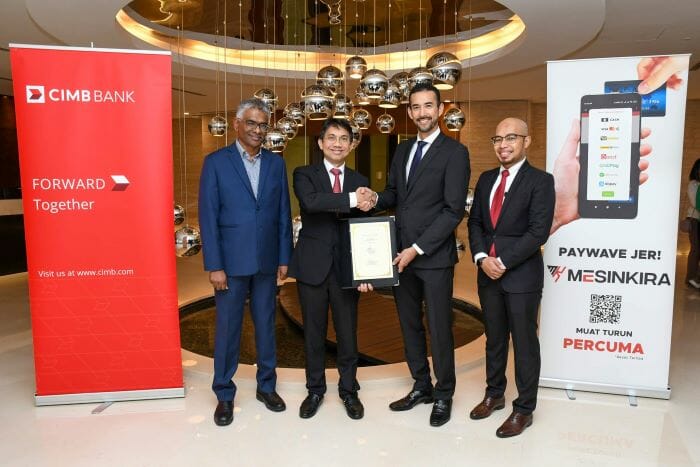
CIMB Bank is partnering with ModulEight Technologies Sdn Bhd to onboard MESINKIRA, an integrated mobile business management solution that helps micro, small and medium enterprises in their digitalisation journey.

MESINKIRA is a commercial platform that offers point-of-sale software including inventory management, payment and accounting, and reporting services to MSMEs. Its comprehensive suite of digital empowerment tools is aimed at aiding businesses in key business operation areas from a wide range of trades and industries to help accelerate business growth in a simple and efficient manner. One of MESINKIRA’s key solutions is its integrated in-house financial analysis and reporting function which adheres to regulatory compliance and exhibits precise data management while maintaining accounting best practices.

Victor Lee Meng Teck, Chief Executive Officer, Group Commercial Banking, said, “CIMB is pleased to welcome MESINKIRA as the latest partner to our selection of business transformation tools made available to our MSME customers. This latest offering also reaffirms CIMB’s continued commitment to support the development of MSME businesses, which form the backbone of the Malaysian economy, as they continue to accelerate their business growth post-pandemic.”

Syed Omar Almohdzar said, “MESINKIRA intends to support and help MSMEs grow, digitalise their operations and boost their net income and creditworthiness. This is achievable through our Retail Operations Support System (“ROSS”) which is truly end-to-end, easing business operations and reconciliation.

CIMB is currently offering a special deal to its existing SME customers where they will be able to enjoy a three-month fee waiver on any MESINKIRA subscription package.

What to do if Your Car is Submerged in Flood Water

0

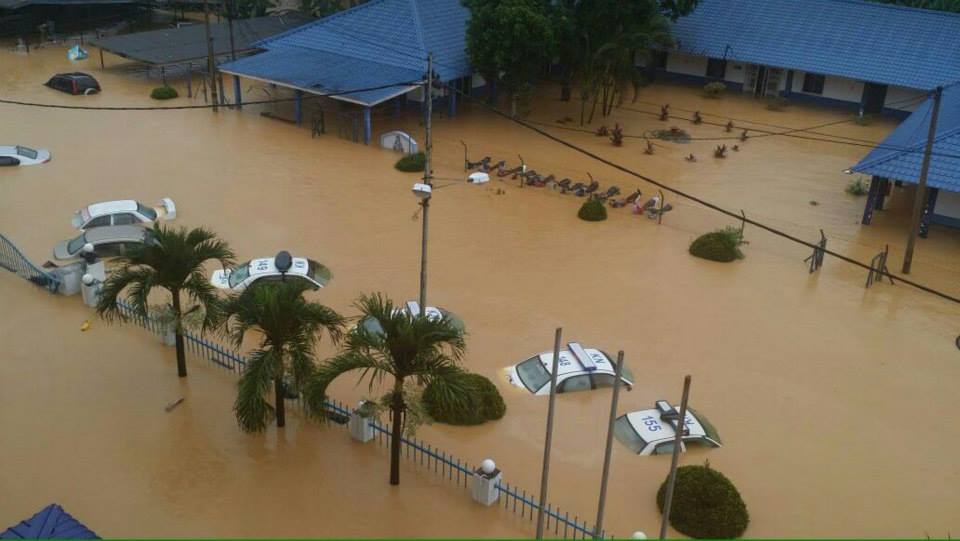
With floods now massively affecting hundreds and thousands of Malaysians, what do you do if your car has been submerged in water? Follow these steps according to Carsome and let’s hope the whole process will be easy and not worrisome for you.

Check the Water Level 

The first thing you need to do if your car is submerged in flood water is to wait for the water to recede before checking the condition of your car. Flood water usually leaves traces of mud on the surface of your car, especially on the exterior. Checking this is important to assess the possibility of damage and determine whether the flood water has submerged the entire car and has entered the engine and other parts of the car.

Do Not Start Your Engine 

If a flood has submerged your entire car including the cabin and engine bay, never start your car’s engine because that can cause a short circuit. Major components such as engines and gear systems can be damaged by the water. All you need to do is to remove the battery of your car and call a mechanic or tow it to a workshop.

Check the Engine & Gearbox 

Once your car is at the workshop, check the engine and the gearbox. Start by checking the dipstick of your engine. If the fluid appears milky, diluted, or beige in color, it’s highly likely that your engine has been flooded. exceeds the maximum line, this means your engine has been flooded. You can also drain the engine and inspect the oil in a pan.

Flush the Fuel (If Needed)

If the fuel tank is positioned on the lower side of your car, it increases the probability of flood water entering the tank. You then should remove the fuel that has been mixed with water to avoid more serious damage to your engine. Do check with your mechanic on how this process should be done.

Remove and Dry the Components of Your Car 

Any removable components in the car such as the radio, mats, and seats should be removed and dried properly. Wash your car with a heavy jet, especially the engine and brakes. However, never spray water towards the air filter holes and lubricating oil lids. Additionally, clean the dirt on the interior of your car like the cushions to avoid any kind of nasty odor. 

Cleaning a flood-damaged car is a huge task and best left to the professionals. You can get advice from your workshop, professional car wash, or professional cushion cleaner to get this job done effectively.

We hope this article will be able to help you if you ever have to drive your car in flood waters. Do remember it’s always safer to leave your car if the flood starts to get worse as your life is much more important to us. If there is a need to drive in the rain, it would be best to check the map app on your phone such as Google Maps or Waze to determine if it’s safe to drive.

SC Updates Investor Alert List

0

The Securities Commission Malaysia (SC) has updated its Investor Alert List.

In an alert on Monday (Nov 21), the commission said the following persons/entities were added to the list:

  • RoboForex
  • Potential clone entity — Robo Trade Program
  • RM Investment Bank
  • Potential clone entity — Tejara Capital

The Investor Alert List contains a list of unauthorised websites, investment products, companies and individuals, including:

  • Persons carrying on or holding themselves out as carrying on the following regulated activities without a licence from the SC:
    • dealing in securities
    • dealing in derivatives
    • fund management
    • advising on corporate finance
    • investment advice
    • financial planning, and
    • dealing in private retirement schemes
  • Persons operating a recognised market without authorisation
  • Persons issuing or offering securities without approval, authorisation or recognition
  • Persons misusing the SC’s logo and misrepresenting the SC

For the latest Business News and happenings, follow BusinessToday on Twitter

I Synergy Group’s New wyde Platform Set to Empower e-Commerce in the Global Marketplace

0

I Synergy Group has now launched its new SaaS product, wyde, an ecosystem for seamless digital eCommerce including its unique NFT technology.

wyde integrates with the advertiser’s eCommerce store and lists products and offers on the wyde Influencer app, now available for downloading on the Android and Apple stores. Influencers share links to their followers that in turn allow customers to register on the wyde customer app and earn wyde reward and loyalty points by purchasing through the shared link.  

The new technology will be initially launched in South-East Asia, with Australia to follow.

“wyde is a marketplace facilitator that empowers advertisers and merchants to engage, and drive revenue. This in turn reduces the cost in retaining customers for advertisers and merchants as through wyde they will be able to provide a frictionless customer journey and buying experience accompanied by a loyalty reward program which rewards spending,’ comments Mr Kevin Coutinho, Managing Director and CEO at I Synergy Group. 

Built on a blockchain-based platform, this provides a faster system, enhanced security, and allows for the upselling and reselling of products based on an AI recommendation engine.

With the birth of the new wyde App, which is an integration of VTRAK (affiliate marketing platform) and Rewalty (blockchain-based loyalty program) IS3 will be able to reduce the cost of maintaining both previous platforms significantly, and facilitate transactions across its services in a seamless manner so that advertiser and user acquisition cost are reduced and customer lifetime value increases. wyde will provide a unique customer, influencer and advertiser experience.

wyde will have a diverse offering of products and services across multiple industries and market sectors and will be geographically diverse. Customers will be rewarded with wyde rewards points on the network for each transaction they make.

wyde rewards points will be usable across all wyde advertisers, so customers and influencers can generate even more rewards and keep track of them all in the one place.

Customers have the option to become an influencer (affiliate partner) and have their own referral code system in place and may choose whether they want to use the platform as an influencer or whether they would just like to complete a one-off purchase via a referral link.

If an advertiser is referred to the wyde platform, and the advertiser onboards, the user who referred the advertiser gets rewarded. Favourite products can also be recommended to friends by sharing the product via their influencer link through the App, the friend can click on the link, sign up once on the wyde App and purchase the product, and then the customer/influencer will instantly receive rewards points to their App-based wallet.

The system incorporates an indexing feature for influencers to share links based on certain categories and customers can register for notifications for new products based on discounts, availability and new products launched.

wyde will have basic influencers and super level influencers. The ability for influencers to become super influencers is via a tiering system, and enables them to receive additional benefits and rewards including the opportunity for increased earnings and other bonus rewards.

The wyde App has a single sign-on function, so instead of multiple website sign-ins, or different multiple loyalty point program registrations, customers can just use a single sign-in which they’ve created with wyde across all advertisers and their websites, this simplifies the logins for them during current and future transactions. 

Users can register with wyde to obtain access to an exclusive unique digital wallet to receive rewards and join the waitlist to get access to limited NFT’s, whereby exclusive products and discounts will be offered to NFT holders on the wyde ecosystem.

The product stakeholders can increase the rewards held on their NFTs by continuing to collect points and provide value to the platform and upgrade their NFT status. 

Advertisers can upsell products and services, and users can market these, as part of the loyalty program, and the app will help the advertiser to collect user data for future product announcements. The loyalty program will include tiers, as well as a custom business program for regular buyers. The advertiser can customize offers for the customers, through customer data analytics, encouraging repeat purchases.

Advertisers will have access to the existing wyde database of customers and be able to reach customers by tapping into the existing wyde influencer network of influencers. 

wyde advertisers can seamlessly integrate with the wyde platform in minutes and start leveraging the company’s existing and new influencers and users. Sign up is quick and easy on the wyde Portal, after installing the App on the eCommerce Store, the wyde advertiser then imports all of the category/products into the database. Once live with offers, advertisers can track every product through a unique link to track the customers coming in through the wyde influencer network and set a custom commission rate for influencers, incentivizing them to promote the product/category. wyde charges a monthly subscription fee which also includes a fixed and variable fee that is dependent on the type of subscription. 

Sarawak CM Leaves The PM Decision To The Palace

0

In a statement issued to the press, Sarawak Chief Minister Abang Johari has left the ultimate decision on who will take over as Prime Minister of Malaysia to the King.

Abang Jo who is also the leader of the dominant party in Sarawak GPS had earlier vowed his allegiance to Tan Sri Muhyiddin Yassin Chairman of Perikatan Nasional the coalition party comprising PAS and Bersatu. In his statement, he added that in view of the political struggles in the Peninsular it is best to respect the will of the people and ensure the mandate is respected.

GPS had accepted PN’s offer to form the government, however, this caused resistance when Barisan Nasional leader decided to choose Pakatan Harapan as an ally to form the government. Now not only has the country encountered its first hung parliament but there is also an impasse on which party has the majority to form the next administration.

The Chief Minister concluded that what is important now is a stable government and the well-being of the people, this should be the focus above anything else.

Malaysia will know the outcome of the situation, after 2 pm today when the Agong receives the potential candidates’ list from the parties that have more than 112 MP backing.

Criminals “Follow the Money” by Commercialising Cybercrime

Sophos published its 2023 Threat Report. The report details how the cyberthreat landscape has reached a new level of commercialization and convenience for would-be attackers, with nearly all barriers to entry for committing cybercrime removed through the expansion of cybercrime-as-a-service. The report also addresses how ransomware remains one of the greatest cybercrime threats to organizations with operators innovating their extortion tactics, as well as how demand for stolen credentials continues to grow.

Criminal underground marketplaces like Genesis have long made it possible to buy malware and malware deployment services (“malware-as-a-service”), as well as to sell stolen credentials and other data in bulk. Over the last decade, with the increasing popularity of ransomware, an entire “ransomware-as-a-service” economy sprung up. Now, in 2022, this “as-a-service” model has expanded, and nearly every aspect of the cybercrime toolkit—from initial infection to ways to avoid detection—is available for purchase. 

“This isn’t just the usual fare, such as malware, scamming and phishing kits for sale,” said Sean Gallagher, principal threat researcher, Sophos. “Higher rung cybercriminals are now selling tools and capabilities that once were solely in the hands of some of the most sophisticated attackers as services to other actors. For example, this past year, we saw advertisements for OPSEC-as-a-service where the sellers offered to help attackers hide Cobalt Strike infections, and we saw scanning-a-service, which gives buyers access to legitimate commercial tools like Metasploit, so that they can find and then exploit vulnerabilities. The commoditization of nearly every component of cybercrime is impacting the threat landscape and opening up opportunities for any type of attacker with any type of skill level.”

With the expansion of the “as-a-service” economy, underground cybercriminal marketplaces are also becoming increasingly commodified and are operating like mainstream businesses. Cybercrime sellers are not just advertising their services but are also listing job offers to recruit attackers with distinct skills. Some marketplaces now have dedicated help-wanted pages and recruiting staff, while job seekers are posting summaries of their skills and qualifications. 

“Early ransomware operators were rather limited in how much they could do because their operations were centralized; group members were carrying out every aspect of an attack. But as ransomware became hugely profitable, they looked for ways to scale their productions. So, they began outsourcing parts of their operations, creating an entire infrastructure to support ransomware. Now, other cybercriminals have taken a cue from the success of this infrastructure and are following suit,” said Gallagher. 

Indeed, as the cybercrime infrastructure has expanded, ransomware has remained highly popular—and highly profitable. Over the past year, ransomware operators have worked on expanding their potential attack service by targeting platforms other than Windows while also adopting new languages like Rust and Go to avoid detection. Some groups, most notably Lockbit 3.0, have been diversifying their operations and creating more “innovative” ways to extort victims. 

“When we talk about the growing sophistication of the criminal underground, this extends to the world of ransomware. For example, Lockbit 3.0 is now offering bug bounty programs for its malware and ‘crowd-sourcing’ ideas to improve its operations from the criminal community. Other groups have moved to a ‘subscription model’ for access to their leak data and others are auctioning it off. Ransomware has become, first and foremost, a business,” said Gallagher.

The evolving economics of the underground has not only incentivized the growth of ransomware and the “as-a-service” industry, but also increased the demand for credential theft. With the expansion of web services, various types of credentials, especially cookies, can be used in numerous ways to gain a deeper foothold in networks, even bypassing MFA. Credential theft also remains one of the easiest ways for novice criminals to gain access to underground marketplaces and begin their “career.”

Sophos also analyzed the following trends:

  • The war in Ukraine had global repercussions for the cyberthreat landscape. Immediately following the invasion, there was an explosion of financially motivated scams, while nationalism led to a shake-up of criminal alliances between Ukrainians and Russians, particularly among ransomware affiliates
  • Criminals continue to exploit legitimate executables and utilize “living off the land binaries” (LOLBins) to launch various types of attacks, including ransomware. In some cases, attackers deploy legitimate but vulnerable system drivers in “bring your own driver” attacks to attempt to shut down endpoint detection and response products to evade detection.
  • Mobile devices are now at the center of new types of cybercrimes. Not only are attackers still using fake applications to deliver malware injectors, spyware and banking-associated malware, but newer forms of cyberfraud have been growing in popularity, such as “pig butchering” schemes. And this crime is no longer just affecting Android users, but iOS users as well.
  • The devaluation of Monero, one of the most popular cryptocurrencies for cryptominers, led to a decrease in one of the oldest and most popular types of cryptocrime—cryptomining. But mining malware continues to spread through automated “bots” on both Windows and Linux systems.

To learn more about the changing threat landscape in 2022 and what it means for security teams in 2023, read the full Sophos 2023 Threat Report

Ox Street, Sneaksurf To Bring Sustainable Sneakers To Culture Cartel

0

Ox Street announced that it will be collaborating with sneaker retailer Sneaksurf to bring a special sneaker recommerce popup store to Culture Cartel, a street culture event happening in Singapore from 1 December to 4 December. 

The popup store will feature a Japanese ‘Wabi-Sabi’ theme which embraces the beauty in imperfection, providing not only a selection of top recent sneaker releases, but also a line of used ‘grails’ that have been authenticated by the Ox Street team to create a unique sneaker shopping experience at the event. This follows Ox Street’s introduction of Used earlier this year to head the sustainability movement within the sneaker resale market.

Commenting on the collaboration and concept, Ox Street founder and CEO, Gijs Verheijke said, “We loved the philosophy of Wabi-Sabi where you embrace and even celebrate imperfections and transience – which applies to used sneakers, where every scar and every scuff has a story and gives the shoes more character. Buying pre-loved is a great concept as you are not only keeping shoes out of landfills, but it is also economical as used pairs can go as low as 50% or even as much as 70% off brand new. With a generation of people who care about the environment and enjoy thrifting, we think Culture Cartel is a great moment to celebrate sustainability.“

Culture Cartel attendees will be able to visit the Ox Street recommerce popup store to access a broad supply of products instantly available for pickup, with pre-verified sneakers available for purchase on the spot. For visitors whose sizes are not available at the popup store, Ox Street’s marketplace will provide full selections that can be delivered to the buyer’s home at a later date. 

Beating Its FY22 Sales Target, LBS Bina Finds Its Lead in Affordable Housing: RHB IB

0

LBS Bina’s first nine months (9M22) results beat expectations on faster-than-expected progress billings for key development projects. It has exceeded its MYR1.6bn FY22 sales target, with total sales of MYR1.8bn as of mid-November, demonstrating the continued strong demand for affordable homes despite macroeconomic challenges. Nevertheless, RHB Research has increased its RNAV discount to 65% to account for the uncertain political environment, economic outlook, and market sentiment.

Above expectations. 3Q22 earnings of MYR35.4m (+0.6% QoQ, +95% YoY) brought 9M22 earnings to MYR100.6 million (+69% YoY). Results were above expectations, at 85% of the Street’s full-year estimates. 9M22 revenue rose 46% YoY on higher contribution from its key development projects, with Klang Valley projects remaining the largest
contributor at 85% of total revenue. However, 9M22 EBIT margin was slightly compressed at 15.5% vs 9M21’s 16.5% due to higher building material costs.

Beating its sales target. LBS exceeded its initial sales target of MYR1.6bn for FY22 with MYR1.8bn total sales as of mid-November (FY21: MYR1.58bn). Most of the new sales were contributed by projects at LBS Alam Perdana, KITA @ Cybersouth, and Idaman BSP. Take-up rates for ongoing projects are healthy, averaging at 82%, and pipeline
bookings of MYR288m should lead to a strong end to the year. Unbilled sales are stable at MYR2.54bn as of October (Sep 2022: MYR2.5bn, Sep 2021: MYR2.1bn), providing revenue visibility for the coming years.

Project launches on schedule. LBS has picked up the pace of its property launches during the quarter, launching MYR1.2bn GDV as of mid-November from just MYR305m by mid-August. It plans to launch a total MYR1.78bn GDV for FY22, with MYR424m worth of launches expected in 4Q22, including the 26-unit Emerald Garden in Batu Pahat
and Idaman Melur. While the rising interest rate and inflationary environment are downside risks, the full stamp duty exemption for homes below MYR500k should help mitigate this risk next year.

RHB Research still maintains BUY rating on LBS Bina. In view of the better-than-expected results, the research house has raised its forecast earnings of FY22F-24F by 6-13%, but lowered its target price (TP) on a higher RNAV discount of 65% from 60% due to the uncertain political environment.

While the rising interest rates and inflationary environment are downside risks, the research house holds the belief that LBS’ positioning as a leading player in the affordable housing segment should mitigate these risks. A 0% ESG premium/discount is applied to the TP as the group’s ESG score of 3.0 is in line with the country median.

Asian Shares Mostly Down On Fears Of China Covid-19 Strict Curbs

0

Asian shares were on the defensive on Tuesday as a COVID-19 resurgence in China increased concerns that Beijing may reimpose strict pandemic curbs and that further restrictions could cause supply chain disruptions.

The dollar pulled back from strong overnight gains on Tuesday while oil took a pause from Monday’s retreat.

The broader Asia-Pacific index ex-Japan lost 0.25 percent in early trade, while China’s benchmark dipped 0.13 percent. Hong Kong’s benchmark index fell 1.31 percent.

Japan’s benchmark Nikkei average opened up 0.78 percent, while Australian shares rose 0.55 percent.

Over here in Malaysia, the FTSE Malaysia KLCI is also slipping down to 1439 as of 11 am.

“China’s Covid situation is really in the front row for Asia trading,” said Redmond Wong, market strategist for Greater China at Saxo Markets in Hong Kong.

Beijing warned on Monday that it was facing its most severe test of the pandemic, fuelling investor concerns that China may be forced to resume strict mobility curbs and give stay and home orders across cities.

Surging cases in manufacturing cities may cause supply chain disruptions, said Wong.

The dollar pared some of its strong overnight gains on Tuesday after investors flocked to the safe-haven currency on nerves over China’s COVID flare ups, but analysts at the National Australia Bank questioned whether demand for the greenback was sustainable.

“Evidence U.S. inflation has peaked and can fall significantly in 2023, together with China and Europe developments, convince us a USD depreciation cycle is now in train,” they said in a note on Tuesday.

U.S. Treasury yields across most maturities rose on Tuesday amid expectations of further Federal Reserve interest rate hikes. The benchmark 10-year Treasury yield rose six basis points.

Oil prices rose slightly in early Asian trade, a day after Saudi Arabia denied a media report that it was discussing an increase in oil supply with OPEC and its allies.

U.S. crude rose 0.27 per cent to $80.26 per barrel on Tuesday and Brent was at $87.79, up 0.19 per cent.

Spot gold traded at $1,738.39 an ounce.

Source: Reuters

The GrowHub, Tangobar Partner For Sustainable Community Development And ASEAN Market Penetration

0

The GrowHub, Asia Pacific’s Web 3-enabled plug-and-play ecosystem builder for food traceability and carbon credits, announced its strategic partnership with Kyoto’s leading craft canning producer and food experience provider Tangobar. Tangobar is committed to the development of canned foods using local agricultural and marine products as well as food promotion events. The GrowHub will be providing its proprietary Web-3 technology to Tangobar to support the sustainable development of the local community in Kyoto Prefecture (Kyoto by the Sea) and the penetration of its products in the ASEAN market.

With a goal of maximizing local food resources, knowledge, and techniques to promote the diversity of Kyoto’s rich landscape, Tangobar seeks to create a harmonious relationship between food producers and consumers to develop a sustainable food culture that is beneficial for all. The GrowHub’s mission of fostering sustainable and conscious trade and providing authentic food that consumers can trust via Web-3 technology aligns with Tangobar’s efforts to contribute to the local environment and communities.

The GrowHub’s unique blockchain solution, which enables direct two-way communication with consumers, will enable Tangobar to tell the rich story of its products and the local community in northern Kyoto while providing them the insights needed to expand and create demand for their product offerings among ASEAN consumers. By creating demand for food experience programs and local food processing, Tangobar hopes to contribute to new employment opportunities and sustainable economic growth in the region.

Dr. Daiki Nakaoka, the Country Head of The GrowHub Japan shared, “While many rural areas in Japan have wonderful food resources, they are faced with the challenges of increasing employment opportunities for locals and re-innovating food experience programs with environmental considerations. This partnership significantly enhances the opportunities for local communities to thrive in ASEAN in a sustainable manner.”

Naoya Seki, Founder, and CEO of Tangobar mentioned, “The GrowHub is a key player in distributing products that contribute to the development of a sustainable environment and society in ASEAN. It is beyond challenging to scale local food resources to potential consumers beyond Japan. As such, The GrowHub comes in as a bridge to enable us to communicate directly with ASEAN consumers. Through this, we are better able to tailor our products according to the needs and demands of new audiences. We are looking forward to our strong partnership with The GrowHub and future roadmaps for consumers to visit our production facilities in Kyoto.”

PCCS Showed Stronger Result in Typical Quiet Second Quarter, Net Profit Ballooned to 241.83% to RM5.65 Mil

0

The athletic apparels company posted stellar second quarter result. The second quarter is typically a quiet quarter for the group, its net profit for the second quarter ended Sep 30, 2022 soaring 241.83% to RM5.65mil from a mere RM1.65mil in the same quarter of the previous year.

PCCS showed better results due to a foreign exchange gain of RM4.43mil. This is attributed to the strengthening US Dollar against the Ringgit.

Meanwhile, there is only a 1.24% increase in revenue to RM104.06mil.

In terms of net profit, there was also a 10% contribution from PCCS’ credit financing business, which only began in Aug 2021. Although just over a year old, it has booked revenue of RM1.29mil for the quarter and is already recording double digit growth and margins. For the cumulative six months period, the credit financing division has contributed revenue of RM2.27mil.

Moving forward, the credit finance business is expected to help support the seasonal nature of PCCS’ core athletic apparel business, and therefore provide more stability in earnings moving.

Meanwhile, the remainder of the profits were contributed by PCCS’ core apparel business in China.

Thus, this brings PCCS’ six month to Sep 30, 2022 cumulative net profit to RM22.84mil from RM3.27mil. Revenue stood at RM273.36mil from RM202.29mil previously.

The high six months profits are also due to the extraordinary gain of RM6.9mil contributed by the gain on disposal of two subsidiaries in its first quarter.

Minus off these exceptional items, PCCS still recorded impressive core net profits of RM8.4mil for the first quarter to June 30, 2022.

While 90% of its business in athletic apparels, PCCS also has divisions in hire purchase financing and medical devices. Its largest export markets for its sportswear are China, European and American countries.

The company continues to be in a strong financial position, and remains in net cash position as usual. It has cash in the bank of RM80.69mil and short-term funds of RM6.04mil.

Meanwhile, borrowings stood at RM33.04mil, but this is strongly supported by inventories of RM47mil and trade receivables of RM52.71mil.

While the group continues to have some RM350mil of apparel orders to fulfil for its financial year ended March 31, 2023 (FY23), the Covid zero policy and sudden lockdowns in China are causing some havoc to PCCS’ manufacturing business in China.

“We have experienced some delays and setbacks in our manufacturing side because of the measures by the Chinese government. This is out of our control, and we do foresee that the apparel business in Cambodia and China to experience some downturn in sales for the following quarter,” said PCCS group managing director David Chan Wee Kiang.

“We are better prepared this time, and thus expect the manufacturing and supply chain hiccups to be more manageable this round. The Group will leverage on its operational efficiencies and cost savings initiatives to achieve better performance,” added Chan.

Moving forward, Chan continues to see a lot of traction and opportunities in the athletic apparels segment.

“We have been moving up the value chain and are already developing high tech athlete wear for Li Ning, Puma and Decathlon to name a few. With our strong track record and financial position, we are on the lookout to acquire apparel related businesses or to work with a big established brand,” said Chan.

PCCS’ biggest customers are Decathlon, Puma and Li Ning.

Beginning 2022, PCCS officially designs, develops and manufactures for Puma in China. PCCS officially kits out the Decathlon racing team that competes for the Tour de France, as well as China’s national ping pong and badminton players under Li Ning.

For the latest Business News and happenings, follow BusinessToday on Twitter

Flexibility Is Malaysia’s New Workplace Currency

0

In the aftermath of the global pandemic, employees are demanding flexibility and autonomy, and organizations are trying to keep up with the ever-changing world of work. The EY 2021 Work Reimagined Employee Survey reveals that only 22% of respondents in Malaysia would prefer to work from the office full-time. 9 in 10 want flexibility regarding where and when they work, and 7 out of 10 respondents say that hybrid work will increase productivity and creativity. Even more staggering is the finding that 50% of survey respondents would quit their jobs if not provided with post-pandemic flexibility. 

Both organizations and governments are making changes to navigate this new normal. Recently, the Malaysian government codified such working arrangements through the Flexible Work Arrangements (FWA) by modifying the Employment Act of 1955. However, adopting FWAs in organizations calls for informed decision-making, and setting up the infrastructure and ecosystem that supports such an arrangement for long-term sustainability. 

Workplace agility – the key to flexibility

In the workplace of today, flexibility is intertwined with agility; a term that denotes the organization’s readiness and speed to react to changes. There are several ways for an organization to build agility in the workplace such as strategy, values, agile team, organizational structure, culture, and processes. For employees, this translates into continuous learning and development, upskilling, and experiencing a people-centered, purpose-driven culture that supports them. The latter includes having control over their working hours (33%) or having the ability to work from any location (24%) or choosing the days to work (19%) or being measured by performance instead of hours (18%), as per a Qualtrics research. Work-life integration is pivotal to employee satisfaction, so much so that the same research indicates that ‘flexibility is a big driver of retention (66%) in Southeast Asia’.

‘Flexible Working Arrangement’ 

The Flexible Working Arrangement (FWA) Amendment Act comes as a huge step from the Malaysian government in response to the growing ‘workplace flexibility’ expectations that employees have. HRD Corp conducted a survey of 1136 respondents across all states in Malaysia targeting workers from all industries. The survey validated what chief human resource officers (CHROs) and HR leaders had deduced from their on-ground experience of managing talent. 59% of respondents strongly agreed, while 26% agreed that having an FWA option in their organization was important. The most frequently cited reasons in support of FWA were – personal health management, decreased travel time, increased work productivity, and more time for family and childcare needs.

TalentCorp, the national agency that drives Malaysia’s talent strategy and works with organizations to implement FWA at their workplace, believes FWA will play a key role in the future of work (FoW) by empowering the workforce.

HR Technology to facilitate workplace flexibility

While the amendment empowers employees, what can empower the organization to become flexible and agile? One part of the answer is establishing clear policies and guidelines and building a communication plan to set clear expectations with all stakeholders. The other vital part is – the right technology and tools. 

A modern HR technology platform can address the expectations of both an organization and its people. A human resource management software (HRMS) can enable enterprises to adapt to change quickly, facilitate processes in a seamless manner, provide tools for collaboration for the remote/hybrid workforce, free up admin time for HR while increasing productivity, efficiency, and engagement for employees. Next-gen HRMSs also help in configuring and tracking overtime, managing data for part-time work, staggered shifts, seasonal work, etc. along with customized leave policies, and so on. 

There is no one-size-fits-all working arrangement, but organizations now have an opportunity to tailor work models in alignment with their people’s expectations. A nimble IT infrastructure with a future forward HRMS combined with governmental and corporate leadership support will play a crucial role in achieving the desired flexibility in the workplace in Malaysia. 

By Jayant Paleti, Co-Founder at Darwinbox

TIME Divests Stake In AIMS Data To DigitalBridge For RM2 billion

0

TIME dotCom Berhad has partnered with affiliates of DigitalBridge Group, Inc. one of the world’s leading owners and operators of digital infrastructure assets, in its efforts to accelerate the expansion of its data centre business, AIMS Group across Asia.

The strategic partnership entails the immediate divestment by Time of 49% of the ordinary shares and 100% of the irredeemable convertible preference shares in AIMS Data Centre Holding Sdn Bhd, as well as 21% of the ordinary shares in AIMS Data Centre (Thailand) Limited. The transaction is expected to close by the end of Q2 2023, subject to certain
conditions precedent (including Time shareholder approval) being satisfied.

“This strategic partnership allows us to crystallise substantial value from the investment we have made in AIMS over the years. Proceeds from the transaction of approximately RM2 billion will partly be used to pay a special dividend of up to RM1.0 billion to our shareholders, and the balance will be reinvested into the Group to further grow shareholder value,” concluded Afzal Abdul Rahman Commander In Chief.

As part of the strategic partnership, the overall AIMS business is being valued at an enterprise value of RM3.2 billion. This compares to its current book value of RM240 million and represents a significant gain since Time first acquired AIMS in 2012 for RM119 million.

AIMS centres currently include its flagship facility in downtown Kuala Lumpur, a state-of-the-art purpose-built site in Cyberjaya and a new data centre in downtown Bangkok.

Under the partnership, parties are looking at rapid tactical expansion of data centre facilities across primary and secondary cities in ASEAN and beyond with a focus on providing best-in-class services to multinationals, large enterprises, content providers, internet infrastructure providers and financial institutions. The plans will centre on AIMS as the primary platform for expansion, whilst making Malaysia a core hub and gateway for greater connectivity in the region

After reviewing the business, the telecommunication company found that there were significant opportunities in underserved markets across Asia. Aggressively pursuing these opportunities would require significant investments as well as a deep understanding of global trends in the space. Time felt that this ambition would be best realised with a strategic partner that has a global lens, culminating in today’s announcemennt.

“We believe that DigitalBridge is the right partner as they are committed to building on AIMS’ heritage and capitalise on its strengths. We see this as a true partnership that will allow us to tap on their global experience in other markets,” said Afzal Abdul Rahim, Commander-in-Chief of Time.

“AIMS operates some of the most strategic data centre assets in the ASEAN region,” said Justin Chang, Managing Director and Head of Asia for DigitalBridge.


Malaysia’s Short-Term Political Risk Index Score May Rise: Fitch Solutions

Fitch Solutions Country Risk and Industry Research said it will likely be raising Malaysia’s short-term political risk index score over the coming days once the new government is formed, and when there is greater clarity with regards to policy direction.

In a note on Monday (Nov 21), the firm however said if a new, stable government is not formed over the coming weeks, it could lead to greater uncertainty and weigh on our growth forecast of 5.8% in Q422 and 4.0% in 2023 as investors take a wait and see approach.

Fitch Solutions said with neither coalition having an outright majority, both PN and PH are now negotiating with their potential partners in a bid to form the next government. PH and PN has ruled out coming together to form the government, leaving BN and GPS as potential kingmakers.

“We reiterate our expectation for political stability to return in Malaysia, once the new government is formed, reinforced by the ‘anti-party hopping’ bill, which was passed in July and effective October 5.

“The law should prevent another collapse of the new government due to party defections.

“Theoretically, that should also lead to an improvement in the policymaking process, reducing the need for the next ruling government to seek support from smaller parties in order to prevent defections,” it said.

For the latest Business News and happenings, follow BusinessToday on Twitter

Anwar: ‘Desperate And Selfish Parties’ Must Not Fan Flames Of Chaos

0

Datuk Seri Anwar Ibrahim said he supports all efforts by the police to quell any attempt to cause trouble and trigger disharmony in Malaysia.

In a Facebook statement posted in the early hours of this morning, the Pakatan Harapan (PH) chairman also reminded “desperate and selfish parties” not to fan the flames of chaos at this critical time for the country.

“I am concerned to see a handful of desperate and selfish parties fanning the flames of racist sentiment and rhetoric at a crucial time like this.

“Efforts and endeavours to establish a government that is responsible and stable should not end in chaos because the Malays, Chinese, Indians, Orang Asli, Sabah and Sarawak tribes are part of the brotherhood of humanity and Malaysians that love peace.

“I very much welcome the stern statement by Inspector-General of Police Tan Sri Acryl Sani Abdullah Sani in seeking to stop any development that could threaten the unity of Malaysia,” he said in the brief statement.

Last night, police warned social media users not to share posts that could threaten public safety and order.

Acryl Sani said the police had found social media content with racial or religious sentiments and insults towards the royal institution in apparent reaction to the inconclusive 15th general election (GE15) results and ongoing efforts to form a government.

“PDRM, in calling for restraint, is warning social media users to refrain from abusing the platform to spread provocative content that may cause public alarm.

“Strict action under the Communications and Multimedia Commission Act 1998, (and also) the Sedition Act and Penal Code will be used against any party trying to create a situation that threatens public safety and order,” he said in a statement tonight.

The 15th general election ended on Saturday with both the PH and Perikatan Nasional coalitions claiming to have enough numbers in the 222-seat Parliament to form government.

PH currently has 82 seats while PN has 73. The Barisan Nasional coalition, which had pushed for national polls to be held this year ahead of the GE14 expiry next year, only garnered 30 seats.

The Yang di-Pertuan Agong has given prospective prime minister candidates a revised deadline of 2pm today to prove that they have a majority.

Anwar Extends Olive Branch to Abang Johari

Pakatan Harapan (PH) chairman Datuk Seri Anwar Ibrahim has reached out to Gabungan Parti Sarawak (GPS) chairman Tan Sri Abang Johari Openg to invite GPS to be part of the unity government he plans to form in Putrajaya.

Anwar said he had reached out to Abang Johari today and explained why aligning with PH would be a better option for Sarawak, as opposed to Perikatan Nasional (PN).

“Yes, I reached out to Abang Johari through our trusted representatives and explained why we are better partners for Sarawak and also Sabah,” Anwar told The Vibes briefly when contacted.

“We have a deep respect for Sarawak and its people and we understand their struggles and needs.

“Sarawak and Sabah just want to be treated fairly and PH can offer that,” a online news site reported Anwar saying.

He said PH can ensure Sarawak and Sabah enter into a true partnership that will ensure the people there are treated equitably.

“Sarawak and Sabah are often paid lip service for their support but I’ve assured that with PH they will not be taken for granted,” Anwar added.

He said what is best for multi-ethnic and multi-religious societies like in Borneo is a coalition like PH that is representative of a multi-racial and multi-religious Malaysia.

“PH champions equitable treatment of all groups while preserving the enshrined Constitutional rights and privileges of Malays and Islam, as well as the rights of other communities.”

He said he is now waiting for the Premier’s response.

“I consider him a friend. I am looking forward to speaking or meeting him soon,” he said.

For the latest Business News and happenings, follow BusinessToday on Twitter

Free Forum: Is Your Business Ready For 2023?

We are just about a month away before 2023 slips in, the past 2 years have been peculiar, to say the least. If you’re a business depending on which industry you’re involved the situation must have been really challenging.

Thankfully for some of us, the pandemic years were mitigated with technology, it is with this grace that we were able to connect and function sanely through the lockdowns and stay-at-home orders. Entrepreneurs who had invested in technology could somewhat function semi-normally and kept their businesses going. In fact, there were even businesses that grew purely in this period using new and existing solutions, think Zoom, TikTok, and eCommerce.

Things have changed profoundly; the way of doing business has evolved today if you are not digitally adapted you could be left behind… to be blunt recall dinosaurs! Digital adoption is no longer a fallacy or future, it’s critical and companies are late to the game if they still look at these as a cost rather than an investment.

However, many business owners are at the end of how to begin their digital journey or take that leap. Questions are aplenty on which technology to adopt, and what hardware or software is best suited for their business.

BusinessToday has engaged with many entrepreneurs who all seem to ask the same niggling question which we have now taken upon ourselves to try to address them with industry experts.

Join the forum and see how your business can accelerate

Our BusinessToday Masterclass Forum, titled Scale Up Digitally with Technology aims to answer these questions and hopefully give you a better understanding of how to move your business ahead by using the right technology tool.

We have invited industry experts like Yogesh Bhatia who will share insights on how business can accelerate their digital journey by investing smartly and can listen to Koh Lian Chong from AMD who will highlight some of the future developments that is taking place in the digital world like Metaverse, IR4, and Web3.0.

This fully sponsored Masterclass forum (because we believe learning should be free just like our content is free to read) will take place on 24 November at 9:00 am at Nexus Bangsar South

Participants will also receive an exclusive goody bag with a free grooming product, Starbucks Voucher, and Domino Pizza Voucher.

Seats are limited to register click here.

For inquiries you may call:

Afiqah 0147205132

Izad 0175508909

Expect 10 Minute Delays Between Putra Heights And Kelana Jaya LRT Stations

0

Rapid KL has issued a statement via social media stating that Kelana Jaya LRT passengers should expect delays of 10 minutes at some stations between Putra Heights and Kelana Jaya.

Some users on Twitter have reported MRT delays as well but Rapid KL has yet to issue a statement regarding it.