


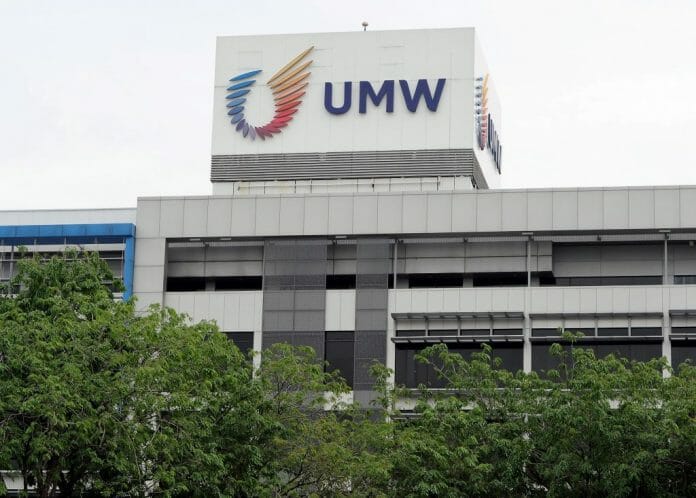
UMW Aerospace (UMW) returned to profitability in the fourth quarter of financial year 2022, and they expect to achieve a full-year profit in financial year 2023,” said Kenanga Research (Kenanga) in the recent Company Update Report.
“We anticipate that the sales volume of fan cases will double in financial year 2023 to 192 units, compared to 96 units in financial year 2022. They aim to reach full capacity of 250 units by financial year 2025,” said Kenanga.
Additionally, UMW benefits from a fixed margin agreement under a cost-plus model, allowing them to pass on fluctuations in input costs to Rolls-Royce with a natural forex hedging mechanism. Increased profitability can be expected from economies of scale and improved manufacturing efficiency.
UMW Aerospace has the ability to scale up production of their existing products and expand their capabilities through collaborations to venture into new products.
In April 2023, they secured a second contract worth RM1 billion for the exclusive manufacturing of rear fan cases, previously imported from a North American supplier.
The new chemical milling plant for rear case production is set to undergo a trial run in 2024, with the first delivery scheduled for 2025, matching the front cases’ capacity of 250 units. The plant has attracted interest from local OEMs for potential collaborations.
Our target price of RM4.80, derived from a Sum-of-Parts valuation, remains unchanged and already includes the valuation of UMW’s aerospace segment. The recurring order from Rolls-Royce reflects positively on UMW’s credibility and operational efficiency.
“There is no adjustment to our target price based on ESG, as we have appraised it with a 3-star rating,” said Kenanga.
Kenanga has a positive outlook on UMW due to its mass-market automotive brands, such as Toyota and Perodua, as well as high-margin models like Toyota Vios and Perodua Alza.
The automotive business demonstrates strong earnings visibility with a backlog of over 240,000 units. Additionally, UMW benefits from the recovery in its heavy and industrial equipment business, along with the manufacturing of aero-engine fan cases.
Risks to Kenanga’s assessment include a reduction in discretionary spending by consumers, particularly on big-ticket items like cars, due to high inflation, disruptions in the supply chain, escalating input costs, and a global recession impacting demand for industrial/heavy equipment.


