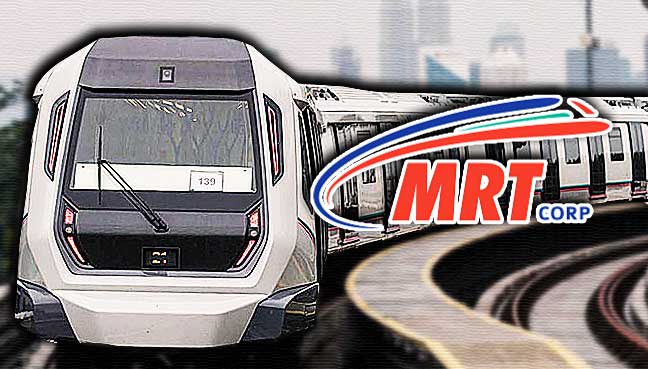
The Mass Rapid Transit (MRT) Corporation Sdn. Bhd. is a company established specifically to build urban rail infrastructure and own assets and MRT Corp receives financial contributions from the Government to fulfil this purpose.
Deputy Finance Minister Lim Hui Ying, in the Dewan Rakyat today, said the “losses” reported in the Auditor General’s Report are costs incurred for the construction of MRT1 and MRT2 infrastructure. These costs are audited annually by external auditors and are found not due to mismanagement by the company management.
Lim said this during the ministry’s winding up speech relating to Auditor General’s Report 2/2024, specifically on the management of Federal Government companies today.
“As a note, Prasarana Malaysia Berhad (Prasarana) is the appointed operator by the Government for MRT1 and MRT2 operations. Therefore, revenue is collected by Prasarana and used to cover Prasarana’s daily operations and maintenance expenses.
Government’s Plan Towards Improvement And Recovery
The daily passenger count on the MRT1 route has reached 250,000 to 270,000 passengers per day. For example, on 29 May 2024, the number of passengers on the MRT1 route reached 274,302.
This represents a 20% increase from the pre-COVID-19 passenger rate. In efforts to further increase passenger numbers, Prasarana is in the process of adding new buses to enhance initial and final mile connectivity.
On increasing costs surrounding the RTS Link, Lim said: “For the RTS Link Project, the construction phase is expected to be completed by December 2024, except for facade works at Bukit Chagar station, which will continue until 2026. All construction contracts have also been awarded. As the project is in its final construction phase, the Government does not anticipate any significant cost increases until the completion of the construction period.
“RTS Link operations will be commercially operated by RTSO Pte. Ltd., a joint venture between Prasarana and SMRT Singapore. Therefore, to ensure operational sustainability, RTS travel fares need to be set at reasonable and equitable rates, subject to user capability.
Lim added, there are short and Long-term plans by the Government to ensure MRT Corp becomes the developer and owner of this infrastructure asset which can reduce its dependency on the Government.
“MRT Corp is a company established specifically to implement rail infrastructure projects. Therefore, civil structure construction costs are usually fully funded by the Government. To reduce the Government’s future financial burden, the Government is exploring taxation methods for rail system components, including rolling stock. Efforts to increase funding generation from MOT/Government MADANI to meet public transportation operational needs.
The Government encourages rail companies to seek additional funding from transit-oriented development (TOD) development-oriented sources, commercial activities including advertising and fibre optic cable leasing, and sustainable energy generation, Lim said at the Parliament sitting today.
“Lawmakers had also raised issues concerns about customer satisfaction levels for both MRT 1 and MRT 2 routes increasing from 2022 to 2023. However, improvements are needed in terms of MRT area parking facilities.
She said the lack of parking in the Putrajaya Line area was due to cost-saving measures taken in 2018/2019 to reduce project costs. MRT Corp is currently reviewing proposals to rebuild several previously suspended multi-storey parking facilities and additional parking at new locations. MRT Corp aims to increase the number of parking spaces by 2,300 from the existing 6,400 spaces.
She added Rapid Rail, under Prasarana Malaysia Berhad as the operator of MRT, LRT, and Monorail routes, continuously monitors with local authorities/police around station areas to ensure that users do not park vehicles on shoulders and obstruct traffic.
Maintenance Issues (issues such as non-functional parking area lights, stagnant water, creeping plants, and malfunctioning train information displays).
Actions have been taken to maintain parking sites, and this will be monitored periodically. Rapid Rail also regularly maintains all facilities at stations, especially lights within premises under Rapid Rail’s control. The availability percentage of maintenance is announced weekly to the public via the RapidKL website. As of now, the availability of lights within Rapid Rail-controlled premises is 99.7% (including LRT, Monorail, and MRT).
On matters such as inaccurate bus schedules, unpredictable traffic congestion, lack of sheltered bus stops, and so on, Rapid Bus under Prasarana Malaysia Berhad is responsible for operating MRT intermediate bus services with a total of 228 buses involving 106 routes.
Bus schedules are also aligned with LRT, MRT, and Monorail services to ensure easy and rapid intermodal transfers. Information on bus schedules, including arrival and departure times, is available via electronic boards at bus stops and the PULSE mobile app, Lim explained.
Bus frequency will be increased with plans to purchase 560 new buses by Prasarana and 150 DRT vans (Demand Response Transit), scheduled to be received gradually from 2025 to 2026.
Also, Rapid Bus collaborates with the Police and Local Authorities (PBT), particularly DBKL, to establish more dedicated bus lanes after the success of such lanes in the Jalan Ampang corridor, she said.
Shaded bus stops fall under the responsibility of Local and Federal Governments. Acknowledging the need to increase the number of shaded bus stops, Prasarana is planning to enhance this infrastructure in cooperation with local authorities. The implementation of this project is scheduled for completion within 2 years and involves improvements to 344 bus stops around the Klang Valley with the cooperation of local authorities including MBSJ, MBSA, MPKj, and MBPJ, she added.