


If you notice stiff neck or sore back after a day’s work, that could be your body signaling some dangerous wear and tear sign on the bones!
And the solutions can be simpler than you think.
First, you can fix this by doing the right kind of exercise. All forms of physical exercise are great for maintaining health, but not all workouts benefit bone strength. Low-impact activities like cycling and swimming are great for fitness but won’t do much for bone density.
Instead, do weight-bearing exercises1 such as jogging, brisk walking, dancing, tennis, and even as simple as walking upstairs to increase bone mass and density as the exercises produce a force on your bones that makes them work harder. Complement them with balance training and stretching exercise to improve stability and prevent falls.
Incidentally, good exercise regime can also relax your mind and increase your mental agility2. In other words, you become happier and more alert by exercising, in addition to promoting bone density building.
Other measures you can take include investing in an ergonomic chair that corrects your posture, adjusting your monitor screen to eye level to ease straining eyes, and taking breaks regularly to move around and flex your muscles after you have remained seated for a long period of time.
Then, ponder the fact that there’s a good reason why vitamin D is called “the sunshine vitamin”. When your skin is exposed to sunlight, it provides the energy for vitamin D synthesis to occur. Vitamin D in turn instructs the cells in your gut to absorb calcium so your bones grow strong and healthy.
Some health experts suggest that we need to get enough sunlight at least twice a week for about 10 to 30 minutes. However, it is important to stay mindful of the risks associated with sun exposure. Take precaution to avoid prolonged exposure and apply sunscreen lotion with high SPF value to protect from the risk of skin complication later. (SPF: Sun Protection Factor)
Next, besides eating healthy food, monitor closely your intake of coffee or tea. If you habitually drink more than two cups of coffee or tea a day, the caffeine intake can deplete your bones as caffeine interferes with calcium absorption, as reported by researchers3.
However, moderate caffeine intake is unlikely to cause significant bone loss if your calcium intake is adequate, coupled with good diet and regular exercise. If you absolutely must indulge in coffee, consider low-acid substitutes as these contain lower levels of caffeine.
Bear in mind that a diet lacking in calcium and vitamin D can compromise bone health. Yes, besides physical activities out in the sun, we are also encouraged to source vitamin D from our food intake. Notably, calcium and vitamin D work hand in hand to boost bone density4.
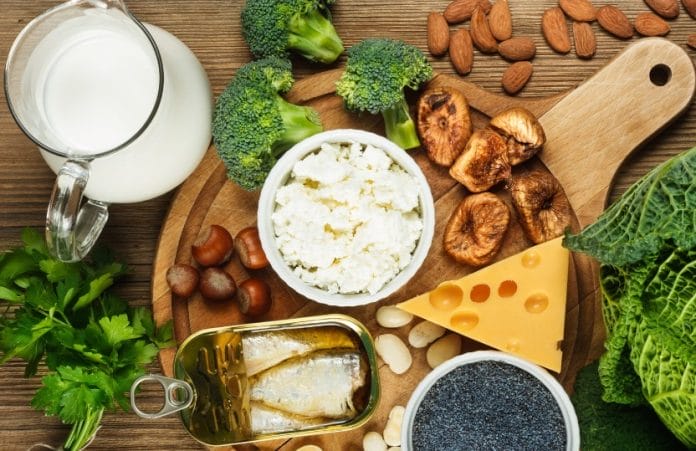
Calcium-rich food variety actually extends beyond just milk and cheese, some nuts, seeds, green leafy veggies and fish are high in calcium. Also, add eggs and cheese that are rich in vitamin D to your diet to boost your bone health.
Remember that a balanced diet can also help you take in other trace minerals and vitamins, besides vitamin D, that can help with the absorption of calcium, especially if you resort to calcium supplement to keep your bones healthy. Many food supplement pills and powdered formula beverages contain added vitamins as well as other substances such as collagen and magnesium5 to promote the absorption of calcium that leads to bone building.
To summarise, we can prevent the early arrival of osteoporosis by taking good care of our bones. The steps are straightforward and inexpensive: maintain good posture, exercise regularly and preferably with moderate sun exposure, eat balanced meals and if necessary, opt for a well-formulated calcium supplement product that ensures calcium absorption.
- https://www.medicalnewstoday.com/articles/325903#strength-training ↩︎
- https://www.healthline.com/health/depression/exercise ↩︎
- https://pubmed.ncbi.nlm.nih.gov/34981132/ ↩︎
- https://www.ncbi.nlm.nih.gov/pmc/articles/PMC9416674/ ↩︎
- https://www.beelith.com/blog/how-does-magnesium-affect-calcium-levels/ ↩︎

