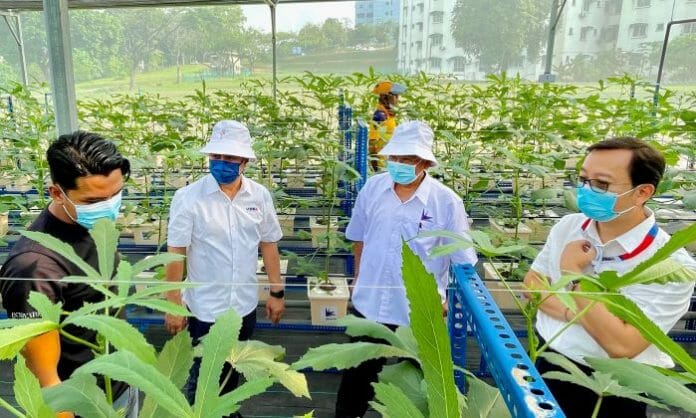
The 2025 Malaysian Federal Budget outlines several key measures and incentives to promote sustainable farming practices, reflecting the government’s commitment to environmental sustainability and agricultural modernisation. A prominent initiative is the allocation of subsidies for sustainable farming technologies, particularly targeting the palm oil sector. These subsidies aim to help producers comply with the European Union Deforestation Regulation (EUDR) while reducing environmental impacts. Additionally, the budget highlights investments in research and development (R&D) to boost crop yields and reduce ecological footprints, with a strong focus on Agri-tech innovations to attract investors and modernize the sector.
A significant portion of the budget, RM6.42 billion, is allocated to the Ministry of Agriculture and Food Security (KPKM) to promote sustainable agricultural practices. This funding will support the upgrading of agricultural infrastructure, enhance the sustainability of food production, and align with the National Agro-food Policy 2021-2030. Additionally, the Green Technology Financing Scheme (GTFS) and the National Energy Transition Fund (NETR) have collectively earmarked over RM1 billion for the adoption of renewable energy in agriculture, including energy-efficient technologies supported by e-rebates.
Another important project is the RM1 billion “Five-Season Two-Year Padi Cultivation Project,” which aims to upgrade padi farming infrastructure and increase rice yields by 15%. This initiative reflects the government’s long-term vision of integrating sustainability into food security while improving farmers’ incomes by up to 43%. These comprehensive measures demonstrate Malaysia’s broader goals of achieving sustainable agricultural growth while balancing environmental and economic needs.
The budget addresses the challenges faced by farmers transitioning to sustainable agriculture
The 2025 Malaysian Federal Budget also introduces several measures aimed at addressing the challenges farmers face in transitioning to sustainable agriculture. A key focus is providing financial and technological resources to help farmers adopt innovative practices. Precision agriculture, digital tools, and traceability systems are emphasized as solutions to improve productivity and reduce the knowledge barriers associated with sustainable farming. Additionally, the budget allocates funding for training programs to assist farmers in meeting international regulations, such as the European Union Deforestation Regulation (EUDR), ensuring they are equipped with the knowledge needed for a smooth transition.
The budget also emphasizes modernizing the agro-food sector by enhancing agricultural infrastructure, which is crucial for overcoming logistical barriers that the adoption of sustainable methods. This includes funding to upgrade paddy farming infrastructure, helping farmers increase yields and income despite unpredictable weather patterns and challenges such as flooding. Furthermore, financial incentives, such as tax breaks and subsidies for agritech investments, are designed to reduce the costs associated with acquiring sustainable technologies, making the transition more accessible.
Energy initiatives, such as the Green Technology Financing Scheme (GTFS) and e-rebates for energy-efficient equipment, help ease the financial burden by promoting the adoption of renewable energy and reducing operational costs. These efforts collectively aim to alleviate the financial and logistical obstacles that farmers face while transitioning to sustainable practices, ensuring that sustainability is both achievable and economically viable for them.
The role sustainable farming plays in Malaysia’s broader environmental and economic goals as reflected in the budget
Sustainable farming plays an important role in Malaysia’s broader environmental and economic goals as outlined in the 2025 budget. Central to this is its contribution to enhancing Malaysia’s global competitiveness, particularly in sectors like palm oil, where compliance with international environmental standards, such as the European Union Deforestation Regulation, is crucial. The budget supports economic growth while ensuring that environmental and social considerations are met, thereby strengthening Malaysia’s market access and trade relations on the global stage.
In the domestic sphere, sustainable farming is a key strategy for addressing food security challenges, as outlined in the National Agro-food Policy 2021-2030. The budget allocates resources to modernize agriculture, emphasizing the need to increase productivity while preserving environmental sustainability. This approach not only ensures long-term food sufficiency but also aligns with Malaysia’s economic objectives of safeguarding the well-being of its population and fostering agricultural resilience against climate change.
Furthermore, the integration of sustainable farming with clean energy initiatives, such as the expansion of solar energy and energy-efficient technologies, underscores Malaysia’s commitment to reducing its carbon footprint. Sustainable farming contributes to both environmental sustainability and economic growth, positioning Malaysia as a leader in addressing global challenges like climate change, rising food prices, and the demand for sustainable food sources. This multi-faceted approach ensures that sustainable farming supports the nation’s long-term environmental and economic resilience.
Author: Ms. Poonthalir Veeran Technical Agriculture Director ReXil Asia JSC