


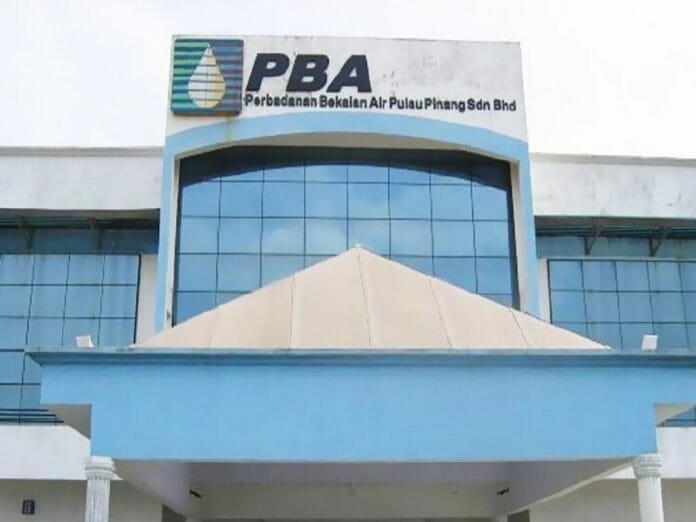
Despite the state-owned water utility firm achieving record profits, Penang is actively exploring various funding avenues to implement its ambitious RM2.099 billion Water Contingency Plan 2030 (WCP 2030), which includes a crucial water tariff review awaiting Cabinet approval. These efforts come as the state embarks on several large-scale infrastructure projects to ensure long-term water security amidst increasing demand.
Penang Water Supply Corporation achieved its highest-ever net profit of RM144.17 million in 2024—a result largely attributed to revised water tariffs implemented in February 2024. Chief Minister Chow Kon Yeow emphasised that these profits are earmarked for critical water infrastructure investments, not for enriching the company.
“This is an outstanding achievement, but it does not serve to fill PBAHB’s coffers,” said Chow at PBA Holdings Bhd’s (PBAPP’s parent company) 25th annual general meeting. He further elaborated, “We need to invest around RM2.1 billion in six major infrastructure projects under WCP 2030, and the current water tariff will not be sufficient to fund all these initiatives.”
Chow confirmed that Pengurusan Aset Air Berhad, a Federal Government agency, has agreed to provide long-term leasing arrangements for two of the projects, but over RM1 billion in funding is still required. He added that the state is actively looking into financing options, and a proposed tariff review has already been submitted to the Cabinet for consideration. If approved by the Cabinet and gazetted by SPAN (National Water Services Commission), the new tariffs will be implemented according to each state’s schedule.
The Chief Minister also addressed concerns regarding the declining water levels in Sungai Muda, Penang’s primary raw water source. He assured that Penang is taking proactive steps, with the Cabinet having approved the Perak-Penang Water Scheme Project, which was also mentioned in the 2025 Budget. While most of this project’s infrastructure will be located in Perak, Penang will be responsible for negotiating its commercial terms.
Under WCP 2030, alternative water sources are being explored, including Mengkuang Dam, Sungai Perai, and Sungai Kerian, as supplementary raw water sources. These projects involve the construction of new water treatment plants and retention ponds near rivers to store emergency reserves, mitigating risks from low river levels or pollution.
A federal project currently underway at Sungai Muda, valued at approximately RM600 million, involves constructing a new barrage and pump station in Lahar Tiang. This initiative aims to divert water to Mengkuang Dam during the rainy season, expected to secure an additional 400 million litres per day (MLD) of water capacity.
“The WCP 2030 is a stopgap solution to ensure water supply until the Perak-Penang project, which could take four to five years to complete, is ready,” Chow explained.
PBAPP chief executive officer Datuk K. Pathmanathan reported that water demand in Penang reached 870 MLD in 2024. Efforts are ongoing to reduce non-revenue water (NRW), which currently stands at 28%, slightly better than the national average of 34.6%.
Pathmanathan highlighted that over 40% of NRW losses are due to ageing water meters. To combat this, PBAPP is rolling out smart meters and undertaking pipe replacement works across the state, backed by a total allocation of RM155 million. He also noted that upgrading works on the Sungai Muda barrage will increase its capacity to 1,500 MLD, while improvements to the canal infrastructure will allow it to handle 1,700 MLD, maximizing raw water drawdown from existing sources.
In a separate announcement, Chow confirmed that PBA Holdings Bhd’s 25th annual general meeting approved a final dividend of 2.25 cents per share. The entitlement date is set for July 15, 2025, with the RM7.5 million payout to 7,157 shareholders disbursed on August 1. This marks the 24th consecutive year of dividend payments for the company.


