


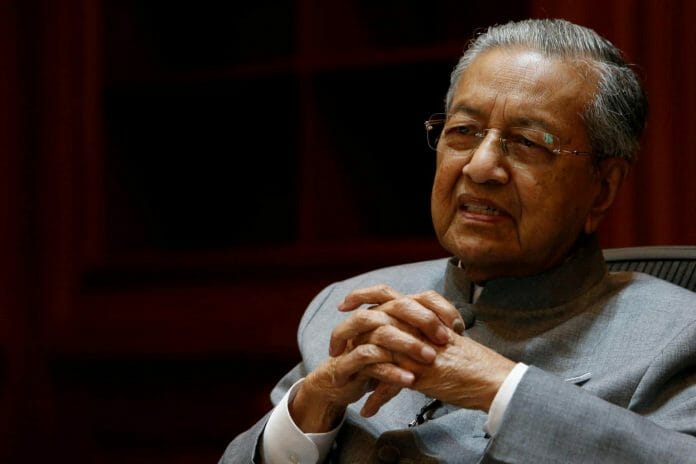
On July 10, 2025, Tun Dr Mahathir Mohamad turns 100. A century since his birth in a modest home in Alor Setar, Kedah, Malaysia, reflects on a statesman whose shadow still looms large over the nation’s past, present and, to some extent, future. Through two premierships, spanning nearly a quarter of the nation’s independence, Mahathir did not merely govern. He shaped Malaysia’s economic trajectory, modernised its infrastructure and cemented a legacy that few regional leaders could match. His leadership was decisive, often controversial, but always rooted in the idea that Malaysia should never settle for being ordinary.
Before he entered politics, Mahathir trained and practised as a medical doctor. His scientific mindset informed the way he led: clinical, focused and grounded in results. But even during his early years, Mahathir was never silent on national issues. He wrote extensively, challenging colonial narratives and advocating for greater Malay participation in the economy. By the time he became Prime Minister in 1981, he brought with him a bold vision that sought to change how Malaysians saw themselves and how the world saw Malaysia.
One of his defining contributions was the diversification of the economy. When Mahathir took office, Malaysia was still largely dependent on rubber and tin. Under his leadership, the country pivoted to manufacturing, electronics and services. He introduced the “Malaysia Incorporated” concept, promoting a business-friendly government that worked hand-in-hand with the private sector. Investment poured in. Industrial zones sprang up. Penang became an electronics hub. Malaysia moved away from being a commodity exporter to becoming an integral part of the global supply chain.
The transformation wasn’t just economic; it was also visible in the country’s skyline. Mahathir drove a new era of infrastructure development. The North-South Expressway connected major cities and enabled the movement of goods and people at a scale previously unimaginable. The Petronas Twin Towers redefined Kuala Lumpur’s cityscape and became a symbol of national pride.
Kuala Lumpur International Airport, Putrajaya and Cyberjaya were all built during his tenure, not merely as vanity projects but as part of a broader plan to modernise public administration and drive digital progress. Infrastructure, for Mahathir, was never just bricks and steel. It was about ambition, confidence and declaring to the world that Malaysia was ready for the big leagues.
His most daring industrial venture was Proton, the national car project launched in 1983. While it drew scepticism, Mahathir saw it as more than just making cars. He saw it as a platform to develop engineering talent, encourage domestic manufacturing and build technological self-reliance. Proton catalysed a new automotive ecosystem. Even with its ups and downs, it inspired Malaysians to believe they could build products that could compete globally.
Vision 2020, unveiled in 1991, was Mahathir’s blueprint for national development. It set clear goals for Malaysia to become a fully developed country by the year 2020, not just economically, but also socially and politically. The vision outlined nine strategic challenges, ranging from fostering a united Malaysian identity to creating an economy driven by innovation. It was a bold, long-term agenda that sparked national conversations on where Malaysia was heading. Complementing that was the Multimedia Super Corridor, which aimed to position Malaysia as a digital leader in Southeast Asia by attracting global tech firms and cultivating a knowledge-based economy.
Mahathir’s resolve was perhaps most tested during the 1997 Asian Financial Crisis. While regional neighbours turned to the International Monetary Fund for bailouts, Mahathir rejected their austerity prescriptions. He implemented capital controls, pegged the ringgit and insulated the economy from speculative attacks. The move, criticised at the time, allowed Malaysia to recover faster than many others and preserved its economic sovereignty. His defiance became a case study for alternative crisis management and earned grudging respect from global economists.
On the international front, Mahathir positioned Malaysia as a vocal middle power. He championed South-South cooperation, stood firm on Palestinian rights and often criticised Western double standards. His Look East Policy encouraged Malaysians to adopt the discipline and technological rigour of countries like Japan and South Korea. In ASEAN, he was a respected elder statesman who advocated for regional self-determination and economic integration.
Of course, Mahathir’s legacy is not without complications. His tenure saw the increasing centralisation of power. Critics have pointed to curbs on the judiciary, constraints on press freedom and political purges. His style was unapologetically strong-willed. He made decisions quickly and expected others to follow. Yet, even his fiercest detractors acknowledge that his leadership was not aimless. It was driven by a desire to see Malaysia succeed.
At 100, Mahathir no longer holds office, but his influence remains. Malaysians still drive on the highways he built, go to work in cities shaped by his plans and engage with global markets thanks to the economic foundations he helped establish. His name continues to stir debate, admiration, criticism and nostalgia.
This milestone is not just a birthday. It is a moment for Malaysians to look back and assess the journey of a nation and the man who helped steer it. Mahathir Mohamad may have long left office, but his imprint is everywhere. From the policies that continue to guide us, to the questions we still ask about power, progress and what it means to be Malaysian.


