The Human Resources Ministry (KESUMA) is amending the National Skills Development Act 2006 (Act 652) to allow for the formal recruitment of trainees and workers with Malaysian Skills Certificates (SKM) at Levels 6, 7 and 8, currently capped at Level 5.
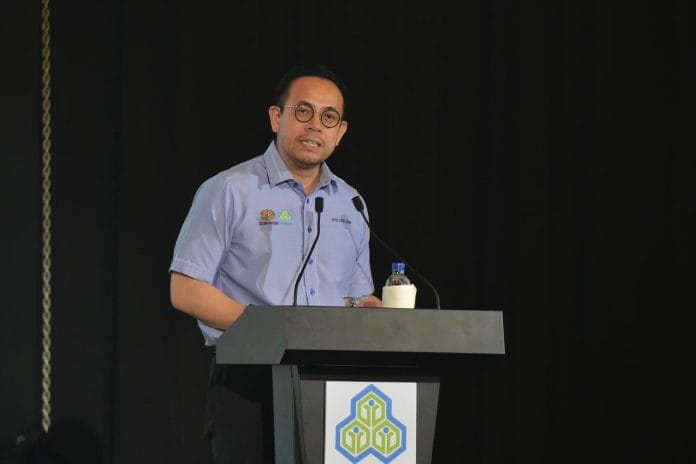
Human Resources Minister Steven Sim Chee Keong said the amendment is crucial to strengthen the role of Technical and Vocational Education and Training (TVET) and elevate its position within the national education and labour system. “We hope the bill can be tabled in Parliament this year,” he said during his keynote at the National Economic Forum 2025.
In a symbolic move to validate the credibility of TVET, Sim also announced he will personally enrol in SKM training at the Industrial Training Institute (ILP) in Melaka. “I want to show that TVET is a viable option. Now imagine if leaders like you, corporate leaders and employers understand how TVET works because you’ve experienced it yourselves,” he said, urging both public and private sector leaders to join him.
The proposed legislative reform follows an in-principle agreement announced last September by Deputy Prime Minister Datuk Seri Dr Ahmad Zahid Hamidi, recognising SKM Levels 6 to 8 as equivalent to a bachelor’s degree.
Sim revealed that the government currently allocates RM6 billion to RM7 billion annually to TVET education. With additional contributions from the Human Resource Development (HRD) levy, the total investment approaches RM10 billion a year. “If we can consolidate and strategise, I think we can more than prepare our economy, our industry and our workers for the future,” he said.
Outlining the ministry’s “Triple A” TVET strategy: Accessibility, Adaptability and Admirability. Sim said KESUMA launched a one-stop online portal last year to centralise applications to over 600 TVET institutions nationwide. This move led to a 30% increase in enrolment compared to pre-pandemic levels. “There were almost 440,000 enrolments last year in TVET,” he said.
For adaptability, Sim highlighted the Academy in Industry programme, which places trainees directly in company settings rather than traditional classrooms. The ministry has already partnered with nearly 2,000 companies, facilitating over 5,000 placements with allowances and nationally recognised certifications.
He also cited the Ilham KESUMA programme, which aims to create 20,000 structured internship opportunities each year, positioning KESUMA as one of Malaysia’s largest internship providers. The ministry is also in talks with the Ministry of Higher Education to explore extended internship options for university students without prolonging their degree durations.
To promote admirability and increase industry participation, KESUMA, through TalentCorp, offers double tax deductions for internship-related expenses and matching grants for SMEs, particularly in rural areas. Companies can also use the HRD Corp levy flexibly to cover intern allowances.