



For over five decades, Japan and Malaysia have cultivated a robust bilateral relationship, built on the bedrock of strong economic and cultural ties. Malaysia’s foundational Look East Policy in the 1980s was instrumental in driving its economic progress, particularly in key sectors such as electronics and automotive. This long-standing trust has anchored many Japanese companies within the country, steadfast in their belief in Malaysia’s potential, its government, and its promises.
This strong bond continues to evolve, with both nations actively deepening their ties across new economic frontiers. As Malaysia embarks on its green economy transition and seeks high-income nation status, the enduring partnership is exploring fresh horizons in areas spanning green technology, digital transformation, innovative urban solutions, and enhanced human capital development.
His Excellency Ambassador Shikata Noriyuki, who commenced his posting in November 2024, has swiftly immersed himself in Malaysia’s diverse landscape. Drawing on his prior experiences accompanying Japanese Prime Ministers Shinzo Abe (in 2007) and Fumio Kishida (two years ago) on official visits, Ambassador Shikata brings a unique perspective to the rapid physical and socio-economic developments reshaping Malaysia and the broader regional and international contexts. His diplomatic tenure notably began with Prime Minister Kishida choosing Malaysia as his first bilateral destination after taking office, a clear indicator of the strategic importance Japan places on this relationship.
Now, under the administration of Prime Minister Ishiba Shigeru, who formally assumed office on October 1, 2024, Ambassador Shikata is poised to play a particularly pivotal role in Japan-ASEAN relations. With 2025 being a significant year for Malaysia as the ASEAN Chair, fostering deeper collaboration between Japan and the bloc is a key priority. BusinessToday recently had the opportunity to engage with Ambassador Shikata at the Embassy along Persiaran Stonor in Kuala Lumpur to gain insight into the direction and mission of the new Japanese administration concerning Malaysia.
Our discussion primarily centered on two main areas highlighted by the Ambassador: Green Transformation (GX) and Digital Transformation (DX). However, within the broader economic landscape, BusinessToday was particularly keen to understand how these new focuses might impact Foreign Direct Investment (FDI) into Malaysia, which has seen a decline in recent years. Our conversation began by delving into the critical area of Green Transformation
Green Transformation (GX) and Energy Collaboration Take Center Stage
A pivotal area of burgeoning cooperation lies in the Green Transformation (GX). Ambassador Shikata highlighted a growing interest from Japanese companies in GX projects across Malaysia, particularly in Sarawak and Sabah, leveraging Malaysia’s rich renewable energy resources like hydropower.
“There are lots of Japanese companies looking into GX projects, including how we could make best use of green energy, mainly driven by the hydro dams, and green energy could be converted to hydrogen, green hydrogen, ammonia, methane,” Ambassador Shikata stated. He also noted Malaysia’s abundance of biofuels and potential for sustainable aviation fuel and Carbon Capture, Utilisation, and Storage (CCUS) collaboration.
This focus aligns with the Asia Zero Emission Community (AZEC) initiative, where Japan and ASEAN countries cooperate on deploying cutting-edge green solutions. The Ambassador observed that Japanese companies are introducing advanced cooling technologies, crucial for energy-intensive sectors like data centers, with potential applications in Johor. Furthermore, Japanese firms like IHI are exploring the co-firing of ammonia in existing coal-fired power plants, with the ultimate objective of completely transitioning to cleaner fuels. Discussions are also emerging around the possibility of civil nuclear power plants, including Small Modular Reactors (SMRs), with Japan expressing readiness to support Malaysia should it pursue such technologies.
Addressing Urban Challenges and Digital Frontiers
Beyond energy, Japan is keen to share its expertise in addressing urban challenges, particularly traffic congestion, a perennial issue in Malaysian cities like Kuala Lumpur and Johor Bahru. Ambassador Shikata believes that solutions piloted in Malaysia could serve as models for other mega-cities across ASEAN.
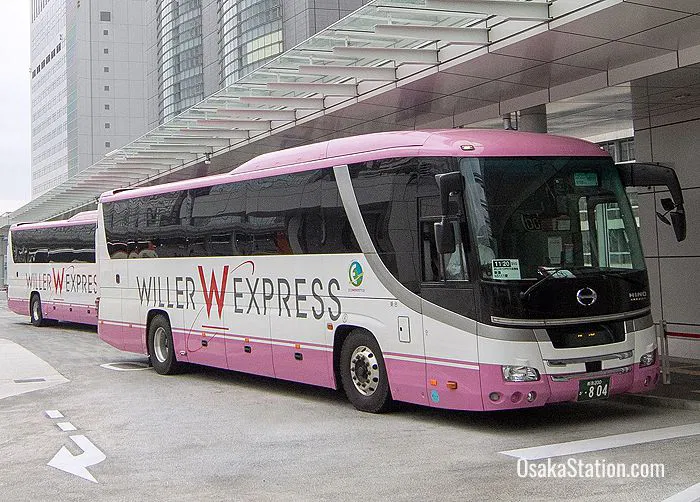
He cited the example of Selangor’s Data Responsive Transport (DRT) solution, where Japanese company Willer is introducing data-driven mini-buses to tackle “last mile” and “first mile” challenges in public transportation. “Malaysia has invested in enough public transportation systems… but the challenge is how to encourage more passengers to use,” he explained, drawing a parallel to Tokyo’s efficient but crowded train system. Such solutions, he emphasized, not only ease congestion but also contribute to reduced energy consumption.
In the realm of Digital Transformation (DX), Ambassador Shikata highlighted Malaysia’s interest in moving beyond semiconductor assembly to mobile design, fostering a full ecosystem for the Integrated Circuit (IC) industry. Collaborations are also deepening in Artificial Intelligence (AI), with experts from the University of Tokyo engaging with Malaysian universities like UTM to encourage young AI professionals to pursue studies in Japan and explore joint ventures or startup opportunities.

Investment Climate: Stability and Transparency Key
With over 1,600 Japanese companies already invested in Malaysia, Japanese firms are continually evaluating the market. Ambassador Shikata views Malaysia as a potential “first case” for overcoming the “middle-income trap,” given its large population and industrial base. He even suggested Malaysia could consider applying to join the OECD due to its advanced development.
However, attracting further significant Foreign Direct Investment (FDI) hinges on predictable and transparent policy environments. While acknowledging Malaysia’s improved political stability under Prime Minister Anwar Ibrahim, Ambassador Shikata noted that sudden policy changes, such as the introduction of the Sales and Service Tax (SST) on July 1, 2025, can create obstacles for foreign investors who value consistency.
He also pointed out practical challenges for Japanese talent in Malaysia, citing the three-year work experience requirement for working permits, which can deter Japanese students who have studied in Malaysia from seeking local employment. “Those kind of issues need to be worked out together… in upgrading further, upgrading our bilateral relations,” he urged, advocating for more sophisticated collaboration.
Two-Way Exchanges and Trade Evolution
Ambassador Shikata stressed the importance of “Look at Each Other” policy, a progression of the long-standing Look East Policy. This initiative encourages more Japanese students to study in Malaysian universities, capitalizing on Malaysia’s English-language-based education and diverse culture. He noted a 25% increase in Japanese students enrolled in Malaysian universities, with efforts underway to establish joint and dual-degree programs.
People-to-people exchanges are also fueling new trade opportunities. The surge in Malaysian tourists visiting Japan (half a million annually) and exploring destinations beyond major cities is creating new linkages. Companies like AirAsia are expanding flights to regional Japanese airports, while Malaysian hospitality groups like Berjaya are broadening their hotel presence in Japan.
For Malaysian companies looking to enter Japan, the Ambassador acknowledged slower progress, particularly in the food and beverage sector. While expressing personal curiosity about the limited number of Malaysian restaurants in Tokyo compared to Thai or Vietnamese eateries, he sees immense potential due to Malaysia’s rich and diverse culinary offerings. He highlighted the Ajinomoto factory near KLIA, which produces 100% halal products, with 40% destined for the Middle East and 10% for other markets, indicating a model for export success.
Regarding the bilateral trade balance, where BusinessToday noted that Malaysian exports to Japan have seen a decline while imports from Japan have risen, Ambassador Shikata clarified that Japan does not prioritise balancing bilateral trade due to its reliance on energy imports like LNG from Malaysia. Instead, he said the focus is on a more advanced and sophisticated economic relationship. He specifically mentioned rare earth resources as a key product Japan is interested in importing more from Malaysia, underscoring the technological collaboration potential.
The ambassador added that Japan-Malaysia partnership must move beyond traditional manufacturing to embrace cutting-edge industries, sustainable development, and a richer exchange of talent and culture


