


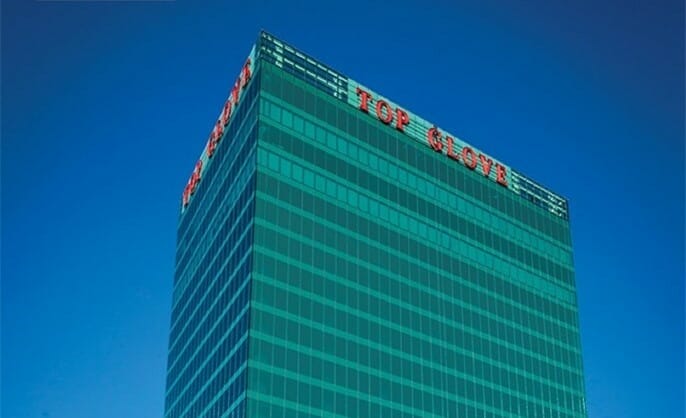
Top Glove Corporation Bhd, the world’s largest glove manufacturer, reported a sharp rebound in earnings for the financial year ended 31 August 2025 (FY2025), driven by stronger global glove demand, improved cost efficiency, and strategic operational execution.
The group posted sales revenue of RM3.5 billion, a 39% increase year-on-year, while profit before tax surged 597% to RM154 million compared with the previous financial year while PAT hits RM109 million. Sales volume rose 55% year-on-year, reflecting continued recovery in glove consumption across key export markets.
For the fourth quarter (4QFY2025), Top Glove recorded sales revenue of RM890 million, up 7% from a year earlier, with PBT rising 700% to RM48 million. Quarterly sales volume also grew 30%, supported by higher utilisation rates and improved operational efficiencies.
The company attributed its stronger performance to sustained glove demand and disciplined cost management, which enabled more competitive pricing and better utilisation of production capacity — reaching about 75% in August 2025.
Operating leverage, combined with favourable raw material prices and ongoing quality optimisation, further enhanced profitability. During the quarter, average natural latex concentrate prices fell 14%, while nitrile latex prices declined 10%, easing cost pressures despite a weaker U.S. dollar.
Managing Director Mr. Lim Cheong Guan said the company’s strategic focus on efficiency and resilience had positioned Top Glove to capitalise on the recovery in glove demand.
“We are pleased to have delivered another profitable quarter, capping off FY2025 on strong footing,” said Mr. Lim. “Our strengthened performance was achieved through disciplined execution of strategic quality and cost efficiency initiatives, with the unwavering support of our people.”
Reflecting its improved financial position, Top Glove declared a final dividend of RM38.5 million, payable on 15 December 2025. The group said it remains committed to delivering shareholder value while maintaining a prudent balance between returns and reinvestment to support future growth


