


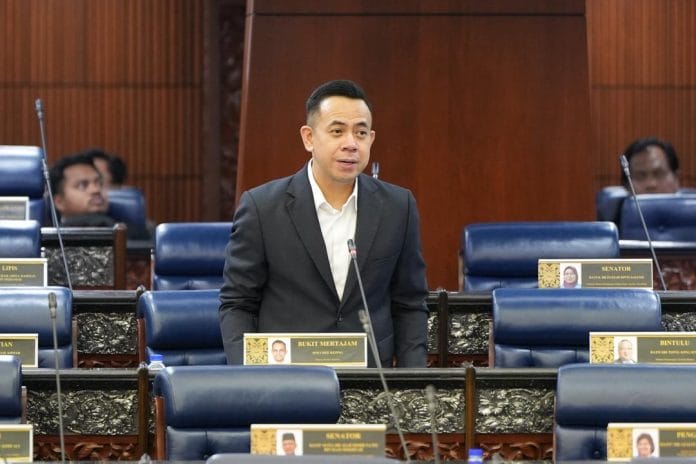
In a decisive step to future-proof Malaysia’s workforce, Human Resources (HR) Minister Steven Sim has announced two landmark legislative amendments aimed at overhauling the nation’s skills development ecosystem.
The proposed bills, the National Skills Development (Amendment) Bill 2025 [Act 652], and the Skills Development Fund (Amendment) Bill 2025 [Act 640] were tabled in Parliament for the First Reading this week, signalling a major push by the Ministry of Human Resources (KESUMA) to strengthen the country’s Technical and Vocational Education and Training (TVET) framework and align it with the demands of a high-tech, skills-driven economy.
Sim shared that under Act 652, the reforms seek to streamline Malaysia’s skills certification system, broaden recognition for diverse training programmes and enhance the governance of training providers.
Key highlights include:
- Expanding the National Skills Development Council to include more strategic ministries and professional bodies for more inclusive TVET policymaking
- Recognising non-NOSS (National Occupational Skills Standard) training programmes for funding under the Skills Development Fund Corporation
- Extending training provider accreditation from three to six years, with clearer and more transparent procedures for suspension or cancellation
- Introducing the Modular Skills Certificate to promote flexible, lifelong learning pathways;
- Establishing new expert categories such as Skills Expert, Senior Skills Expert and Skills Consultant to recognise and elevate local talent.
Meanwhile, Act 640 focuses on strengthening the financial backbone of skills development through PTPK. The amendment expands the scope of training loans and financial aid to include recognised non-SKM programmes that meet industry demand.
It also enhances transparency in loan approvals and fund management, while tightening enforcement through a 12-year limitation period for legal action against loan defaulters and travel restrictions for borrowers who default on repayments.
Sim said the twin amendments represent a pivotal move to make Malaysia’s skills ecosystem more inclusive, flexible and industry-responsive.
“The reforms are expected to boost opportunities for Malaysians pursuing technical and vocational careers, while ensuring better governance and sustainability of public funds,” Sim added.
The Second and Third Readings of both bills are scheduled for December, when Parliament will debate the full framework of the reforms.
“These amendments are designed to build a more agile and high-impact skills system, one that supports Malaysia Madani’s vision of a skilled, equitable and prosperous society,” said Sim.


