



Louis Vuitton has just unveiled its latest high jewellery collection, Mythica, and it’s less about traditional sparkle and more about storytelling, symbolism and reinvention.
Presented at a sunset show in Marrakech’s Kasbah D’If on the edge of the Moroccan desert, the collection was designed to feel like a journey rather than a showcase.
The idea running through Mythica is simple: life isn’t static, and jewellery shouldn’t be either. The collection is divided into 11 chapters and 110 pieces, each tied to a stage of growth such as challenge, self-discovery or confidence.
The collection’s story was brought to life in a setting that matched the mood. Models moved through the desert-lit venue wearing Nicolas Ghesquière’s designs, while guests from around 50 countries looked on, including Léa Seydoux, Alicia Vikander, Phoebe Dynevor and Ana de Armas.
Louis Vuitton’s CEO Pietro Beccari summed up the thinking behind it as “travel in many forms”, even describing gemstones as a “third form of travel” — shaped over billions of years before reaching the wearer.
Where the collection really shifts direction is in its materials. Alongside expected stones like emeralds, rubies and sapphires, Louis Vuitton is putting focus on less conventional gems it describes as “new precious”.
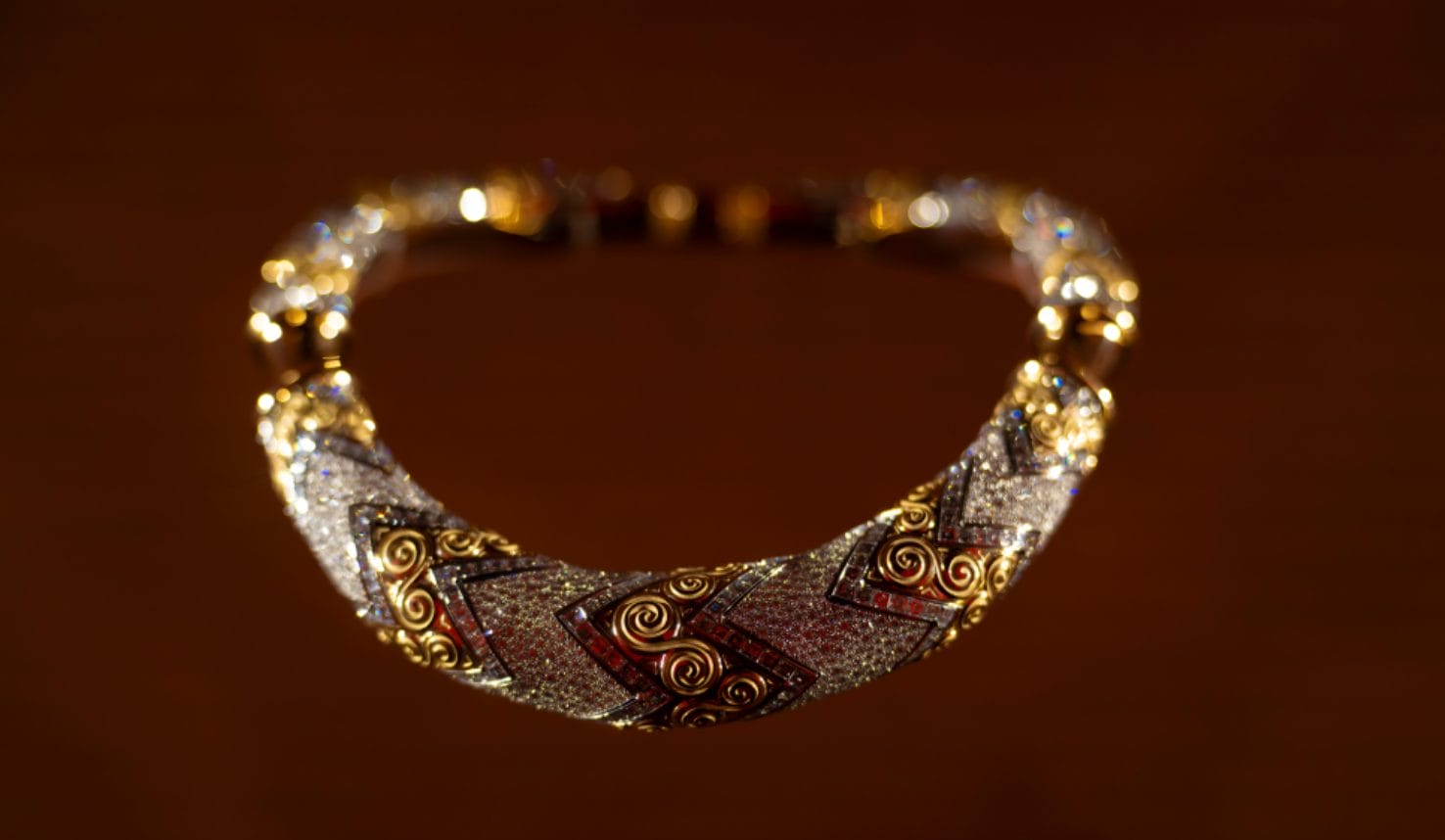
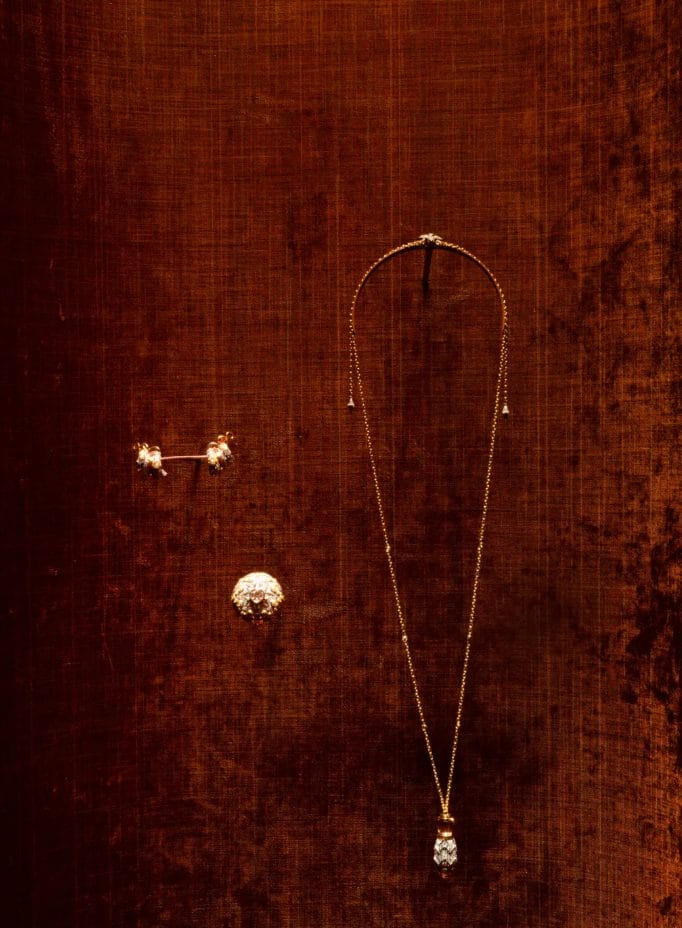
These include natural zircon, cat’s-eye topaz and fluorescent diamonds, selected for their rarity and distinctive visual effects rather than legacy status. It is a deliberate move away from the usual hierarchy of gemstones and towards a broader definition of value.
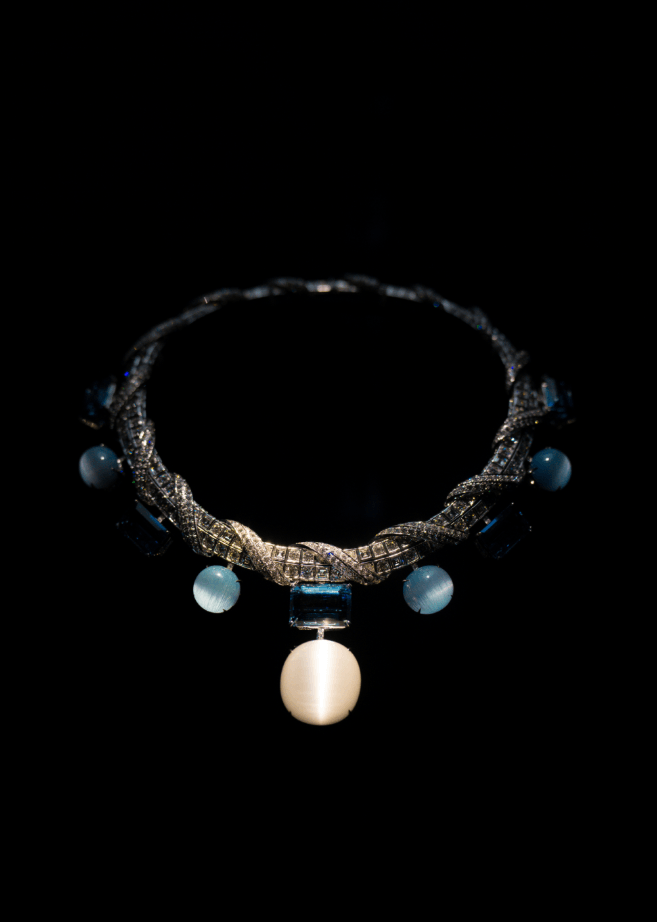
Several pieces highlight this approach. A necklace centred on a 127.66-carat cat’s-eye topaz draws attention through its shifting band of light, while another features a large Cambodian zircon that had been stored for decades, chosen for a colour quality rarely seen in newer stones. These designs place unusual gems at the forefront, rather than using them as secondary details.
Flexibility is another key theme. Some pieces are designed to be worn in multiple ways, including a transformable necklace that can be styled in 10 different configurations. While the craftsmanship behind these designs is intensive, the intention is clear. These are pieces meant to adapt to different settings and uses, not remain fixed.
Colour is used just as deliberately. In one example, thousands of diamonds are arranged to create a gradual shift in tone from warm orange to white, requiring careful matching to maintain consistency across the gradient.
In another, fluorescent diamonds reveal hidden blue patterns under UV light. Instead of treating fluorescence as a flaw, Louis Vuitton builds it into the design, adding an extra layer that only appears under certain conditions.
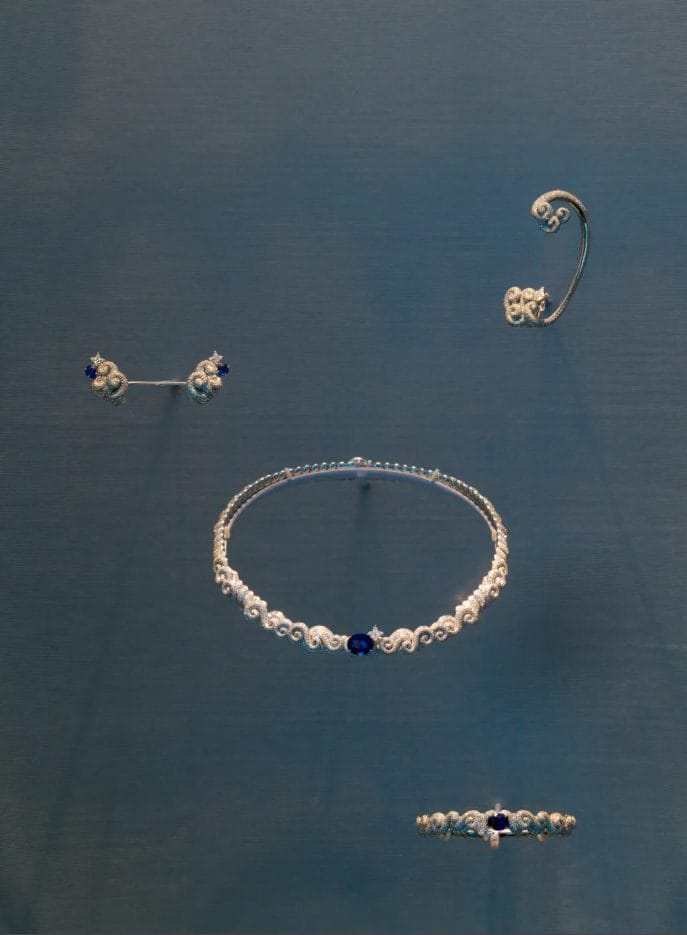
Traditional gemstones are still present, but handled with the same mindset. A 17-carat Colombian emerald is set within intricate monogram-inspired structures, while sapphire-focused pieces combine stones sourced from Madagascar, Sri Lanka and Myanmar to create depth through variation rather than uniformity.
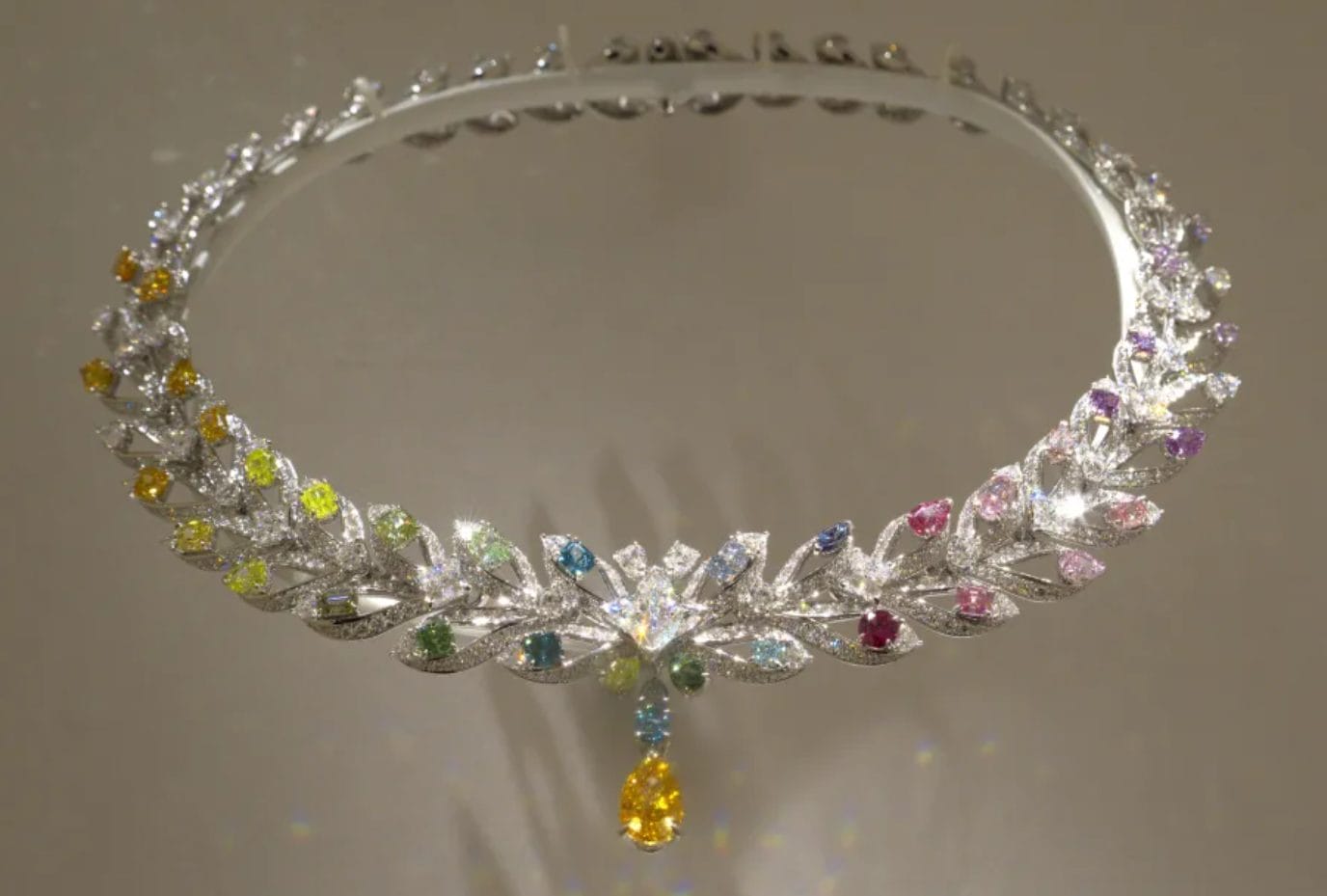
At the top end of the collection, a laurel wreath-inspired necklace brings together 38 different diamond hues, sourced over more than two years. Nearby sits the highest-value piece, a ring featuring a 3.31-carat fancy vivid pink diamond, paired with rare complementary stones.
The collection’s rare zircons, fluorescent diamonds and colour‑gradient strategies underline Louis Vuitton’s commitment to a new kind of preciousness—one that draws as much on geology and optics as it does on myth and personal narrative.


