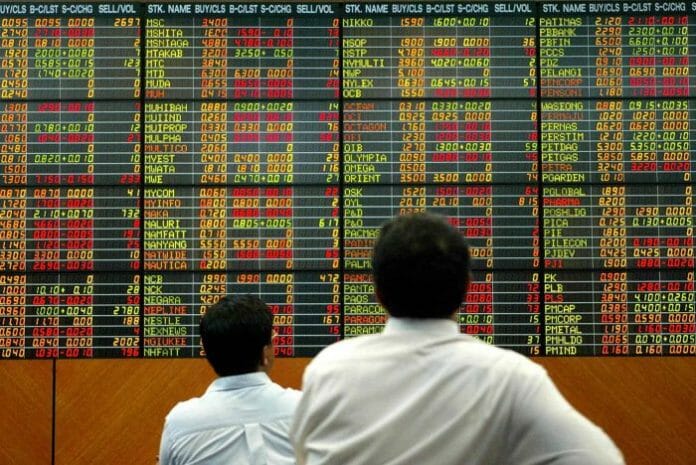
Stocks across Asia edged higher on Monday while oil prices held steady, as investors weighed fragile progress in Middle East tensions alongside a packed week of corporate earnings and key economic data.
South Korean equities led regional gains, rising 2.6% after returning from a holiday break, while broader Asia-Pacific shares outside Japan added 0.6%. Japanese markets were quieter due to a holiday, with Nikkei futures edging slightly higher in subdued trade.
In early commodity movement, Brent crude was flat at US$108.30 a barrel after recovering from earlier losses of more than 2%, while US crude held at US$102.01. Sentiment remained sensitive to developments in the Strait of Hormuz after reports of ongoing disruption in the key shipping route.
US President Donald Trump said, “For the good of Iran, the Middle East, and the United States, we have told these Countries that we will guide their Ships safely out of these restricted Waterways, so that they can freely and ably get on with their business,” adding that the United States would begin an effort to free ships stranded in the Strait of Hormuz. No further operational details were given.
A statement from Central Command said support would include guided-missile destroyers, over 100 land and sea-based aircraft and 15,000 service members, underscoring the scale of the deployment amid heightened maritime risks.
Market participants also pointed to ongoing uncertainty around Iran’s response to US proposals, with negotiations still in flux and no clear breakthrough in sight. One attack on a bulk carrier in Iranian waters over the weekend further highlighted risks to shipping lanes.
In equity markets, US futures were broadly unchanged as investors looked ahead to more than 100 corporate earnings releases this week, including results from major names such as Advanced Micro Devices, Super Micro Computer, Walt Disney and McDonald’s.
Gold eased 0.2% to US$4,603 an ounce while currency markets were largely muted, with the US dollar slightly weaker as traders awaited clearer signals on geopolitical developments and energy supply risks.
Reuters