


The world is currently receiving a painful masterclass in maritime vulnerability. As the Strait of Hormuz faces disruptions that have effectively halted commercial shipping, the global economy has been reminded that vital flows of energy and raw materials can be throttled by regional conflict.
Following the U.S.-Israeli strikes against Iran on Feb.28, the closure of Hormuz triggered immediate shocks, with tanker traffic dropping to near zero after the withdrawal of war risk insurance.
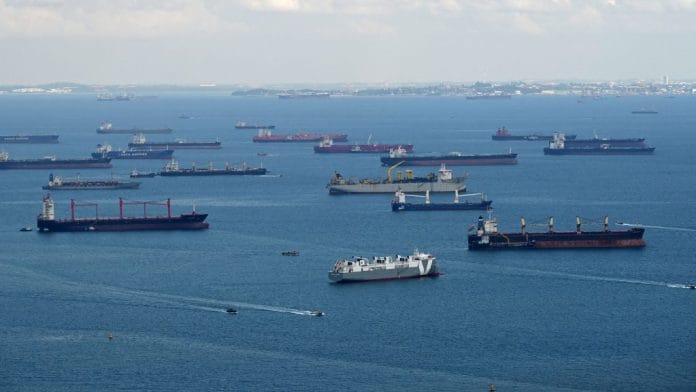
However, if Hormuz is a warning, the Strait of Malacca is the ultimate test of the viability of a multipolar world. While Hormuz handles roughly 11 percent of global trade, Malacca facilitates a staggering 25 percent. It is the world’s premier trade highway, carrying over 23 million barrels of oil daily, which is more than any other maritime chokepoint on earth.
This is about more than oil
The danger of a Malacca disruption extends far beyond energy prices, it is a threat to the very foundations of modern production. The crisis in Hormuz has already shown that the region accounts for the quarter of the world’s seaborne fertilizer exports. The Persian Gulf states produce 43 percent of seaborne urea and 44 percent of seaborne sulfur trade. Sulfur is not just a commodity but a critical feedstock for phosphate fertilizer production, used heavily by major importers like China and Indonesia. A blockage in these straits triggers a famine multiplier, as the lack of nitrogen and phosphate fertilizers immediately hikes production costs across global agricultural systems.
Furthermore, these maritime corridors are vital for advanced technology sector. The global dependence on these routes for helium and other commodities for the high tech-sector poses an existential risk to semiconductor manufacturing and the medical sector. In an era where everything from automotive sensors to cardiac monitors relies on microchips, a naval blockade in Southeast Asia would effectively freeze the global tech economy, disrupting high-tech production chains which are already fracturing under geopolitical strain.
The threat of hegemonic disruption
The primary threat to the Malacca Straits is not localised instability but a calculated attempt by the U.S. to weaponise global trade. Having hollowed out its own industrial base through excessive financialisation, the U.S. has pivoted from economic competition to military and systemic disruption. By wielding massive tariffs, Washington sought to raise the cost of doing business with China.
This is a cynical strategy that treats the global consumer as collateral damage. We already see the Ukraine model of proxy disruption mirrored in Eurasia. Hostile groups have been enabled to attack Chinese funded infrastructure in Myanmar and Pakistan, ranging from gas pipelines to dams, in an effort to sever the land-based links of the Belt and Road Initiative (BRI). These attacks on bridges and railway lines in Iran are a part of a broader effort to contain a nation that the U.S. can no longer compete with in economic terms.
The convergence of sovereignty and defense priorities
For China and the ASEAN states, the response must be a pragmatic, unified defense of their shared waters. The South China Sea should no longer be a theater of bickering over disputed borders. Instead, China and ASEAN must prioritise commercial profit-sharing agreements for energy extraction. By treating these waters as a shared economic zone, the region can benefit collectively, neutralising the friction that external powers exploit to justify their military presence.
China must move beyond being merely an economic partner. To counter the looming military threat, China must build deep capacity within ASEAN’s defense establishments. Providing the radars, ships, and aircraft that secure the region creates a baseline of trust and prevents the U.S. from filling a perceived security vacuum. The Plan of Action for the ASEAN-China Comprehensive Strategic Partnership 2026-2030 already highlights the need for stronger strategic dialogue and practical defense cooperation, including joint exercises and maritime safety initiatives. ASEAN states can no longer afford to ignore U.S.-China rivalry as they run the risk of becoming a proxy battlefield.
The sovereign gatekeeper model
The most decisive move for regional stability would be the implementation of a shipping toll. Recently, Indonesian officials floated the idea of leveraging their geographical position to charge ships passing through the Malacca Strait, following Iran’s intention to enforce such a toll in the Strait of Hormuz. While currently debated under international law, such a move by Indonesia and Malaysia as the littoral states could allow them to generate the revenue necessary for the security and maintenance of the world’s busiest corridor.
By backing this initiative and acting as a security guarantor, China can help establish a sovereign gateway. Naturally, Japan and South Korea could add their input as they are highly vulnerable to any maritime blockade of the Malacca Strait. This would transition the strait from being a chokepoint vulnerable to external naval interdiction into a managed corridor under regional control. And security oversight.
The alternative will be the to surrender to the chaos currently witnessed in the Middle East. If the Strait of Malacca falls victim to the same geopolitical weaponisation, the result will be global inflation and potential starvation. By aligning on energy, defense, and maritime governance, the region could ensure that the world’s most important trade highway remains an independent and prosperous corridor for all.
Dr Julia Roknifard is a Senior Lecturer at the School of Law and Governance at Taylor’s University and lectures at the newly launched programme ‘Philosophy, Politics, and Economics’.


