



The recent tremors in Segamat, Johor, have shattered the long-held belief that Peninsular Malaysia is geologically inactive, with experts now confirming that ancient fault lines beneath the country can still awaken under regional tectonic pressure.
In an exclusive response to BusinessToday, Department of Mineral and Geoscience (JMG) director-general Datuk Zamri Ramli said the localised seismic events in Segamat were caused by the reactivation of the ancient Mersing Fault System, a structural fault line previously considered dormant.
“While Peninsular Malaysia is located far from major tectonic plate boundaries such as the Ring of Fire or the Sumatra Subduction Zone, it is scientifically inaccurate to regard the Peninsula as tectonically ‘dead’,” he said.
Between Aug 24 and 31 last year, one minor quake and five aftershocks measuring 2.5 to 4.1 were recorded in Segamat.
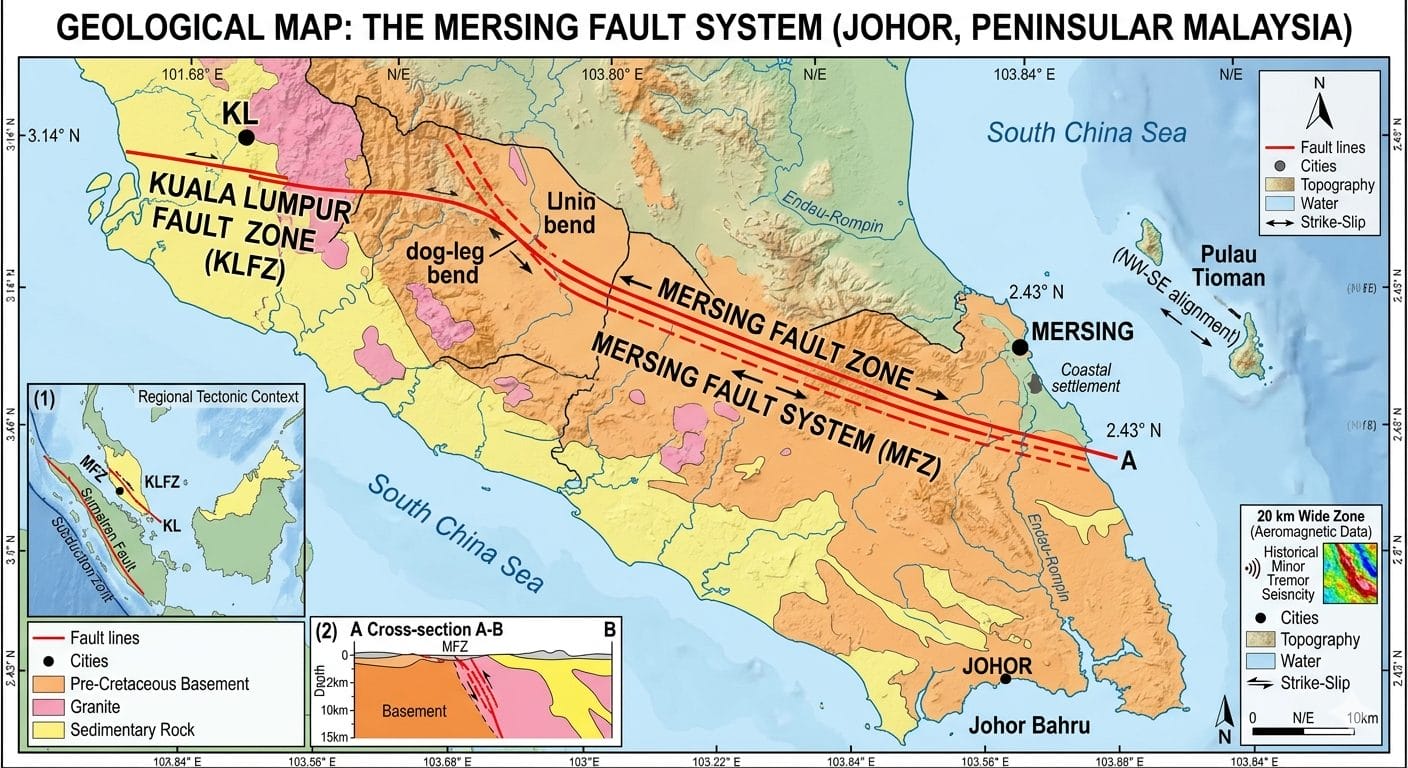
According to Zamri, the fault reactivation was triggered by regional tectonic compression affecting the broader Sunda Plate, also known as Sundaland, where Peninsular Malaysia sits.
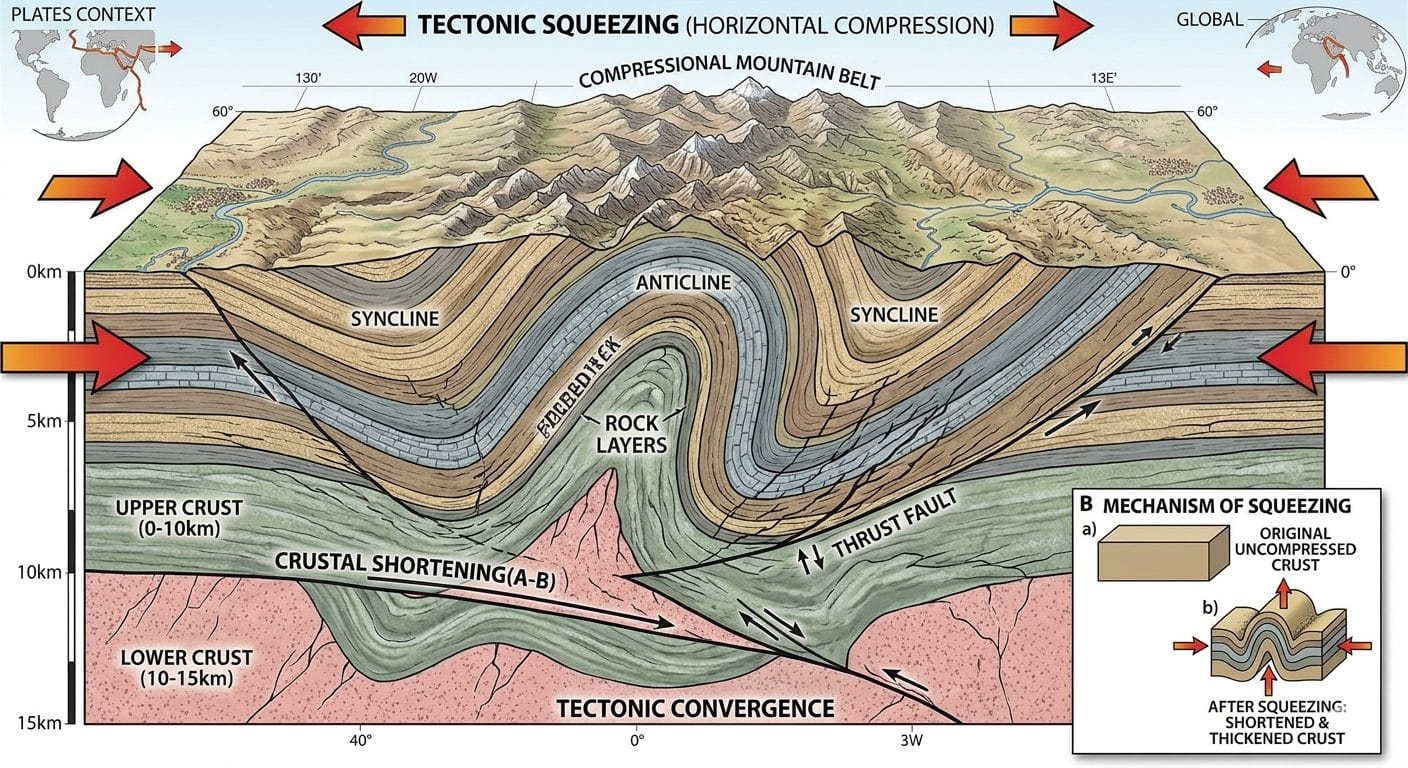
He explained that the Malaysian landmass is currently experiencing a phenomenon known as “tectonic squeezing”, driven by pressure from the Australian Plate to the west, the Philippine Sea Plate to the east and the southward movement of the Eurasian Plate.
“These ancient faults remain permanent zones of weakness within the Earth’s crust. When stress accumulates, these are the first areas to slip,” he said.
Unlike tremors caused by massive earthquakes in Sumatra, the Segamat incidents were classified as shallow intraplate earthquakes occurring directly beneath the affected area.
Zamri said this explains why even relatively small tremors, typically between magnitude 2.5 and 4.9, were capable of producing audible booms and localised ground fissures.
The revelation is significant because it underscores that seismic activity in Malaysia may not only originate from distant regional earthquakes, but can also emerge locally from ancient geological structures beneath the Peninsula itself.
To monitor such movements, Zamri revealed that JMG currently operates 53 Fault Movement Benchmark Stations nationwide by using both real-time and periodic sensors to detect millimetre-scale crustal shifts.
“Data gathered from these stations is used to continuously update the National Seismic Hazard Map and ensure infrastructure complies with Eurocode 8 seismic safety standards,” he said.
Zamri stressed, however, that the Segamat area remains fundamentally safe for habitation, noting that the energy released from intraplate fault movements is significantly lower than that of major plate-boundary earthquakes.
He highlighted that currently, JMG, Malaysian Meteorological Department and Universiti Teknologi Malaysia are also utilising advanced subsurface imaging technologies such as Seismic Refraction and Electrical Resistivity Tomography to identify near-surface fractures and soil instability.
“These events are minor adjustments of a dynamic Earth,” Zamri said, adding that ongoing monitoring efforts are focused on ensuring public safety and strengthening infrastructure resilience.


