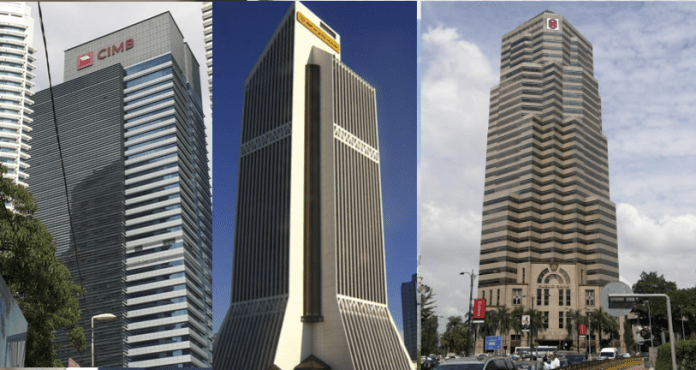
Malaysia’s banking sector posted a generally resilient set of first-quarter 2026 results, although analysts are becoming increasingly selective on the sector amid concerns over inflationary pressures, asset quality risks and margin compression.
According to Kenanga Research, eight out of the 10 listed banks under its coverage met earnings expectations during the 1QCY26 reporting season, reinforcing confidence in the sector’s longer-term earnings resilience despite emerging near-term headwinds.
The research house said the main disappointments were Bank Islam Malaysia Bhd and MBSB Group Holdings Bhd. Bank Islam’s earnings were weighed down by weaker-than-expected non-fund based income and higher operating expenses linked to its LEAP25 transformation programme, while MBSB faced sharper net interest margin (NIM) compression following the July 2025 Overnight Policy Rate (OPR) cut, coupled with elevated credit costs.
Looking ahead, banks are expected to gain clearer visibility on provisioning requirements in the second quarter as the effects of higher fuel prices and inflation begin filtering through to borrowers’ repayment behaviour.
So far, only Malayan Banking Bhd (Maybank) and Alliance Bank Malaysia Bhd have increased precautionary provisions, while AmBank Group was the sole lender to write back loan overlays, reflecting management’s view that previous provisioning levels had been overly conservative.
Kenanga noted that several banks may revise guidance during the August reporting season. These include Maybank due to slower-than-expected loan growth, Hong Leong Bank over potential shortfalls in return-on-equity targets, Affin Bank on credit cost assumptions, and MBSB following its recent increase in credit cost guidance.
The research house also remains watchful on Bank Islam, which has yet to unveil a successor strategy beyond its current LEAP25 roadmap.
Among the sector’s stronger performers, AmBank continues to focus on quality loan growth and expects lower credit costs supported by potential overlay reversals. Public Bank remains confident in its outlook, citing its high proportion of collateralised lending and robust asset quality buffers, while RHB Bank believes its sizeable provisioning reserves provide protection against future repayment stress.
Net interest margin trends remain mixed across the industry. While several banks recorded year-on-year margin expansion, analysts expect margins to gradually moderate as asset yields adjust to lower interest rates. Funding costs are also expected to decline as higher-cost fixed deposits mature following the OPR cut.
At the same time, the strengthening ringgit has reduced foreign exchange-related income opportunities, increasing pressure on banks to grow fee-based and other non-interest income streams.
Market share trends also highlighted diverging strategies among lenders. The combined domestic loan market share of the 10 listed banks tracked by Kenanga stood at 83.2% in the first quarter.
Maybank, CIMB Group Holdings Bhd and RHB Bank saw modest declines in market share as they adopted a more selective approach to lending, particularly in lower-yielding segments. Meanwhile, Hong Leong Bank and Affin Bank gained market share by expanding their exposure to secured lending products such as mortgages.
Despite near-term uncertainties, Kenanga maintained its “Overweight” call on the banking sector, citing attractive dividend yields and resilient earnings prospects.
Public Bank remains one of the research house’s top picks, supported by a dividend yield exceeding 6% and a RM3.5 billion capital return plan over three years. The completion of LPI Capital Bhd’s disposal of its stake in the bank is also expected to ease concerns over share overhang.
CIMB is another preferred name, offering an estimated dividend yield of about 7%, including its previously announced RM2 billion capital return programme. Analysts believe the disposal of CIMB Thai’s loss-making automotive financing portfolio could further strengthen returns and unlock additional capital.
AmBank also features among Kenanga’s preferred banking stocks, supported by its disciplined approach to balancing growth and asset quality, improving credit cost outlook and commitment to increasing absolute dividend payouts annually.
While earnings risks remain in the near term, Kenanga said Malaysian banks remain well positioned to weather economic challenges, with strong capital buffers and the potential for future provision write-backs providing additional support to long-term shareholder returns.