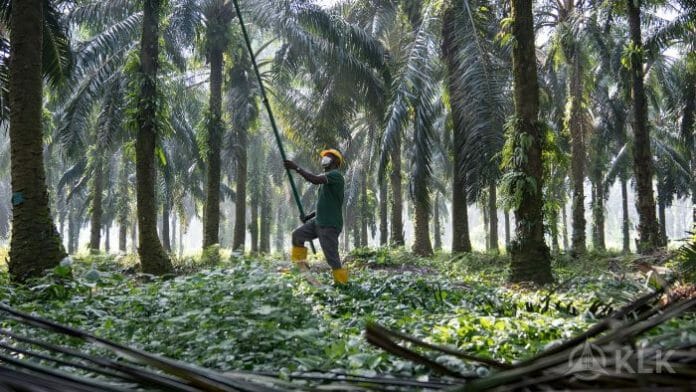
Malaysia’s plantation sector delivered a mixed set of first-quarter 2026 earnings, with weaker palm oil prices and seasonal production factors weighing on profitability despite generally healthy fresh fruit bunch (FFB) output growth.
According to a sector review by HLIB Research, four of the seven plantation companies under its coverage reported results that were broadly in line with expectations, while Genting Plantations Berhad, Johor Plantations Group Berhad and TSH Resources Berhad missed forecasts.
The research house said lower-than-expected FFB production was the main reason behind earnings disappointments at Genting Plantations and TSH Resources, while Johor Plantations was affected by weaker realised price premiums due to inventory build-up and increased purchases of external crops.
Aggregate core earnings for the sector fell 16% quarter-on-quarter to RM1.25 billion during the first quarter, reflecting seasonally weaker harvesting activities and softer realised palm product prices.
On a year-on-year basis, sector earnings declined 11%, also to RM1.25 billion, largely due to lower palm oil prices despite improved crop production across most companies.
Five of the seven planters recorded positive FFB growth during the quarter, supported by favourable weather conditions and improved labour availability. However, Johor Plantations and TSH Resources reported lower production due to dry weather conditions in Johor and severe flooding in Sumatra, respectively.
Mixed Performance in Downstream Segment
Downstream operations continued to produce mixed results across the industry.
IOI Corporation Berhad and SD Guthrie Berhad recorded stronger downstream contributions on a year-on-year basis, while Kuala Lumpur Kepong Berhad saw weaker earnings from the segment.
HLIB attributed the divergent performance to differences in hedging strategies, currency translation effects and varying demand conditions across product categories and geographical markets.
The research house noted that most plantation companies maintained their FFB production guidance for the year, as management teams generally believe the emerging El Niño phenomenon is unlikely to significantly affect near-term crop productivity.
Rising Costs Emerging as Key Concern
While production outlook remains stable, plantation companies are increasingly concerned about escalating costs linked to the ongoing conflict in the Middle East.
Several industry players highlighted potential disruptions to fertiliser supplies as well as rising freight and energy costs, which could increase crude palm oil (CPO) production expenses if geopolitical tensions persist.
Despite continued industry overcapacity, integrated plantation groups have become slightly more optimistic about the downstream segment’s short-term prospects.
HLIB said heightened price volatility, lower feedstock costs — particularly palm kernel-related inputs — and stronger restocking activities among oleochemical customers have helped improve sentiment.
HLIB Maintains Overweight Call
The research house maintained its 2026 CPO price assumption of RM4,350 per tonne, noting that prices have averaged RM4,324 per tonne year-to-date.
It expects CPO prices to remain elevated at between RM4,500 and RM4,600 per tonne during the second quarter before moderating from the third quarter onward. Its long-term CPO price forecast remains unchanged at RM4,200 per tonne from 2027 onwards.
HLIB retained its “Overweight” rating on the plantation sector, citing support from elevated crude oil prices that continue to underpin palm oil demand and pricing.
However, it cautioned that the current upcycle may be front-loaded, with medium-term risks stemming from supply adjustments in competing vegetable oil markets.
For stock picks, HLIB continues to favour upstream-focused plantation companies that have already locked in fertiliser costs, providing greater earnings visibility. Its preferred names include Johor Plantations Group Berhad with a target price of RM1.78 and SD Guthrie Berhad with a target price of RM7.05.