


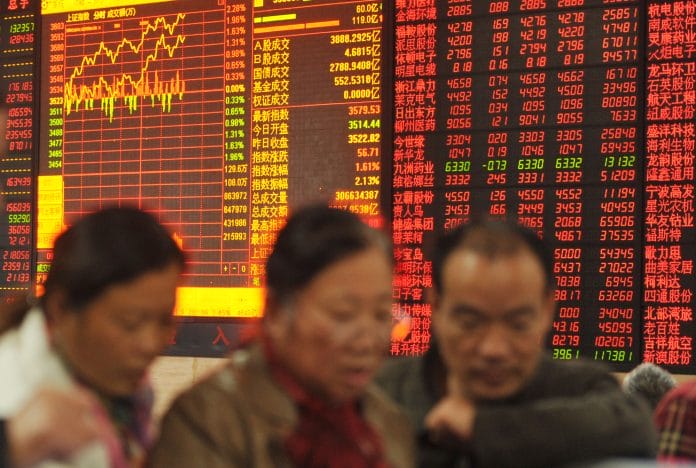
Asian equities fell on Thursday as investors reacted to escalating tensions in the Middle East, rising oil prices and expectations that US interest rates could remain higher for longer.
MSCI’s broadest index of Asia-Pacific shares outside Japan slipped 0.9%, with South Korea’s KOSPI leading regional losses after falling 3%.
Investor sentiment weakened after the United States launched a fresh round of strikes against targets in Iran, prompting Tehran to announce the closure of the Strait of Hormuz, a key global oil shipping route.
The latest escalation pushed Brent crude oil up 2% to US$94.93 per barrel during Asian trading after settling at US$93.10 a barrel overnight.
The geopolitical concerns added to market anxiety following a sharp sell-off on Wall Street, where the S&P 500 fell 1.6% and the Nasdaq Composite dropped 2.0% after US inflation accelerated to 4.2% in May, the fastest pace since April 2023.
The inflation reading reinforced concerns that the US Federal Reserve may need to maintain a hawkish stance, with traders increasingly pricing in the possibility of another interest rate hike before year-end.
Analysts said markets were becoming more cautious about high-growth technology stocks, particularly in North Asia, where valuations had risen sharply over the past two months.
The stronger US inflation outlook also lifted Treasury yields, with the benchmark 10-year yield rising to 4.564%.
Meanwhile, the US dollar remained firm as investors sought safer assets amid heightened geopolitical uncertainty.
Cryptocurrencies also came under pressure, with Bitcoin slipping 0.5% to US$61,445 and Ether declining 0.6% to US$1,619.
Gold eased 0.3% to US$4,059.59 an ounce despite the risk-off environment, as concerns over higher interest rates weighed on the precious metal.
Reuters

