


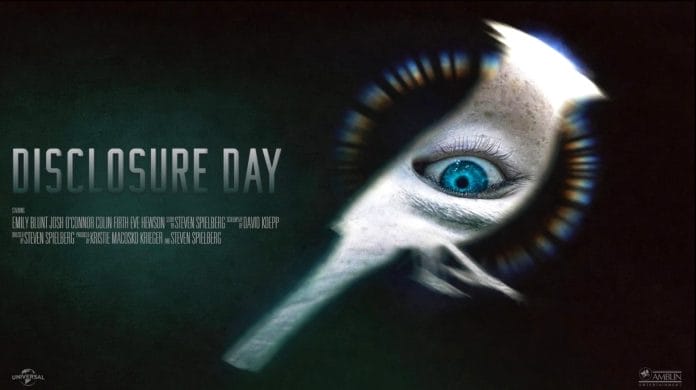
There is a strange sentence I never thought I would write.
For a movie about extraterrestrial cover-ups, decades of hidden encounters and the possibility that humanity is not alone, Disclosure Day barely feels like an alien movie.
And perhaps that is what surprised me the most.
Not because I subscribed to the theories claiming this would somehow become the cinematic spearhead for “real disclosure”. I was excited for something much simpler.
Steven Spielberg making another movie about the phenomenon.
After all, there is a reason why Jurassic Park occupies one of my Top Four films on Letterboxd. Not because of the dinosaurs, but because of everything surrounding them. The sense of wonder and exploration. The warmth and humanity. The fact that it could be terrifying without forgetting to be funny. Clever without feeling smug. Gritty while still retaining that childlike fascination that made you want to stare at the screen with wide eyes.
That, to me, is Spielberg at his best.
Which is why I walked into Disclosure Day excited.
And why I walked out feeling strangely hollow.
The plot
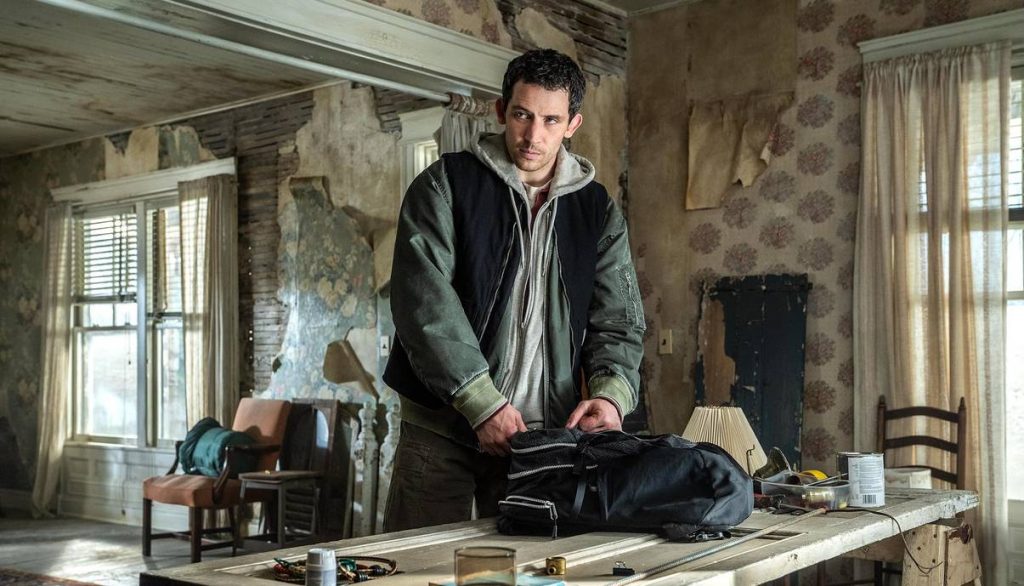
The film follows Daniel Kellner, played by Josh O’Connor, a cybersecurity expert working for the mysterious Wardex Corporation. After stealing 107 drives containing classified footage documenting alien encounters dating back to Roswell, Daniel finds himself hunted by powerful forces determined to keep the truth hidden.
Running parallel to his story is Margaret Fairchild, a meteorologist portrayed by Emily Blunt, whose life changes after a strange encounter involving a red cardinal grants her extraordinary abilities, including speaking languages she never learned and understanding alien communication.
As both stories slowly converge, they find themselves pursued by Wardex CEO Noah Scanlon, played by Colin Firth, who will stop at nothing to prevent humanity from learning the truth.
On paper, it sounds fascinating.
And honestly, parts of it are.
The world-building is intriguing enough to keep you invested.
The problem is not the ideas.
It’s how they’re executed.

What I like
First and foremost, Emily Blunt.
Goodness gracious.
She is phenomenal.
Whether she’s speaking Korean, Russian or what can only be described as alienese, she commits completely to the role and somehow grounds some of the film’s strangest moments with total sincerity. There is a reason many critics have called this one of the finest performances of her career.
I completely understand why.
Spielberg’s touch is still visible too.
Even at this stage of his career, he remains one of the greatest visual storytellers cinema has ever seen. Certain scenes, camera movements and set pieces carry that unmistakable Spielberg flair. You can feel the master at work.
It’s just that those moments arrive in flashes rather than throughout the entire experience.
And then there’s the ending.
Without venturing into spoiler territory, the final act finally feels like the movie I thought I was getting. The mystery becomes more compelling, the emotional stakes rise and, for a brief moment, that familiar Spielberg sense of awe begins to emerge.
Ironically, the ending saved the movie for me.
And perhaps that’s why I found myself wishing more of the journey leading up to it had the same energy.

What I’m mixed on
John Williams and Spielberg are one of cinema’s greatest partnerships.
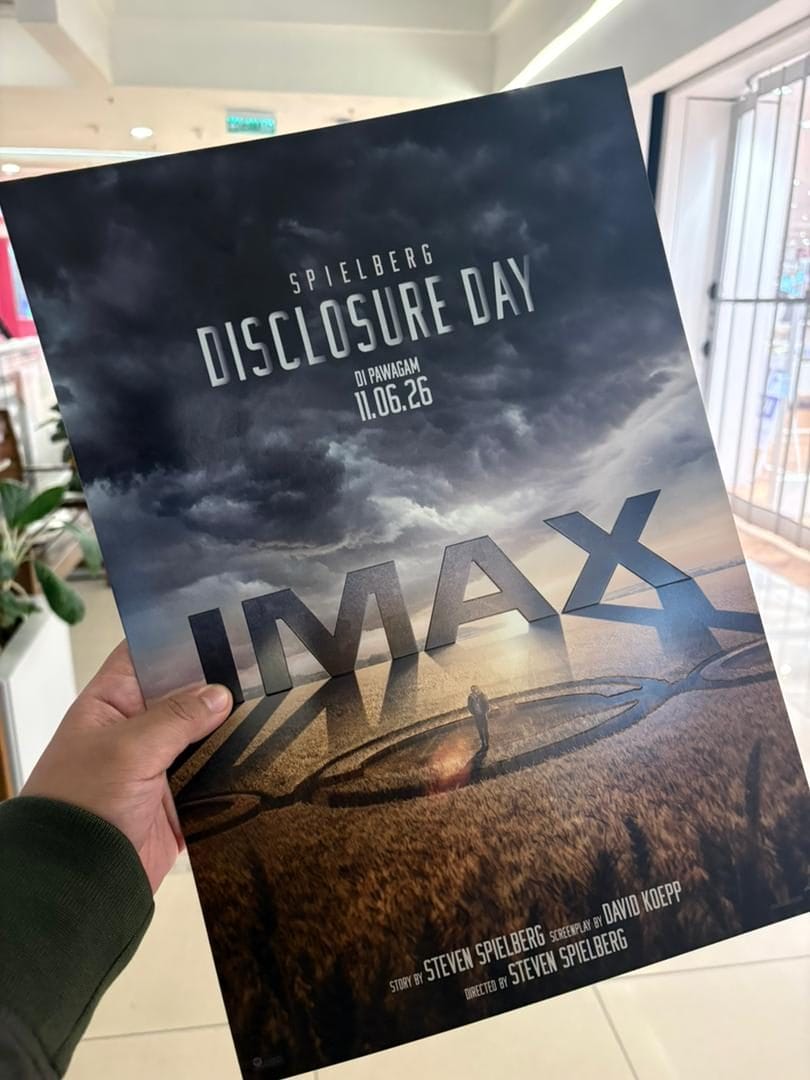
Which makes it all the more surprising that I walked out of my IMAX screening struggling to remember a single theme.
Not because the music is bad.
Far from it.
The score works.
But unlike the melodies of Jurassic Park, E.T. or Close Encounters, nothing here really lingers after the credits roll. It simply exists.
Which, sadly, describes much of Disclosure Day.
The humour also falls into this category.
There are funny moments.
But many of them simply don’t land. They aren’t terrible jokes. They just pass by without leaving much impact.
And while I appreciate slow burns, I don’t think audiences struggling with this movie have an attention span issue.
If you still haven’t managed to hook viewers after an hour, that’s not on the audience.
That’s on the storytelling.

What I don’t like
Honestly, I still don’t understand who the target audience is.
People expecting an alien movie may leave disappointed because this barely feels like one.
Strip away the extraterrestrial aspect and replace the classified footage with almost any other government secret and much of the story remains unchanged.
At times, Disclosure Day feels less like science fiction and more like an old-fashioned conspiracy thriller that simply happens to have alien files attached to it.
The script is where my biggest frustrations lie.
There are fascinating ideas buried underneath, but the movie rarely explores them with enough depth. Speeches gesture towards questions about humanity and our place in the universe without ever truly wrestling with them.
Everything remains frustratingly surface level.
And then there are the villains.
Wardex somehow manages to be both frighteningly competent and hilariously incompetent at the exact same time.
One moment, they possess near-omniscient surveillance capabilities and futuristic technology capable of tracking anyone within seconds.
The next, they overlook things that seem painfully obvious.
There were moments where I genuinely stopped questioning the characters and instead started questioning the movie itself.
The nearly three-hour runtime doesn’t help either.
This is a painstakingly long, methodical and dialogue-heavy experience. Slow burns can work beautifully, but they need to reward patience.
Too often, Disclosure Day feels like it’s dragging its feet.
Visually, I was also left disappointed.
And this was in IMAX.
The CGI feels surprisingly inconsistent. Some sequences work, but others, particularly involving animals, looked oddly artificial. There were moments where the fox scenes reminded me of something straight out of The Polar Express, and not in a good way.
The colour palette, meanwhile, feels strangely bland.
Everything appears washed out and muted. Ironically, the only colours that truly pop come from the heavily computer-generated animals themselves.
Which feels odd for a Spielberg film.
Because his movies usually have warmth.
Wonder.
Life.
Disclosure Day often feels strangely cold.
And perhaps my strangest thought throughout the movie was this:
“Surely this is satire.”
The excessive lens flares.
The technobabble surrounding a glorified MacGuffin.
The endless screens inside the villain headquarters.
The car chases that feel suspiciously close to product placements.
The generic monologues trying to sound profound.
There were moments where I genuinely convinced myself that the film was building towards some grand reveal that this was all a movie within a movie, with the government using an intentionally bad blockbuster to disguise actual alien footage.
Because surely Spielberg wasn’t playing all these tropes completely straight.
Apparently, he was.

What the critics say
Perhaps fittingly, critics themselves appear divided.
The Guardian awarded the film four stars, describing it as entertaining and praising Emily Blunt’s performance as a career highlight.
The New York Times praised its interconnected storytelling and ability to sweep audiences along.
Meanwhile, BBC was much harsher, awarding it two stars and comparing it to a rather ordinary episode of The X-Files.
The Hollywood Reporter even called it Spielberg’s best film in 20 years, while critics at The Film Verdict argued that the movie broke the director’s unbeaten streak when it comes to alien stories.
Honestly, I can understand both sides.
Because this isn’t a bad movie.
It’s just a lesser Spielberg movie.
And perhaps that distinction matters more.
Final verdict
The biggest disappointment about Disclosure Day isn’t that it’s bad.
It’s that it’s forgettable.
Because Spielberg movies aren’t supposed to be forgettable.
Even his lesser films usually contain some sense of wonder, humanity or emotional sincerity.
Here, there are glimpses.
Emily Blunt delivers what may genuinely be one of the finest performances of her career.
The ending is engaging.
Spielberg’s craftsmanship occasionally surfaces.
But the soul?
The heart?
The childlike awe that made Spielberg, well, Spielberg?
It’s strangely absent.
Perhaps my disappointment comes from my own expectations.
After all, there is a reason Jurassic Park sits among my Top Four films on Letterboxd. Not because of the dinosaurs, but because of the wonder. The exploration. The warmth. The humour. The intelligence. The way Spielberg could make something terrifying feel magical at the same time.
That feeling, that unmistakable Spielberg magic, is what I was hoping to find in Disclosure Day.
And while flashes of it are there, they are just that.
Flashes.
Which makes the experience less frustrating and more melancholic.
Because beneath the uneven script, the occasionally questionable decisions and the disappointingly bland presentation, you can still glimpse the filmmaker who gave us Close Encounters, E.T. and Jurassic Park.
Just not often enough.
5/10. I came for Spielberg’s sense of wonder. I left wishing there had been more of it.


