


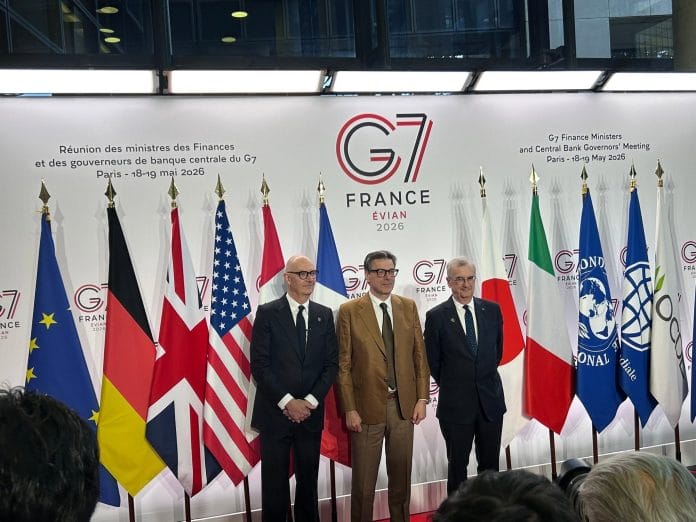
France is pressing fellow G7 members to agree on a joint statement aimed at reducing the West’s reliance on China for critical minerals, as concerns over supply chain vulnerabilities and economic imbalances dominate the final day of the summit in Evian-les-Bains.
Securing supplies of key minerals has emerged as one of the central themes of France’s G7 presidency, with leaders also expected to discuss broader trade distortions and growing concerns over China’s expanding industrial strength.
Diplomats said the proposed measures could include price support mechanisms, subsidies, market standards, guaranteed purchases and efforts to encourage greater private investment in supply chains outside China. Any commitments agreed by the G7 are expected to represent only the first steps in a longer-term strategy.
The issue gained urgency after China imposed export restrictions on rare earth permanent magnets in 2025, causing disruptions across industries and exposing the dependence of Western economies on Chinese supplies for the energy, defence and technology sectors.
“We are negotiating texts that are significant on critical minerals and, as a consequence, on economic sovereignty,” a French presidency official said ahead of the summit.
Beijing has gradually tightened controls over exports of strategic materials in recent years, including tungsten and antimony, while Western nations have stepped up efforts to secure supplies, expand processing capacity and increase recycling capabilities. However, analysts say it could take years to meaningfully challenge China’s dominant position.
The United States floated the idea of a critical minerals trading bloc earlier this year, although differences remain over how such an arrangement would function, particularly amid Washington’s “America First” approach.
Beyond mineral security, G7 leaders are also expected to address what France describes as widening global economic imbalances. Paris argues that China is producing too much, the United States is consuming too much and Europe is investing too little.
European policymakers have become increasingly concerned about China’s record trade surplus and its move into higher-value industries, in what some analysts have described as a “second China shock” following its dominance in low-cost manufacturing two decades ago.
French President Emmanuel Macron sought to engage Beijing before the summit in a bid to ease tensions, but China has rejected accusations of unfair subsidies and warned it would take “strong” countermeasures against proposed European measures aimed at strengthening technological sovereignty and favouring local procurement.
European Union leaders are due to discuss tougher trade defence tools at a summit in Brussels on Thursday. The bloc recorded a record trade deficit with China of more than €360 billion last year.
“This is, of course, not sustainable. As you know, in Europe, our strategy is very clear: de-risk not decouple,” European Commission President Ursula von der Leyen told reporters at the start of the summit.
Artificial intelligence is also on the agenda, with leaders expected to discuss issues surrounding AI agents, misinformation and liability. OpenAI chief executive Sam Altman and Anthropic chief executive Dario Amodei are expected to join discussions during Wednesday’s lunch session.
Reuters


