


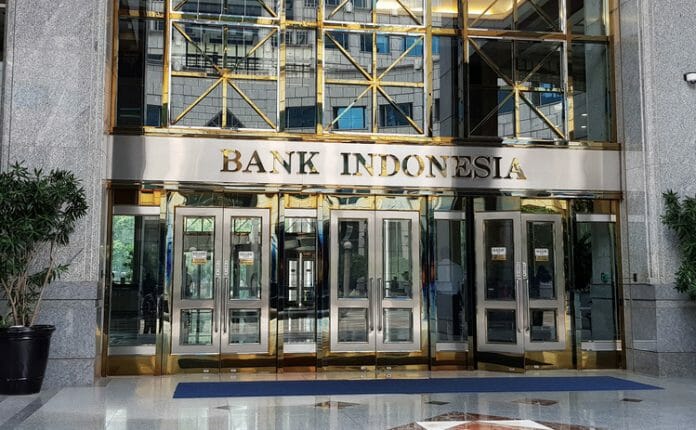
Indonesia’s central bank raised its benchmark rates by 25 basis points on Thursday, just a week after a surprise off-cycle rate hike, as it seeks to attract fresh capital inflows and halt selling in its battered rupiah and other assets.
Bank Indonesia (BI) extended its aggressive monetary tightening campaign at its Jun-26 policy meeting, delivering a widely anticipated +25bps hike, lifting its benchmark interest rate to 5.75%. This decision closely followed an off-schedule +25bps increase on 9th Jun, forming part of a rapid cumulative +100bps tightening cycle since May-26, raising the policy rate to its highest level since Apr-25. This coordinated intervention is designed to anchor the rupiah exchange rate, curb inflationary pressures, and insulate economic growth after the annual inflation rate surged from 2.42% in Apr-25 to 3.08% in May-25, rapidly approaching the upper bound of BI’s 1.5%–3.5% target band.
Despite this acceleration, the central bank maintains that inflation will remain contained within the government’s official +1.5% to +3.5% target range, allowing policymakers to preserve their 2026 GDP growth forecast of +4.9-5.7%. In alignment with the headline adjustment, BI symmetrically raised the rates on its overnight deposit and lending facilities by +25 basis points each, to 4.75% and 6.50%, respectively.
Within the region, the Bangko Sentral ng Pilipinas (BSP) also hiked its benchmark policy rate by +25bps to 4.75% at its Jun-26 policy meeting yesterday. This marked the central bank’s second rate increase this year, in line with market expectations. The BSP’s Monetary Board emphasized that regional inflation risks remain heavily skewed to the upside as elevated global oil and fertiliser prices, compounded by ongoing Middle East tensions, continue to pass through into domestic fuel and food supply chains.
The elevated inflation has led to central banks adopting a more hawkish stance to contain rising inflationary pressures. The US-Iran peace deal has resulted in the global oil prices falling to the lowest levels in 3 months, signaling the energy-led global inflation may ease in the latter part of the year. However, MBSB in its notes said the rising prices of raw materials and prolonged disruptions to the supply chain stability could keep inflation outlook elevated which the house opining that it will support additional policy tightening in selected economies.


