


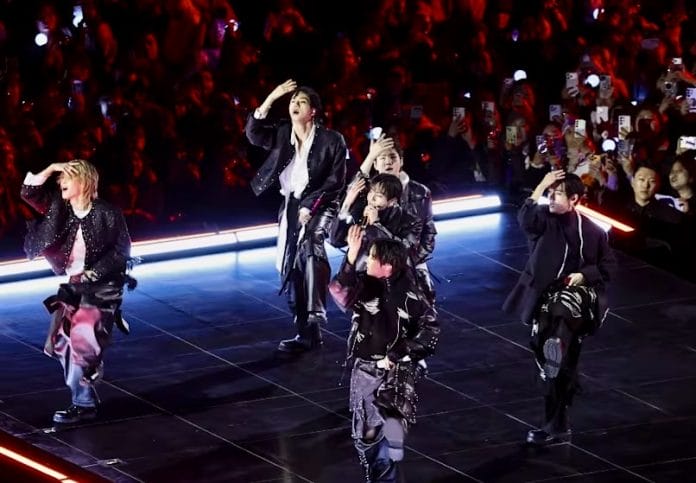
Singapore’s hotel landscape is being recalibrated in real time as the arrival of BTS for four December concerts at the National Stadium triggers one of the sharpest demand spikes the city’s hospitality sector has seen in recent years.
According to CNA, based on exclusive interviews with hotel operators and Trip.com Singapore, the shift didn’t build gradually—it hit immediately after the tour announcement and accelerated further during ticket sales.
Edmund Ong, general manager of Trip.com Singapore, described a sudden surge in search traffic followed by conversion into bookings for the core concert dates between Dec 16 and 22.
The scale is not subtle. Hotel reservations for that period are up more than 18 times year-on-year, with demand patterns concentrated into short stays rather than extended holidays. Three-star hotels have seen demand multiply nearly 50 times, while mid-tier and four-star properties are absorbing a large share of the remaining pressure.
What stands out in CNA’s reporting is how quickly pricing has detached from normal December benchmarks. Some hotels are already charging multiple times their usual rates for the same nights, while others are expected to adjust further upward as occupancy tightens closer to the event.
In practical terms, December in Singapore is no longer behaving like a standard peak season—it is behaving like a compressed event economy.
Location is becoming a defining factor. Areas such as Bugis and Kampong Glam are emerging as the most contested zones for accommodation, accounting for a significant share of concert-period bookings due to proximity and transport connectivity to the National Stadium.
These neighbourhoods are absorbing spillover demand from fully booked or high-priced central hotels, effectively becoming buffer zones for fans travelling into the city.
The demand is also highly international. Findings show that visitors are primarily arriving from across Asia, with China and Japan leading, followed by Southeast Asian markets. This reinforces a pattern seen in previous global mega-events in Singapore: regional fan mobility that concentrates sharply around concert windows rather than spreading across a season.
Inside the industry, the response is less about celebration and more about logistics. Hotel operators are actively adjusting staffing levels and operational workflows to handle compressed guest cycles—often one-night or two-night stays that create rapid turnover pressure.
Based on CNA’s exclusive interviews with Ascott’s revenue management leadership, lessons from earlier large-scale concerts have already shaped current preparations, particularly around managing check-ins, housekeeping load, and early arrival surges that exceed standard service expectations.
Some properties are also experimenting with experience-driven add-ons tied to the concert period, but the underlying challenge remains functional: keeping rooms moving, clean, and available under unusually tight turnaround conditions. Staffing increases across guest services and engineering teams are being positioned as necessary infrastructure rather than optional upgrades.
Still, not all demand is being absorbed within Singapore. A portion of travellers, reacting to rising prices and limited availability, are already adjusting their plans—either shifting stays to Johor Bahru or considering non-traditional overnight options closer to transit hubs.

