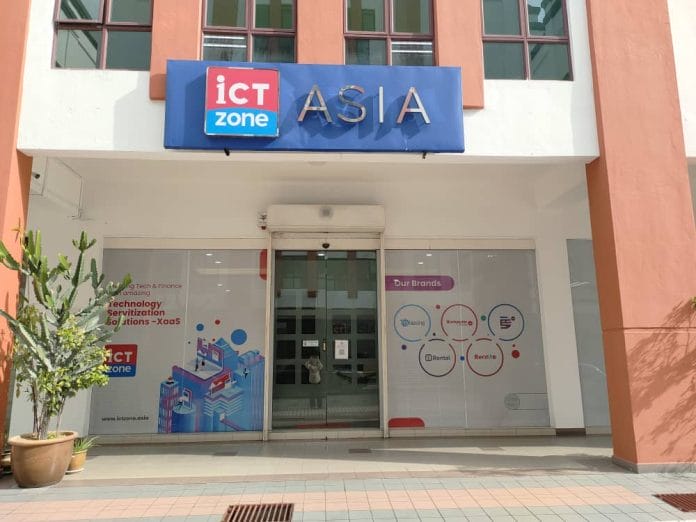
ICT Zone Asia Bhd kicked off its new financial year (FY27) on a solid note, with profit attributable to owners of the company (PATAMI) rising 34.6% year-on-year to RM4.5 million in the first quarter ended April 30, 2026 (1Q27), driven by robust growth across its Technology Financing and ICT trading businesses.
The ACE Market-listed TechFin and ICT solutions provider also achieved a milestone as quarterly revenue surpassed RM100 million for the first time, surging 141% to RM100.3 million from RM41.6 million a year earlier.
The standout performer was the trading of ICT hardware and software segment, where revenue more than quadrupled to RM72.3 million from RM17.5 million, supported by new contracts and orders secured from corporate and government customers.
Meanwhile, Technology Financing, the group’s core recurring-income segment, expanded 22.7% to RM26.9 million, reinforcing its subscription-based business model.
Managing Director and Chief Executive Officer Tommy Lim said while the RM100 million quarterly revenue milestone was significant, the group remained focused on growing recurring, contract-backed earnings through Technology Financing.
“Technology Financing is where we want the group’s weight to sit — it is recurring and carries the margins that matter to us,” he said, noting the ongoing shift by organisations from owning technology assets to subscription-based consumption models.
As at April 30, 2026, Lim shared that ICT Zone’s unbilled order book stood at RM280.7 million, with RM275.7 million coming from Technology Financing contracts. About RM84.4 million is expected to be recognised over the remaining nine months of FY27.
The group also strengthened its cash position, with operating cash flow rising to RM19.5 million from RM5.8 million a year earlier, while cash and bank balances increased to RM37.9 million.
“Looking ahead, the group remains optimistic due to sustained demand for subscription-based ICT procurement, growing adoption of artificial intelligence (AI)-capable devices, the upcoming Windows 10 end-of-support cycle, and Malaysia’s push to expand AI infrastructure as key growth catalysts for its Everything-as-a-Service offerings,” Lim said.