


The Financial Markets Committee noted that while external monetary shifts and local political positioning have induced short-term fluctuations, the underlying health of Malaysia’s domestic financial architecture remains resilient.
The FMC highlighted that recent movements in the ringgit and broader regional currencies continue to be dictated by shifting global dynamics. Although a recent interim peace deal signed between the United States and Iran has partially defused global geopolitical anxieties, financial markets have aggressively pivoted back to tracking persistent US inflation and the prospect of elevated interest rates.
According to the committee, the ringgit’s pullback this month was primarily accelerated by two key market drivers:
A resurgent US dollar triggered a wave of corporate and institutional hedging, as global markets brace for the US Federal Reserve to keep policy rates higher for longer later this year.
MSCI Index Rebalancing: Portfolio adjustments were amplified by the execution of the May MSCI index review, which saw the removal of six Malaysian equities from the flagship MSCI Malaysia Index, triggering mechanical capital outflows.
The FMC added that capital outflows from non-resident (NR) investors in June represent a standard portfolio rebalancing following the ringgit’s exceptionally strong performance in the early months of the year. Furthermore, with domestic state elections officially announced, foreign portfolio managers are temporarily adopting a “neutral stance” ahead of the political polls.
Despite the currency’s downward correction, data reveals that Malaysia’s onshore foreign exchange market is operating at a highly robust capacity.
The 7.5% surge in daily turnover has been fueled by highly balanced, two-way commercial flows. The FMC stated that corporate currency transactions remain fully aligned with macroeconomic expectations, underscoring that liquidity lines remain smooth and panic-free. Robust trade data and stable domestic inflation continue to act as crucial structural buffers.
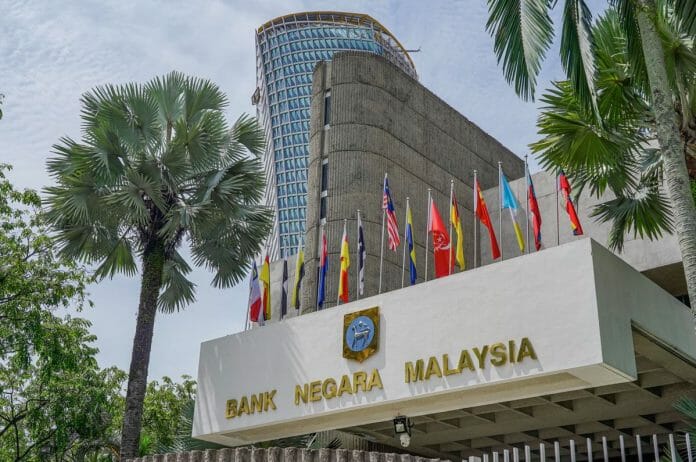
Bank Negara Malaysia (BNM) utilised the meeting to reiterate its commitment to safeguarding orderly market dynamics. The central bank announced it will step up active monitoring and intensify existing policy tools designed to stabilise the currency.
Moving forward, BNM will expand its Qualified Resident Investor (QRI) framework to aggressively incentivize foreign fund inflows. Concurrently, the central bank is amplifying its coordinated engagements with government-linked companies (GLCs), government-linked investment companies (GLICs), and major private corporations, urging them to consistently repatriate and convert their foreign offshore earnings back into the local financial system.

