


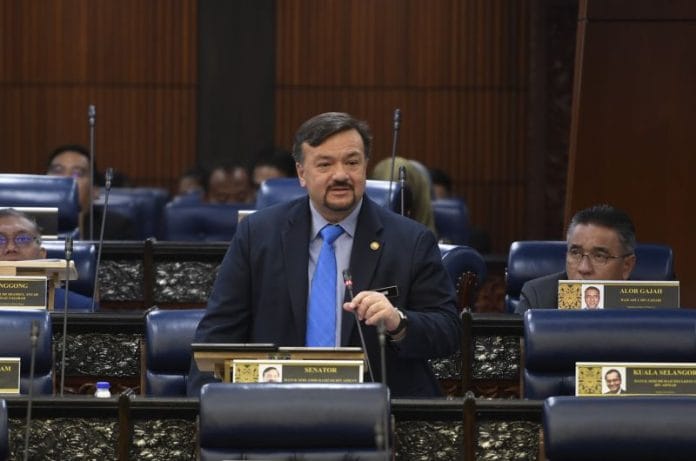
Malaysia’s diesel subsidy rationalisation under the framework is designed to curb leakages, stabilise supply and ensure only eligible Malaysians benefit, Finance Minister II Datuk Seri Amir Hamzah Azizan told Parliament.
In response to Simpang Renggam MP Datuk Seri Utama Ir. Hasni Mohammad, he said the reform was driven by three main factors, including the impact of geopolitical tensions in West Asia that pushed global crude prices above US$120 a barrel, rising fiscal pressure from escalating subsidy bills and ongoing leakage issues caused by price gaps that encourage smuggling and non-citizen consumption.
Amir Hamzah said subsidy costs had surged from around RM800 million a month in January and February 2026 to nearly RM5 billion a month in March and April, highlighting the scale of fiscal strain faced by the government during the oil price spike.
He added that despite coordination with PETRONAS to secure diversified supply sources, addressing leakage remained critical, particularly in Sabah and Sarawak where large price differentials with neighbouring countries have incentivised illicit diesel flows.
Under the new framework, diesel pump prices will be standardised nationwide at market levels while eligible Malaysians will continue to receive subsidised fuel through MyKad verification. The subsidised price has been set at RM2.10 per litre.
The government estimates the reform could generate savings of up to RM2 billion annually, which would be used to support continued subsidised pricing for citizens while strengthening supply resilience.
On eligibility concerns, Amir Hamzah said data from BUDI95 usage showed fewer than 1% of users consistently exceeded the 200 litre monthly threshold. Department of Statistics Malaysia data also showed more than 80% of diesel users consume below 200 litres a month, with the average at about 140 litres.
He added that around 95% of users fall below 300 litres monthly, with an additional 100 litre top-up available upon application for those requiring higher usage.


